What drives Energy Beam Control price differences?
Author
Date Published
Reading Time

Understanding Energy Beam Control price differences is essential when comparing laser, electron, ion, plasma, and thermal-processing systems across advanced manufacturing environments.
Pricing is rarely driven by hardware alone. It reflects beam precision, power stability, automation depth, shielding needs, compliance expectations, and process reliability.
For any serious evaluation, Energy Beam Control price should be reviewed beside performance risk, maintenance burden, qualification standards, and future scalability.
What does Energy Beam Control price really include?
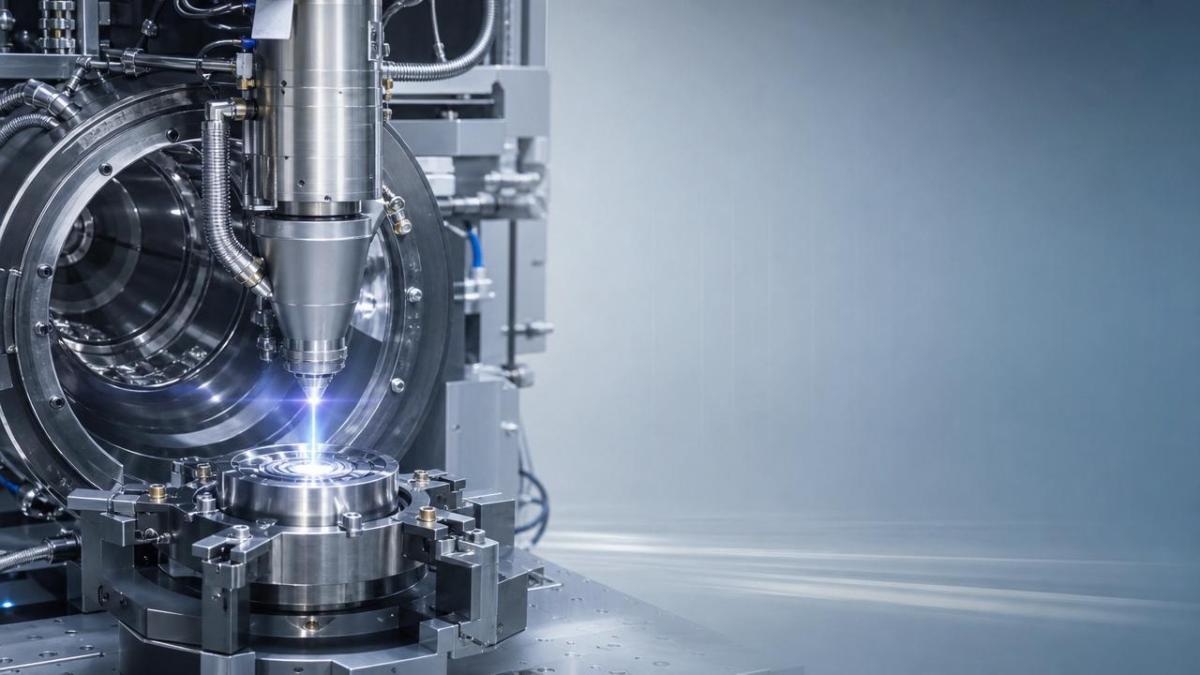
Energy Beam Control price covers more than a beam source, motion platform, power cabinet, and control interface.
It usually includes process architecture, safety engineering, cooling design, calibration capability, software control, and documentation depth.
A low entry price may only represent the core machine. Critical options can appear later as additional commercial items.
Examples include beam diagnostics, closed-loop feedback, gas management, vacuum chambers, fixture packages, and validated process recipes.
Energy Beam Control price also reflects the supplier’s ability to control energy delivery under real production variation.
This matters in aerospace joining, semiconductor surface modification, medical component finishing, battery welding, and high-value thermal processing.
- Capital equipment cost: beam source, optics, vacuum, motion, and safety systems.
- Process cost: qualification, recipe development, fixtures, and acceptance testing.
- Lifecycle cost: spares, service contracts, downtime exposure, utilities, and upgrades.
The most useful comparison separates base configuration from process-ready configuration. This prevents misleading Energy Beam Control price conclusions.
Why does beam precision change Energy Beam Control price so strongly?
Beam precision is one of the biggest cost drivers because it determines repeatability, heat-affected zone control, and defect probability.
A system holding stable spot size, beam alignment, and energy density needs better components and deeper integration.
For laser processing, cost rises with high-quality optics, galvanometer accuracy, beam shaping, and real-time power monitoring.
For electron or ion beam equipment, vacuum stability, beam column design, and charged-particle control become major factors.
For plasma and microwave systems, field uniformity, chamber design, and process gas control influence Energy Beam Control price.
Precision also affects inspection cost. Better control can reduce scrap, rework, destructive testing, and repeated qualification runs.
How should precision be judged?
Do not judge only by the smallest advertised spot size or maximum power rating.
Ask how the system behaves during long cycles, material variation, edge transitions, and repeated thermal loading.
A higher Energy Beam Control price can be justified when process drift is measurable, controlled, and documented.
- Check power stability across the complete operating window.
- Review beam profile reports, not only catalog specifications.
- Confirm repeatability after warm-up, maintenance, and tool changeover.
- Compare process results on actual materials and geometries.
How do application environments affect Energy Beam Control price?
Application environment changes both technical configuration and commercial scope. The same beam power can require very different support systems.
A laser welding cell for battery tabs differs from a laser cladding system for turbine repair.
An electron beam melting platform differs greatly from a high-vacuum heat treatment furnace with carburizing capability.
Energy Beam Control price increases when the environment demands vacuum integrity, inert gas purity, explosion protection, or contamination control.
Semiconductor-related processes often require particle discipline, clean handling, software traceability, and tight thermal uniformity.
Aerospace and medical processes usually require stricter documentation, stronger validation evidence, and robust quality records.
Which applications usually carry higher price pressure?
- High-vacuum electron beam welding and additive manufacturing.
- Multi-axis laser processing of critical metal components.
- Ion beam systems for surface engineering and microfabrication.
- Plasma cleaning or activation with strict surface energy targets.
- Thermal processing requiring uniformity surveys and atmosphere control.
In these cases, Energy Beam Control price reflects risk reduction as much as machine capability.
Why do automation and software create large price differences?
Automation changes a system from a capable machine into a controlled production asset.
Advanced automation can include robotic loading, vision alignment, recipe control, barcode tracking, and in-process monitoring.
Each layer increases Energy Beam Control price, but it can reduce operator dependency and process variation.
Software also affects cost. Simple interfaces are cheaper, but validated control platforms carry higher engineering value.
Data logging, audit trails, alarms, permissions, and network integration can be essential in regulated manufacturing environments.
The cheapest interface may become expensive if it cannot support traceability, remote diagnostics, or future production scaling.
When is automation worth paying for?
Automation is valuable when repeatability, cycle time, safety, and data capture influence final product acceptance.
It is less urgent for early research work, low-volume trials, or flexible laboratory development.
A practical Energy Beam Control price review should separate must-have automation from convenience options.
- Define production volume and takt time requirements.
- Identify data required for quality release.
- Measure safety exposure during loading and maintenance.
- Estimate downtime cost from manual setup errors.
How do compliance, standards, and qualification influence Energy Beam Control price?
Standards-based manufacturing increases upfront cost, but it protects repeatability and acceptance confidence.
Relevant frameworks may include ISO quality systems, AWS welding practices, DIN references, safety codes, and customer-specific protocols.
Energy Beam Control price rises when suppliers provide documentation packages, calibration certificates, validation protocols, and factory acceptance testing.
Qualification work can include metallurgical testing, thermal mapping, weld sectioning, surface analysis, or chamber leak verification.
These activities cost money because they require engineering time, test equipment, traceable records, and controlled procedures.
Ignoring compliance cost can produce an unrealistic Energy Beam Control price comparison between suppliers.
What should be requested before final comparison?
- A complete scope of supply with exclusions clearly listed.
- Acceptance criteria tied to measurable process outputs.
- Calibration and preventive maintenance requirements.
- Utility, gas, cooling, exhaust, and facility specifications.
- Training, commissioning, and remote support conditions.
What common mistakes distort Energy Beam Control price comparisons?
The first mistake is comparing maximum power without comparing controllable process performance.
A high-power system may still produce poor results if beam delivery, cooling, or motion control is weak.
The second mistake is ignoring facility cost. Vacuum pumps, chillers, shielding, exhaust, and gas systems can be substantial.
The third mistake is treating spare parts and service response as minor details.
For production environments, downtime can exceed the initial Energy Beam Control price difference between two systems.
Another mistake is accepting unclear demonstrations. A polished sample does not prove long-term stability under real production conditions.
How can a fair comparison be built?
Use the same process target, material batch, geometry, inspection method, and acceptance criteria for every supplier.
Then compare Energy Beam Control price against measurable outcomes, not brochure promises.
How should Energy Beam Control price be evaluated before a decision?
A strong evaluation starts with the process outcome, not the machine catalog.
Define the required weld depth, surface condition, thermal uniformity, deposition quality, or microstructural result first.
Then identify the beam technology and control architecture capable of delivering that result repeatedly.
Energy Beam Control price should be judged through total cost of ownership, technical risk, and qualification readiness.
A structured scoring model helps balance price, performance, maintainability, delivery time, support depth, and upgrade potential.
Energy Beam Control price differences are best understood as differences in controlled performance, not simple equipment markup.
The right system balances beam physics, thermal behavior, automation, compliance, and lifecycle support.
Before selecting a supplier, build a comparison matrix based on process evidence, documented scope, and ownership cost.
For complex laser, electron beam, ion beam, plasma, or thermal-processing projects, benchmark technical claims against recognized standards.
That approach turns Energy Beam Control price from a confusing quotation number into a practical decision metric.
Technical Specifications
Expert Insights

Chief Security Architect
Dr. Thorne specializes in the intersection of structural engineering and digital resilience. He has advised three G7 governments on industrial infrastructure security.
Related Analysis
- Sep 01, 2026How to Evaluate an Industrial Valves Distributor for Reliable Process PerformanceAuthor :Lina Cloud
- Aug 31, 2026How to Size Spring-Loaded Safety Relief Valves for Process Overpressure ScenariosAuthor :Dr. Elena Carbon
- Aug 30, 2026Laser PPE Requirements: Selecting Eyewear and Controls by Laser ClassAuthor :Dr. Aris Nano
Recommended News
- How to Evaluate an Industrial Valves Distributor for Reliable Process PerformanceAuthor :Lina Cloud

- How to Size Spring-Loaded Safety Relief Valves for Process Overpressure ScenariosAuthor :Dr. Elena Carbon

- Laser PPE Requirements: Selecting Eyewear and Controls by Laser ClassAuthor :Dr. Aris Nano

- Selecting High-Pressure Pump Shaft Seals for Abrasive, High-Temperature ServiceAuthor :Dr. Elena Carbon