Flexible Jaw Coupling Prices: Cost Drivers Buyers Should Compare
Author
Date Published
Reading Time
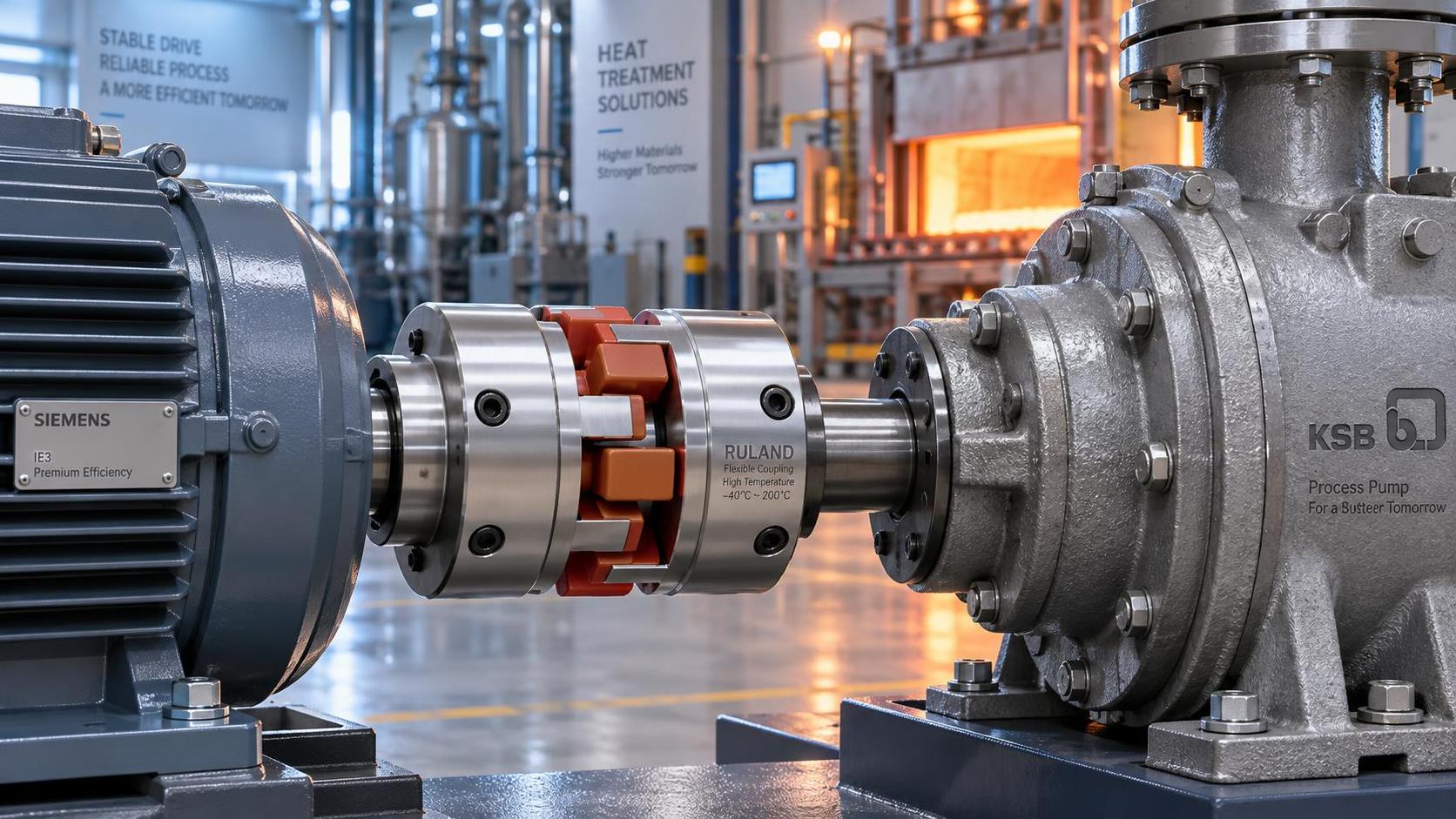
A flexible jaw coupling can look like a modest line item beside a laser system, vacuum furnace, induction drive, pump skid, or automated material-handling module. Yet when a coupling fails, the resulting cost is rarely modest. A stoppage can interrupt a thermal cycle, delay a maintenance window, affect process repeatability, or expose a drivetrain to secondary damage.
That is why flexible jaw couplings price comparisons should begin with more than a unit quote. Procurement teams need to understand what is included in the offered configuration, what engineering assumptions sit behind the rating, and whether the selected coupling will remain serviceable in the actual operating environment. Two couplings that appear similar in a catalog may carry very different lifecycle costs once bore machining, elastomer selection, balancing, documentation, lead time, and replacement availability are considered.
For buyers supporting precision manufacturing and thermal-processing assets, the practical question is not simply, “Which jaw coupling is cheapest?” It is, “Which option gives the required torque transmission, misalignment tolerance, maintainability, and supply assurance at an acceptable total installed cost?”
Why Flexible Jaw Coupling Prices Vary So Widely
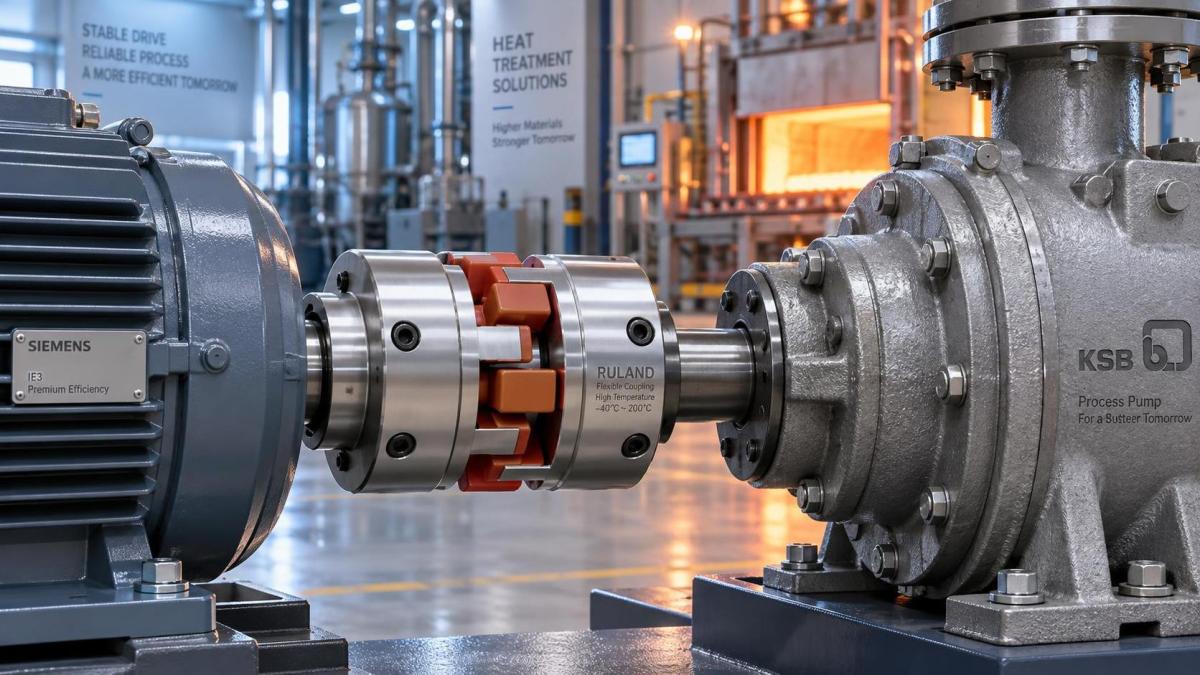
Flexible jaw couplings consist of two hubs and an elastomeric insert, often called a spider. Their basic arrangement is straightforward: the hubs transmit torque through the spider while allowing a measured degree of angular, parallel, and axial misalignment. The design is common because it is compact, fail-safe in many configurations, and generally permits element replacement without moving connected equipment.
But a basic architecture does not create a basic purchasing decision. Pricing changes with every technical and commercial choice made around the coupling. A small off-the-shelf coupling with standard bores and a common polyurethane insert is not comparable to a larger, engineered assembly for a high-inertia blower, furnace conveyor, or process pump operating close to a heated enclosure.
In practice, buyers often see quote differences caused by one or more of the following:
- Nominal and peak torque capacity
- Hub material, surface protection, and manufacturing method
- Finished bore, keyway, set-screw, clamp-hub, or taper-lock requirements
- Spider material, hardness, temperature tolerance, and chemical resistance
- Speed rating, balance requirements, and rotational inertia limits
- Dimensional interchangeability with an installed coupling series
- Documentation, traceability, inspection, and compliance requirements
- Order quantity, inventory position, delivery commitment, and freight terms
A low initial price can be entirely reasonable when the application is light duty, the geometry is standard, and replacement speed is not critical. It becomes a concern when the quote omits features that the actual machine requires.
Start With the Duty, Not the Catalog Size
Torque rating is the central cost driver, but it should not be read as a single, universal number. Suppliers may publish nominal torque, maximum torque, short-duration overload torque, or ratings tied to particular service conditions. Procurement should ask engineering to clarify the operating torque profile before comparing offers.
A conveyor drive and a direct-drive process fan may have similar motor power, yet their coupling demands can differ sharply. Starting frequency, reversing loads, motor acceleration, driven inertia, shock events, and the operating speed range all influence selection. In variable-frequency-drive applications, torsional behavior and harmonic excitation may also matter more than the headline kilowatt rating suggests.
For a buyer, this means each quote should show the coupling series, size, rated torque, maximum speed, and selected service factor. If one supplier has quoted a higher series size while another has quoted the minimum catalog size, the apparent price gap may reflect different risk assumptions rather than simple supplier margin.
Do not treat service factor as a paperwork detail. It is often the difference between a coupling that performs quietly for years and one that chews through inserts after repeated starts or occasional process jams.
The Hubs: Where “Same Size” Can Stop Meaning the Same Product
Hub configuration affects both purchase price and installation effort. Standard pilot bores are usually less expensive than hubs machined to a final shaft diameter with a keyway and retaining feature. Once the order requires nonstandard shaft tolerances, double keyways, stepped bores, special screw locations, or inspection records, the coupling becomes partly a machining and quality-control purchase.
Buyers should compare whether a quoted price includes:
- Finished bores on both hubs, including the specified tolerances
- Keyways, key stock, set screws, or clamp screws
- Hub-to-shaft fit requirements and mounting orientation
- Protective coatings appropriate for humidity, washdown, or corrosive exposure
- Spacer arrangements or extended-distance configurations, where needed
- Dynamic balancing or speed-related verification
Material choice also changes the commercial picture. Aluminum hubs can reduce weight and are often suitable for moderate-duty, lower-inertia arrangements. Steel or ductile iron designs may be selected where torque, impact loading, or ruggedness governs. Stainless or specially coated components may be justified near washdown areas, chemical exposure, or aggressive ambient conditions. The right selection is application-specific; paying for a corrosion-resistant hub in a clean, enclosed drive may add little value, while omitting it in a harsh environment can create a recurring replacement expense.
In advanced fabrication facilities, procurement should also check for practical installation constraints. A coupling that meets torque requirements but cannot be installed within the available shaft separation, guard envelope, or maintenance clearance is not a low-cost solution.
The Spider Is Small, but It Can Determine the Real Operating Cost
The elastomeric spider is often the least expensive individual part in the assembly and the most frequently misunderstood. Its material and hardness influence damping, torsional stiffness, misalignment capability, temperature resistance, and wear behavior. A standard elastomer may work well in a general industrial gearbox drive but become unsuitable close to a furnace shell, heated process zone, oil mist source, or chemical cleaning area.
Different elastomer grades are commonly offered to balance flexibility and torque transmission. A softer element may provide greater damping and accommodate more vibration, while a harder element can support higher torque and produce a stiffer drivetrain. Neither is automatically better. The relevant question is whether the element matches the speed, load fluctuations, temperature, and alignment condition of the machine.
When reviewing flexible jaw couplings price proposals, ask suppliers to identify the exact spider compound rather than stating only “standard insert.” Useful details include the material family, hardness grade, continuous operating temperature range, compatibility with lubricants or chemicals present on site, and expected replacement procedure.
A very low-priced assembly may be supplied with the most common insert grade, while a more expensive quote may include a high-temperature or chemically resistant element. If the machine operates beside a thermal-processing chamber or a high-duty vacuum pump, that distinction can matter far more than the difference in purchase price.
Compare the Quote as a Complete Configuration
Many procurement disputes arise because the buyer compares line-item totals without normalizing the scope. One supplier may quote hubs only. Another may include the spider. A third may include bores but exclude keys, balancing, protective packaging, or documentation. The totals cannot be evaluated fairly until the configuration is aligned.
A normalized comparison sheet is especially valuable when sourcing replacement parts for installed equipment. Record the manufacturer series, exact hub part numbers, spider specification, bore details, and overall assembled dimensions. “Equivalent” should never mean merely similar in appearance. It should mean compatible in torque, speed, fit, material behavior, and operating conditions.
Interchangeability Can Save Money—or Create a Hidden Liability
Buyers may seek interchangeable flexible jaw couplings to reduce cost or shorten lead time. This can be a sound strategy, particularly for mature equipment fleets where an approved alternative source improves resilience. However, interchangeability deserves engineering review.
Even when jaw profiles appear alike, dimensions and performance details can differ: hub engagement length, spider geometry, bore depth, nominal torque conventions, maximum rpm, and allowable misalignment are not always identical across brands or series. Mixing a hub from one system with an insert from another should not be assumed acceptable without confirmation.
For critical assets, the cost of an engineering validation is usually minor compared with an unexpected shutdown. A disciplined approval route should verify drawings, coupling envelope, shaft attachment method, torque and speed ratings, and elastomer compatibility. It should also document the approved substitute in the maintenance system so emergency buying does not lead to inconsistent field installations.
Lead Time Is Part of the Flexible Jaw Couplings Price Equation
For an MRO buyer, the most expensive coupling may be the one that is unavailable during an outage. Standard sizes from established product lines may be readily stocked, while custom-bored hubs, unusual materials, or specialized inserts can require additional manufacturing time. There is no universal rule that stocked components are preferable; a custom configuration may be necessary. The point is to make lead time visible during the selection process rather than discovering it after a failure.
Consider segmenting demand into two groups. Routine, noncritical applications can often be purchased through competitive spot buying with clear technical specifications. Critical drives—such as those supporting vacuum systems, thermal conveyors, cooling circuits, production handling, or continuous-process auxiliaries—may justify a defined spare strategy. Keeping a correctly configured insert or complete coupling assembly can be more economical than holding an entire motor or gearbox contingency.
Ask suppliers whether replacement spiders are available independently, whether hubs can be purchased separately, and whether the selected series has stable regional supply. These answers influence maintenance cost long after the original purchase order is closed.
Documentation Requirements Should Be Proportionate to Risk
Not every jaw coupling needs extensive certification. Requiring unnecessary documentation can inflate procurement cost and delay delivery. At the same time, some projects—especially those tied to regulated manufacturing, export controls, formal quality systems, or high-value capital equipment—need traceability that a commodity purchase cannot provide.
Define the required documentation before requesting quotations. Depending on the asset and project requirements, this may include dimensional inspection, material confirmation, certificate of conformity, country-of-origin information, or supplier quality records. For equipment operating in demanding energy-beam and thermal-processing environments, teams should also clarify whether the coupling is located inside, adjacent to, or remote from the controlled process area. Environmental exposure may affect the need for particular materials or handling controls.
G-EBT’s benchmarking approach is useful here: relate the mechanical component specification to the conditions created by the wider process system. A coupling serving an auxiliary drive may not see the process directly, but heat radiation, airborne contaminants, vibration, and maintenance access can still shape its real-world performance.
A Practical Buying Sequence for Procurement Teams
Before sending an RFQ, gather the existing coupling part number and photographs, but do not rely on those alone. Obtain shaft diameters, keyway dimensions, shaft separation, motor and driven-equipment data, operating speed, starting pattern, ambient temperature, and known failure history. If inserts have failed repeatedly, note their condition: cracking, melting, tooth deformation, and abrasion each point toward different causes.
Then request quotes against a single technical schedule. Require suppliers to state deviations explicitly rather than burying assumptions in a datasheet. This makes flexible jaw couplings price comparison more transparent and gives engineering a practical basis for approval.
Finally, evaluate the total delivered and installed cost. Include unit price, machining, logistics, inspection, planned spare inserts, expected replacement effort, and the operational consequence of a delayed part. A coupling selected this way is less likely to become an urgent purchase later.
The Best Price Is the One That Fits the Risk
Flexible jaw couplings are often purchased under time pressure because they are small, familiar components. That is precisely why critical details can be missed. The most defensible purchasing decision balances the quoted price against duty rating, hub configuration, elastomer performance, fit, lead time, and supplier support.
For low-risk applications, a standard coupling with a transparent specification may be the right answer. For high-duty or process-sensitive equipment, paying for the correct material, bore arrangement, insert grade, and documentation can be the less expensive decision over the service life of the drive. Procurement teams that compare the whole configuration—not just the unit price—will make choices that protect both budgets and uptime.
Technical Specifications
Expert Insights

Chief Security Architect
Dr. Thorne specializes in the intersection of structural engineering and digital resilience. He has advised three G7 governments on industrial infrastructure security.
Related Analysis
- Sep 15, 2026Flexible Jaw Coupling Prices: Cost Drivers Buyers Should CompareAuthor :Dr. Aris Nano
- Sep 14, 2026How to Evaluate an Industrial Roller Chain Supplier for Heavy-Duty Conveyor SystemsAuthor :Dr. Aris Nano
- Sep 13, 2026Explosion-Proof Enclosure Prices: How Certification and Materials Affect Your QuoteAuthor :Dr. Aris Nano
Recommended News
- Flexible Jaw Coupling Prices: Cost Drivers Buyers Should CompareAuthor :Dr. Aris Nano

- How to Evaluate an Industrial Roller Chain Supplier for Heavy-Duty Conveyor SystemsAuthor :Dr. Aris Nano

- Explosion-Proof Enclosure Prices: How Certification and Materials Affect Your QuoteAuthor :Dr. Aris Nano

- Selecting Heat Shrink Tubing for Wire Harnesses: Temperature, Ratio, and MaterialAuthor :Marcus Valve