When should hydraulic cylinders OEM be custom built?
Author
Date Published
Reading Time
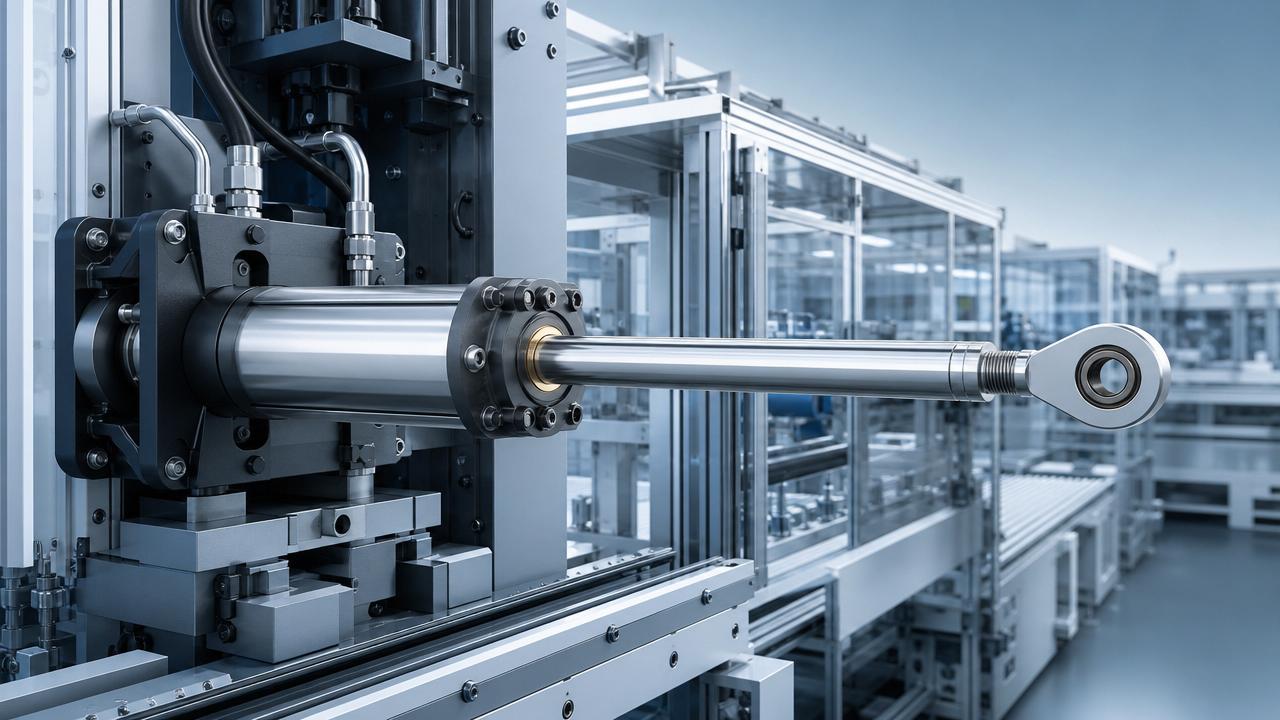
Specifying a hydraulic cylinders OEM solution becomes critical when standard catalog cylinders cannot meet the load profile, stroke accuracy, duty cycle, environmental exposure, or integration constraints of advanced industrial equipment. For technical evaluators, the decision is not simply about customization cost—it is about reliability, safety margins, lifecycle performance, and compatibility with demanding manufacturing systems. This article examines when custom-built hydraulic cylinders are justified, what engineering factors should guide the decision, and how OEM collaboration can reduce operational risk in high-performance applications.
When Standard Cylinders Stop Being Technically Sufficient
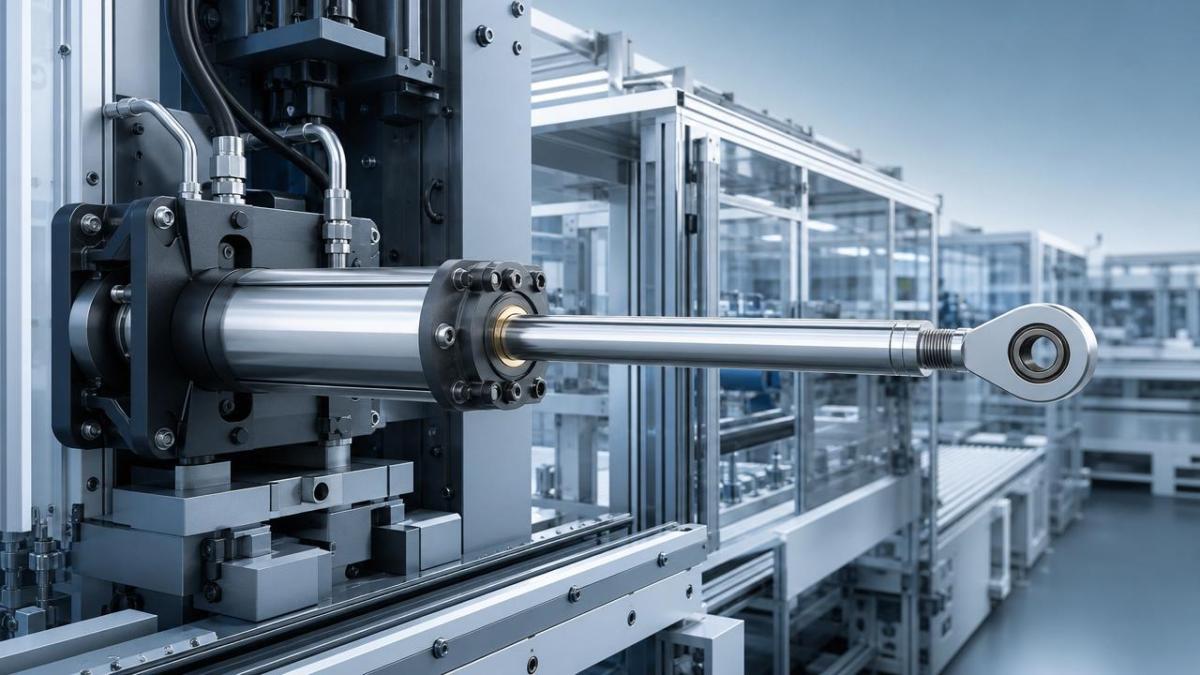
A catalog hydraulic cylinder is appropriate when force, stroke, mounting, sealing, and duty cycle fit within established limits. In advanced fabrication lines, those limits are often exceeded by thermal exposure, vibration, contamination, or precision alignment requirements.
A hydraulic cylinders OEM design becomes justified when one mismatch can create downtime, scrap, leakage, or unsafe motion. Technical evaluators should treat customization as risk control, not cosmetic engineering.
Key Triggers for Custom Engineering
The first trigger is load complexity. If the cylinder experiences side loading above normal design assumptions, shock peaks, or variable pressure cycles, a standard bore and rod combination may fatigue prematurely.
The second trigger is motion accuracy. Equipment for laser processing, vacuum heat treatment, metal joining, and plasma handling may require repeatability near ±0.1 mm to ±0.5 mm, depending on the axis and control architecture.
The third trigger is environmental severity. Cylinders near furnaces, induction coils, welding cells, abrasive dust, or vacuum-adjacent mechanisms may need special coatings, rod materials, wipers, or seal compounds.
Typical Customization Signals
- Required stroke exceeds catalog ranges, such as 1,500 mm to 4,000 mm in lifting or transfer systems.
- Operating pressure fluctuates between 160 bar and 250 bar with frequent shock loading.
- Cycle rate reaches 10,000 to 100,000 cycles per month in automated production.
- Installation envelope is constrained by robots, vacuum chambers, guards, or thermal insulation.
- Maintenance access is limited to scheduled shutdowns every 3 to 6 months.
The table below summarizes when a hydraulic cylinders OEM route is more technically defensible than a catalog purchase. It is especially useful during early feasibility review or supplier prequalification.
The decisive point is not whether customization is possible, but whether the operating risk exceeds the cost and time of engineering validation. In critical equipment, a hydraulic cylinders OEM decision often protects the whole production cell.
Engineering Factors That Define a Custom-Built Hydraulic Cylinder
A custom cylinder specification should begin with measurable operating conditions. Bore, rod diameter, wall thickness, seal system, bearing length, port layout, and surface treatment must be selected against the real machine duty cycle.
For technical evaluators, the best hydraulic cylinders OEM discussions are driven by load cases, drawings, cycle data, fluid information, and acceptance criteria. Without those inputs, suppliers can only estimate risk.
Force, Pressure, and Safety Margin
Cylinder force is primarily determined by bore area and system pressure, but practical design also accounts for friction, pressure loss, acceleration, and impact. Many industrial systems operate around 140 bar to 210 bar.
Heavy forming, lifting, clamping, or furnace door applications may require higher pressure ratings, larger rods, or safety factors of 1.5 to 3.0, depending on applicable machine standards and failure consequences.
Stroke, Buckling, and Alignment
Long-stroke cylinders introduce buckling risk, especially when compression loads combine with imperfect alignment. Rod column strength, guide spacing, mounting rigidity, and end constraints should be reviewed together.
If stroke length exceeds 20 times rod diameter, or if the rod pushes a guided carriage over 2 meters, buckling calculations and bearing design become central to the hydraulic cylinders OEM specification.
Seals, Materials, and Thermal Exposure
In energy-beam and thermal-processing environments, cylinders may face radiant heat, hot particles, cutting fumes, plasma byproducts, or thermal gradients near 80°C to 200°C at exposed surfaces.
Seal selection may involve polyurethane, NBR, FKM, PTFE-based arrangements, or high-temperature scrapers. Rod coatings may include hard chrome, nickel-based layers, or ceramic-enhanced surfaces where abrasion is severe.
Specification Data to Prepare Before Supplier Review
- Maximum push and pull force, including static load and dynamic peak load.
- Stroke length, required speed, acceleration, and positioning tolerance.
- Operating pressure, proof pressure, and expected pressure spikes.
- Fluid type, cleanliness target, temperature range, and contamination risk.
- Mounting orientation, side-load estimate, envelope drawing, and service access.
- Target life, such as 1 million cycles, 3 years, or a defined overhaul interval.
A well-prepared data package shortens design cycles. In many B2B projects, a preliminary hydraulic cylinders OEM concept can be reviewed in 7 to 15 working days if the load and interface data are complete.
Application Scenarios in Advanced Industrial Equipment
Custom hydraulic cylinders are widely used outside traditional construction machinery. In high-value manufacturing, they support controlled motion in equipment where one failed actuator can interrupt an entire production batch.
For G-EBT’s benchmarking context, hydraulic cylinders may appear in thermal doors, vacuum handling frames, welding fixtures, material transfer systems, beamline shielding, and heavy component positioning modules.
Thermal Processing and Furnace Systems
Vacuum heat treatment and induction heating equipment often require cylinders for door locking, load carriage movement, quench transfer, or lifting mechanisms. Heat isolation and seal protection are major concerns.
A hydraulic cylinders OEM approach is commonly justified when the actuator is exposed to hot fixtures, thermal cycling, water-glycol fluids, or limited maintenance windows during 24-hour production schedules.
Welding, Joining, and Clamping Fixtures
Specialized welding lines need precise clamping force, rapid actuation, and resistance to spatter. A small loss of force can distort a joint gap, while over-force can damage thin parts.
Custom cylinders may integrate position sensors, hardened rods, shielded seals, and compact manifold connections. Cycle times may range from 3 seconds to 30 seconds per clamp sequence.
Laser, Electron Beam, and Plasma Equipment
In beam-based manufacturing systems, cylinders may not enter the optical path, but they often move shields, fixtures, chambers, or loading modules. Contamination control and smooth motion are important.
Where clean operation is required, the hydraulic cylinders OEM design may include low-leakage seals, compatible fluids, contamination barriers, stainless interfaces, or remote-mounted hydraulic connections.
The following table connects common industrial scenarios with cylinder customization priorities. It can help evaluators align technical requirements with procurement language before issuing an RFQ.
The pattern is clear: the more the cylinder influences process stability, safety, or product quality, the stronger the case for a hydraulic cylinders OEM specification instead of a standard replacement part.
How Technical Evaluators Should Compare OEM Proposals
Comparing OEM proposals only by unit price is risky. Two cylinders with the same bore and stroke can differ substantially in bearing length, seal quality, rod finish, weld design, testing depth, and documentation.
A structured review should cover at least 6 areas: design basis, materials, manufacturing control, testing, documentation, and lifecycle support. These factors influence downtime more than initial purchase cost.
Design Review and Validation
Ask whether the supplier performs buckling checks, pressure containment calculations, seal compatibility review, and fatigue consideration for repeated cycles. Drawings should identify ports, mounts, tolerances, and critical interfaces.
For demanding equipment, proposal packages should include 2D drawings, 3D interface models when needed, bill-of-material summaries, and a defined review stage before production release.
Manufacturing and Inspection Controls
The supplier should explain how tubes are honed, rods are ground and finished, welds are controlled, and seals are installed. Surface roughness, straightness, and concentricity affect long-term leakage and friction.
Typical acceptance steps include dimensional inspection, pressure testing at 1.25 to 1.5 times rated pressure, leakage checks, stroke verification, and functional cycling before shipment.
Practical Supplier Questions
- What design assumptions were used for load, pressure, speed, and side force?
- Which seal materials are selected, and what temperature range do they support?
- Can the port location and mounting geometry match the machine envelope exactly?
- What inspection records will be supplied with each shipment?
- What lead time applies to prototypes, pilot batches, and repeat production?
A capable hydraulic cylinders OEM partner should welcome technical questions. Ambiguous answers about material grade, test pressure, or seal compatibility are early warning signs during procurement evaluation.
Implementation Process, Lead Time, and Risk Control
Custom cylinder development should follow a controlled process. Rushing directly from rough dimensions to production can create hidden failures that only appear after installation or thermal cycling.
A typical hydraulic cylinders OEM project includes 5 stages: requirement definition, concept design, technical review, prototype or first-article production, and final validation before series supply.
Expected Timeline
For moderately complex cylinders, concept design may require 1 to 2 weeks after complete data submission. Prototype manufacturing often takes 4 to 8 weeks, depending on material availability and testing scope.
Highly specialized designs involving long strokes, special coatings, integrated sensors, or unusual seal systems may require 8 to 12 weeks. Evaluators should include this in project planning.
First-Article Acceptance
First-article inspection should confirm dimensions, stroke, port orientation, mounting fit, pressure integrity, surface finish, and sensor signal compatibility if feedback devices are integrated.
Where failure would stop a critical production line, it is reasonable to request a documented functional test, leakage limit, and packaging method suitable for international transport.
Common Mistakes to Avoid
- Using only bore and stroke as the RFQ description.
- Ignoring side load from linkage, misalignment, or uneven fixture motion.
- Selecting seals without fluid compatibility or temperature verification.
- Leaving sensor integration until after the mechanical design is frozen.
- Accepting unclear test criteria for pressure, leakage, and cycling.
The best results occur when mechanical, hydraulic, controls, maintenance, and procurement teams review the design together. This reduces late changes and prevents installation conflicts.
Maintenance, Lifecycle Value, and Final Procurement Guidance
A custom cylinder should be evaluated across its service life, not only at purchase. Seal replacement frequency, rod damage risk, spare availability, and maintenance access can outweigh a small price difference.
In many industrial systems, planned inspection every 3 to 6 months is practical, while high-cycle or high-temperature applications may need shorter monitoring intervals during commissioning.
Lifecycle Indicators to Track
Maintenance teams should monitor external leakage, rod scoring, abnormal heat, pressure drift, cycle time changes, and noise during reversal. These indicators reveal problems before catastrophic failure.
If a hydraulic cylinders OEM design includes replaceable wear bands, accessible seals, and documented spare kits, maintenance becomes more predictable and shutdown planning improves.
When Customization Delivers the Best Return
Customization delivers strongest value when equipment downtime is expensive, motion affects product quality, safety factors are non-negotiable, or the installation space cannot accept standard geometry.
It is also appropriate when the machine will be built in repeat quantities. Once validated, a custom design can become a stable platform component across 10, 50, or more machines.
Decision Rule for Evaluators
Choose a catalog cylinder when the application is low-risk, accessible, lightly loaded, and dimensionally standard. Choose a hydraulic cylinders OEM solution when failure affects safety, throughput, precision, or critical process stability.
For technical evaluators managing advanced industrial systems, the right question is not “Can we buy a cheaper cylinder?” It is “What cylinder design prevents operational risk over the full lifecycle?”
G-EBT supports this decision mindset by focusing on measurable engineering criteria, process compatibility, and supplier benchmarking for high-performance manufacturing environments. If your equipment requires a reliable custom-built actuator strategy, contact us to discuss application details, request a tailored evaluation, or learn more about hydraulic cylinders OEM solutions for demanding industrial systems.
Technical Specifications
Expert Insights

Chief Security Architect
Dr. Thorne specializes in the intersection of structural engineering and digital resilience. He has advised three G7 governments on industrial infrastructure security.
Related Analysis
- Sep 01, 2026How to Evaluate an Industrial Valves Distributor for Reliable Process PerformanceAuthor :Lina Cloud
- Aug 31, 2026How to Size Spring-Loaded Safety Relief Valves for Process Overpressure ScenariosAuthor :Dr. Elena Carbon
- Aug 30, 2026Laser PPE Requirements: Selecting Eyewear and Controls by Laser ClassAuthor :Dr. Aris Nano
Recommended News
- How to Evaluate an Industrial Valves Distributor for Reliable Process PerformanceAuthor :Lina Cloud

- How to Size Spring-Loaded Safety Relief Valves for Process Overpressure ScenariosAuthor :Dr. Elena Carbon

- Laser PPE Requirements: Selecting Eyewear and Controls by Laser ClassAuthor :Dr. Aris Nano

- Selecting High-Pressure Pump Shaft Seals for Abrasive, High-Temperature ServiceAuthor :Dr. Elena Carbon