When should ro membrane elements be replaced?
Author
Date Published
Reading Time
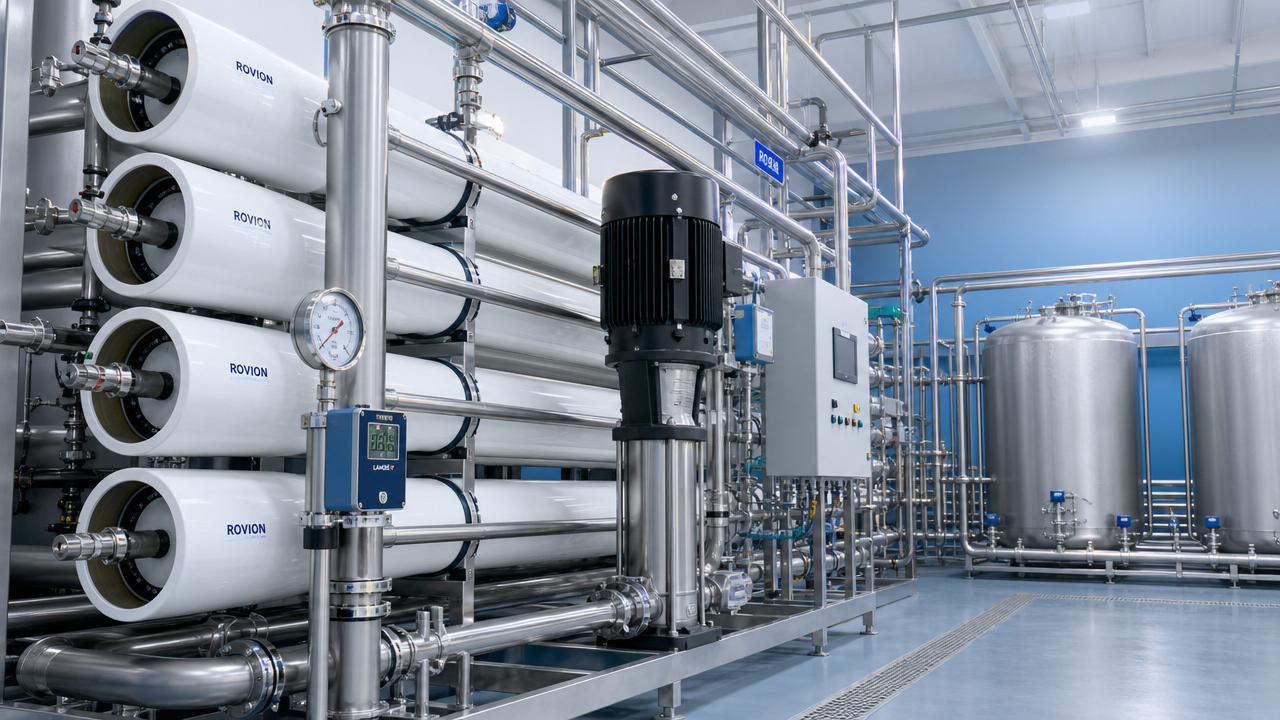
For after-sales maintenance teams, knowing when to replace ro membrane elements is essential to keep water treatment systems stable, compliant, and cost-efficient. In demanding industrial environments—where ultrapure water may support thermal processing, precision cleaning, cooling circuits, or high-spec manufacturing—delayed replacement can lead to lower permeate quality, rising pressure, higher energy use, and unplanned downtime. This guide explains the practical signs, performance indicators, and service conditions that help determine the right replacement timing before membrane failure affects production reliability.
What Replacement Timing Means for Industrial Maintenance Teams
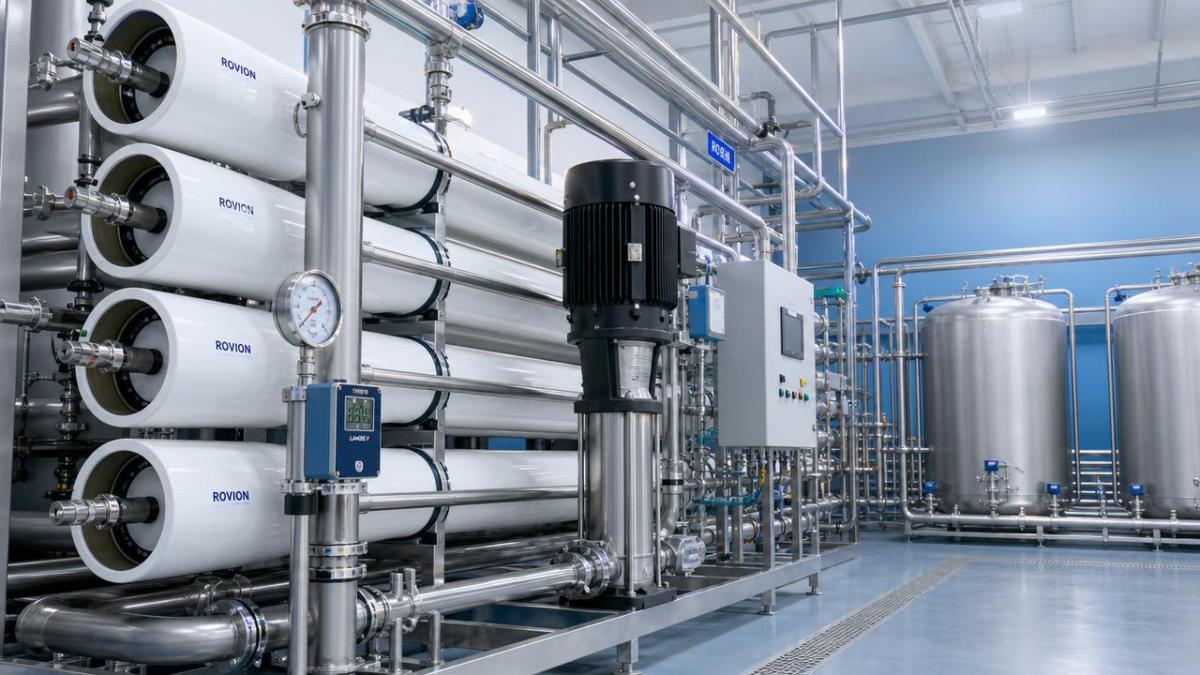
Replacing ro membrane elements is not simply a calendar-based task. It is a controlled maintenance decision based on water quality, pressure behavior, recovery rate, and operating risk.
In industrial plants, reverse osmosis performance often connects directly with downstream process stability. Semiconductor cleaning, battery material preparation, vacuum furnace cooling, and plasma equipment utilities may all depend on predictable permeate quality.
- If replacement is too early, maintenance budgets rise and usable membrane life is wasted.
- If replacement is too late, product quality, equipment uptime, and compliance records may be affected.
- If the root cause is misunderstood, new ro membrane elements may fail quickly under the same operating conditions.
G-EBT approaches this decision through technical benchmarking. The same discipline used for laser processing, vacuum heat treatment, electron beam equipment, and plasma systems also applies to utility water reliability.
Key Signs That ro membrane elements Should Be Replaced
The strongest replacement signals appear when several symptoms occur together. A single abnormal value may indicate fouling, scaling, instrumentation error, or poor pretreatment rather than end-of-life.
After-sales technicians should compare current readings with normalized baseline data. Baseline data should be recorded after commissioning, after chemical cleaning, and after any major feedwater change.
The table below summarizes practical field indicators for deciding whether ro membrane elements need cleaning, investigation, or replacement.
A reliable decision rarely depends on one daily reading. Trending gives maintenance teams a stronger basis for defending budget requests and preventing avoidable shutdowns.
Performance Thresholds: When Cleaning Is No Longer Enough
Most ro membrane elements can be cleaned several times during their service life. However, cleaning is only valuable when performance loss is reversible and the membrane structure remains intact.
Maintenance teams should normalize data for temperature, pressure, feed salinity, and recovery. Without normalization, seasonal water changes may look like membrane failure.
Practical threshold checks
- A persistent permeate quality decline after chemical cleaning suggests irreversible rejection loss.
- A major drop in normalized flow after cleaning indicates severe scaling, compaction, or embedded fouling.
- A rapid pressure increase after short operation often points to pretreatment failure rather than normal aging.
- Repeated alarms in downstream polishing, EDI, or mixed bed systems may indicate that ro membrane elements are no longer protecting final water quality.
For high-spec manufacturing utilities, the tolerance window is smaller. Waiting until complete failure may be unacceptable when water quality affects thermal stability, surface cleanliness, or analytical repeatability.
Application Scenarios Where Replacement Should Be More Conservative
Replacement timing depends on process criticality. A general cooling loop may tolerate gradual efficiency loss, while precision cleaning or battery material processing may require earlier intervention.
The following comparison helps after-sales maintenance personnel match ro membrane elements replacement strategy with industrial risk level.
In G-EBT benchmarking work, utility systems are assessed as part of the production environment, not as isolated auxiliaries. This helps maintenance teams link membrane decisions to manufacturing risk.
Common Causes of Premature Failure in ro membrane elements
If ro membrane elements fail much earlier than expected, replacing them without root-cause analysis is risky. The new set may repeat the same failure pattern.
Root causes maintenance teams should verify
- Oxidant exposure from chlorine, ozone, or incompatible cleaning chemistry can damage polyamide membranes and reduce salt rejection.
- Insufficient pretreatment allows suspended solids, colloids, iron, manganese, or microbiological growth to load the first stage rapidly.
- High recovery operation without proper antiscalant control can accelerate calcium carbonate, sulfate, or silica scaling.
- Incorrect installation may cause brine seal damage, element telescoping, O-ring leakage, or bypass flow.
- Frequent start-stop operation can create hydraulic shock and unstable concentration polarization.
Field records should include feedwater analysis, SDI, temperature, pH, pressure, recovery, cleaning logs, and cartridge filter change frequency. These details clarify whether replacement is necessary or preventable.
How to Decide Between Cleaning, Partial Replacement, and Full Replacement
Budget pressure is common in after-sales maintenance. The right approach balances spare part cost, downtime exposure, and downstream process risk.
Use the comparison below when deciding how to restore system performance without over-purchasing ro membrane elements.
Partial replacement is attractive, but it should be based on vessel mapping and permeate probing. Random replacement may hide the real failure location.
Replacement Workflow for After-Sales Service Teams
A disciplined workflow reduces rework and helps prove that maintenance actions were technically justified. It also supports communication with procurement, production, and quality departments.
Recommended service sequence
- Confirm baseline data and normalize current performance before declaring ro membrane elements end-of-life.
- Inspect pretreatment, cartridge filters, chemical dosing, and feedwater changes to prevent repeated failure.
- Decide whether cleaning, selective replacement, or full replacement is technically and economically justified.
- Verify model compatibility, element quantity, pressure vessel configuration, and recovery design before ordering.
- After installation, flush, stabilize, record start-up data, and update maintenance intervals.
For facilities audited under ISO-style quality systems, the replacement record should include date, operator, element position, lot traceability where available, cleaning history, and acceptance readings.
Procurement Checks Before Ordering ro membrane elements
Maintenance staff often receive urgent replacement requests, but procurement mistakes can delay recovery. Element size alone is not enough to confirm suitability.
Before purchasing ro membrane elements, confirm operating limits, feedwater source, vessel design, and downstream quality targets with the technical team.
- Check element diameter, length, membrane type, flow rating, salt rejection, and maximum operating pressure.
- Confirm compatibility with brackish water, seawater, high-silica feed, low-fouling operation, or ultrapure water pretreatment.
- Review chemical cleaning compatibility, storage conditions, and preservation requirements during delayed installation.
- Align delivery timing with planned shutdown windows, flushing time, and production validation requirements.
A technically correct purchase reduces emergency freight, repeated downtime, and disputes between maintenance and purchasing departments.
FAQ: Practical Questions About ro membrane elements Replacement
How long do ro membrane elements usually last?
Many industrial elements operate for several years, but service life depends on pretreatment, feedwater stability, cleaning quality, recovery rate, and chemical exposure. Time alone should not drive replacement.
Can poor permeate quality always be solved by replacing membranes?
No. High conductivity may also come from damaged O-rings, leaking interconnectors, valve bypass, instrument drift, or mixed permeate contamination. Confirm the cause before ordering ro membrane elements.
Should all elements be replaced at the same time?
Full replacement is preferred when decline is system-wide or qualification rules require consistent performance. Partial replacement is acceptable when diagnostics clearly identify isolated failure.
What data should be provided when requesting technical support?
Provide feed and permeate conductivity, pressure readings, temperature, recovery, flow, SDI, pH, cleaning history, element model, system layout, and recent changes in feedwater or chemicals.
Why Choose G-EBT for Replacement Assessment and Technical Benchmarking
G-EBT helps industrial maintenance and procurement teams evaluate ro membrane elements within the broader operating environment, including thermal processing, precision manufacturing, vacuum systems, and plasma-related utilities.
Our value lies in structured technical comparison, not generic product promotion. We support decision-makers with parameter confirmation, application matching, failure analysis, and benchmark-based replacement recommendations.
- Consult us to confirm whether replacement, cleaning, or partial intervention is the most defensible option.
- Request support for model selection, operating parameter review, delivery planning, and compliance documentation needs.
- Discuss customized evaluation for systems serving cooling circuits, precision cleaning, ultrapure water pretreatment, or high-spec manufacturing lines.
If your team is seeing rising conductivity, increasing pressure, or repeated cleaning failure, contact G-EBT for a focused technical review of ro membrane elements replacement timing, selection criteria, and implementation risk.
Technical Specifications
Expert Insights

Chief Security Architect
Dr. Thorne specializes in the intersection of structural engineering and digital resilience. He has advised three G7 governments on industrial infrastructure security.
Related Analysis
- Sep 01, 2026How to Evaluate an Industrial Valves Distributor for Reliable Process PerformanceAuthor :Lina Cloud
- Aug 31, 2026How to Size Spring-Loaded Safety Relief Valves for Process Overpressure ScenariosAuthor :Dr. Elena Carbon
- Aug 30, 2026Laser PPE Requirements: Selecting Eyewear and Controls by Laser ClassAuthor :Dr. Aris Nano
Recommended News
- How to Evaluate an Industrial Valves Distributor for Reliable Process PerformanceAuthor :Lina Cloud

- How to Size Spring-Loaded Safety Relief Valves for Process Overpressure ScenariosAuthor :Dr. Elena Carbon

- Laser PPE Requirements: Selecting Eyewear and Controls by Laser ClassAuthor :Dr. Aris Nano

- Selecting High-Pressure Pump Shaft Seals for Abrasive, High-Temperature ServiceAuthor :Dr. Elena Carbon