Wholesale welding helmets vary more than price suggests
Author
Date Published
Reading Time
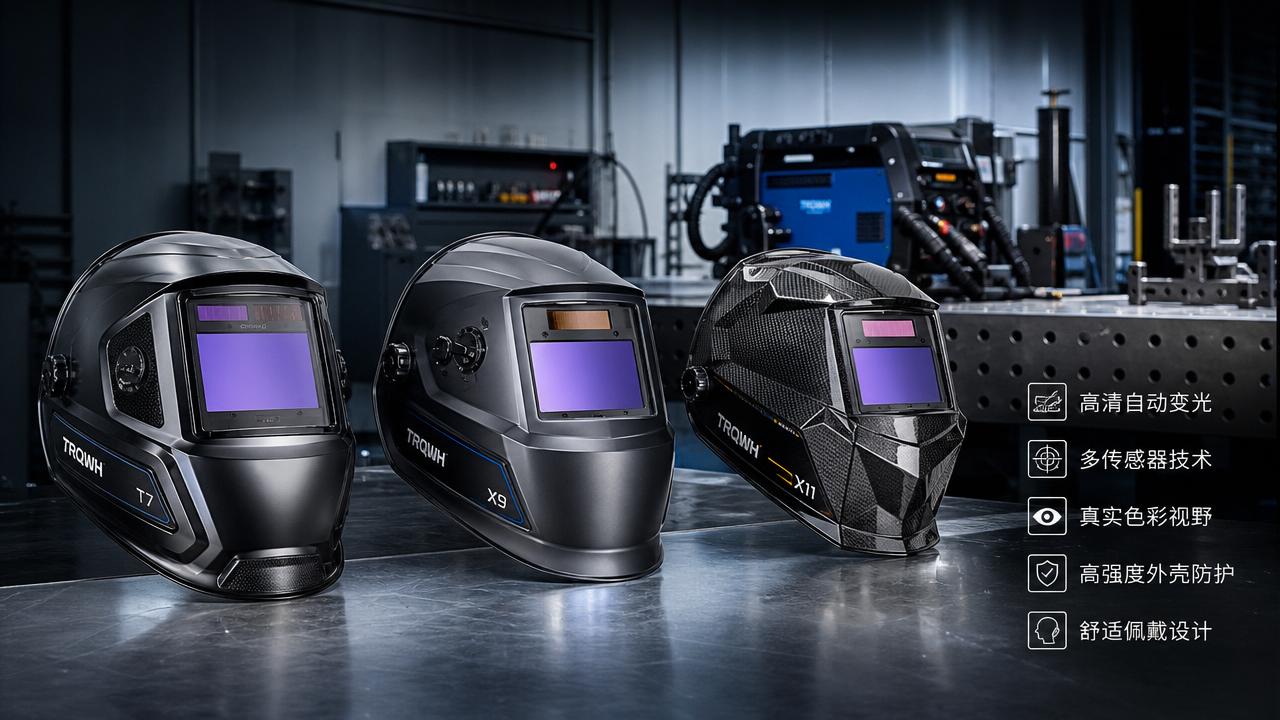
At first glance, wholesale welding helmets may seem interchangeable except for price, but procurement teams know the real differences run far deeper. Lens technology, arc-sensing speed, optical clarity, compliance standards, durability, and total lifecycle cost all shape purchasing value. For business evaluators comparing suppliers, understanding these hidden variables is essential to selecting helmets that protect workers, support productivity, and align with industrial performance requirements.
Why do wholesale welding helmets vary so much beyond unit price?
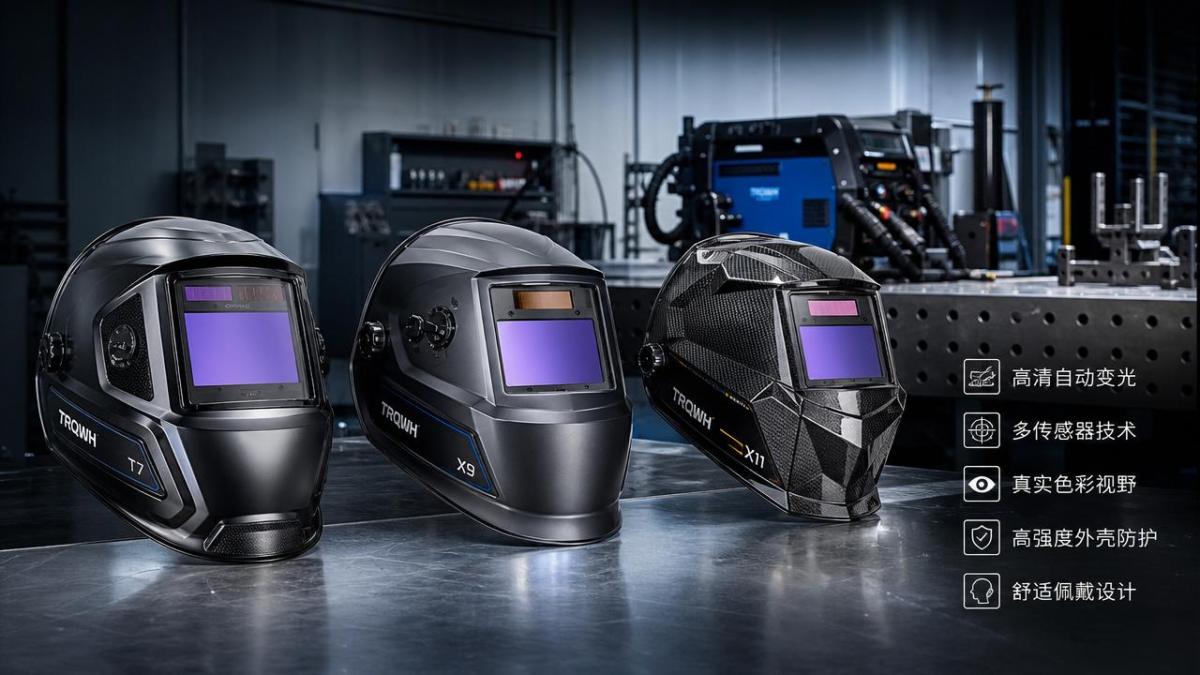
For business evaluators, the biggest mistake is treating wholesale welding helmets as a commodity line item. In industrial purchasing, price only captures acquisition cost. It does not reveal optical performance, operator fatigue, maintenance burden, or compliance risk.
A low-cost helmet may look acceptable in a distributor catalog, yet fail under repeated exposure to high-amperage welding, variable ambient light, or fast production cycles. That gap matters in fabrication lines where downtime, safety incidents, and rework cost more than the helmet itself.
G-EBT approaches specialized welding and metal joining from a benchmarking perspective. That means evaluating protective equipment not in isolation, but in relation to process stability, metallurgical quality control, applicable standards, and the operating demands of advanced manufacturing environments.
What procurement teams are really buying
- Worker protection against arc radiation, spatter, and impact hazards across different welding methods.
- Process continuity, especially where high throughput leaves little room for operator discomfort or poor visibility.
- Compliance confidence for internal audits, customer qualification, and safety documentation.
- Predictable lifecycle cost, including replacement lenses, headgear wear, battery consumption, and defect-related losses.
When wholesale welding helmets are assessed in this broader way, specification differences become commercial differences. That is why two visually similar helmets can produce very different operational outcomes.
Which technical differences matter most in wholesale welding helmets?
The technical gap between helmet options usually appears in six areas: auto-darkening response, optical clarity, shade range, arc sensor performance, ergonomic design, and durability. These are the factors most likely to affect user acceptance and welding consistency.
The table below helps business evaluators compare common specification points in wholesale welding helmets and connect them to real purchasing consequences.
For procurement decisions, technical performance should be linked to process conditions. A helmet that works in light fabrication may underperform in shipbuilding, heavy structural welding, robotic cell support, or maintenance operations with changing orientations.
How these differences show up on the shop floor
- Poor optical clarity increases welder strain, especially during extended TIG or precision MIG tasks.
- Weak sensors may misread low-amperage arcs or blocked sight lines in pipe and corner welds.
- Fragile headgear often becomes the first replacement point, creating hidden maintenance costs.
- Limited adjustment settings reduce fleet flexibility when one site handles varied welding processes.
How should business evaluators compare suppliers of wholesale welding helmets?
Supplier comparison should move beyond catalog images and quoted discounts. The better question is whether the supplier can support stable industrial use, transparent technical documentation, and repeatable delivery quality.
The following comparison framework is useful when reviewing wholesale welding helmets for multi-site procurement, contractor programs, or plant-level standardization.
This is where a technical benchmarking perspective helps. G-EBT evaluates industrial products against process needs, standards language, and operational risk. For procurement teams, that translates into more disciplined shortlisting and fewer surprises after deployment.
A practical shortlist method
- Define the welding processes involved, such as MIG, TIG, stick, flux-cored, or plasma-related tasks.
- Separate mandatory requirements from preferred features, especially for optical class and standards documentation.
- Request sample evaluation under real plant lighting and operator positions, not only desk review.
- Compare replacement parts policy and expected support during the equipment lifecycle.
Which application scenarios need different helmet priorities?
Not every production setting needs the same helmet profile. Wholesale welding helmets should be selected according to arc characteristics, working posture, exposure duration, and quality sensitivity of the welded product.
The next table maps common industrial scenarios to practical specification priorities, helping evaluators avoid overbuying in one area while underprotecting in another.
This scenario-based selection model is especially valuable in diversified industrial groups. One central procurement standard may need subcategories rather than a single universal helmet, particularly when plants span fabrication, repair, and precision joining operations.
What standards and compliance points should buyers verify?
Compliance should never be assumed from product appearance or generic claims. When sourcing wholesale welding helmets, buyers should verify the standards language used by the supplier, the scope of the claim, and whether documentation aligns with the intended market.
G-EBT regularly works within environments shaped by ISO, AWS, and DIN references. While these standards often govern broader process and quality systems, the same discipline should guide personal protective equipment reviews.
Key compliance checkpoints
- Confirm whether the helmet documentation addresses eye and face protection requirements relevant to the destination market.
- Check that auto-darkening performance claims are supported by recognized test references rather than marketing-only language.
- Review labeling consistency between quotations, samples, packaging, and supplied documents.
- Ask whether replacement parts maintain the same compliance position as the original assembly.
For business evaluators, compliance is not just a safety topic. It also influences vendor approval, customer confidence, contract defensibility, and internal EHS coordination.
How should total cost be assessed instead of purchase price alone?
The most reliable cost model for wholesale welding helmets includes acquisition cost, consumables, service life, replacement frequency, and productivity implications. A lower initial price may become more expensive if headgear fails early or lens quality reduces work speed.
Procurement teams should also include soft costs. Examples include operator complaints, retraining when models change, unplanned local purchases during shortages, and quality losses from poor visual performance.
Common hidden cost drivers
- Frequent cover lens replacement due to poor scratch resistance or weak logistics support.
- Higher rejection or rework in visually demanding welding applications.
- Operator substitution or inconsistent PPE use because the helmet is uncomfortable over long shifts.
- Inventory complexity caused by too many poorly standardized helmet variants.
A disciplined sourcing strategy usually favors the lowest justified lifecycle cost, not the lowest invoice line. That distinction is central when wholesale welding helmets are deployed across high-output industrial operations.
FAQ: what do buyers often ask about wholesale welding helmets?
How do I evaluate wholesale welding helmets for mixed welding processes?
Start with the broadest process range used in your facilities. Confirm adjustable shade levels, sensitivity, delay settings, and reliable arc sensing in both high- and low-amperage conditions. Mixed-process environments benefit from helmets that reduce SKU count without sacrificing visibility or comfort.
Are premium lens features worth the higher cost?
In many industrial settings, yes. Better optical clarity can reduce eye strain and support more stable weld pool observation. The return is stronger in precision work, extended shifts, and operations where rework or operator fatigue carries a measurable cost.
What is the most overlooked factor in supplier selection?
Spare parts continuity is often underestimated. A helmet may be competitively priced at launch, but if cover lenses, headgear parts, or battery-related components are difficult to source later, the procurement advantage disappears quickly.
How important is sample testing before volume orders?
It is highly important. Desk comparison alone cannot reveal comfort, real visibility, or sensor behavior in awkward weld positions. Short field trials with actual users usually provide the clearest signal before plant-wide rollout.
Why work with a technical benchmarking partner before final selection?
For business evaluators, the challenge is not just finding wholesale welding helmets. It is selecting a defensible specification that balances safety, cost, usability, and operational fit. That requires more than distributor price sheets.
G-EBT brings a decision framework shaped by advanced industrial benchmarking across laser processing, electron and ion beam systems, vacuum heat treatment, specialized welding, and plasma-related manufacturing. This cross-disciplinary view helps procurement teams judge protective equipment in relation to real process demands.
Why choose us
If you are assessing wholesale welding helmets for industrial sourcing, we can support parameter confirmation, supplier comparison logic, scenario-based product selection, standards review, and lifecycle cost screening. We can also help structure evaluation criteria for sample review, delivery planning, custom configuration discussions, and quotation alignment across multiple stakeholders.
Contact us when you need a more technical basis for helmet selection, clearer trade-offs between low-cost and higher-spec options, or a procurement framework that aligns welding safety with production performance and compliance expectations.
Technical Specifications
Expert Insights

Chief Security Architect
Dr. Thorne specializes in the intersection of structural engineering and digital resilience. He has advised three G7 governments on industrial infrastructure security.
Related Analysis
- Sep 01, 2026How to Evaluate an Industrial Valves Distributor for Reliable Process PerformanceAuthor :Lina Cloud
- Aug 31, 2026How to Size Spring-Loaded Safety Relief Valves for Process Overpressure ScenariosAuthor :Dr. Elena Carbon
- Aug 30, 2026Laser PPE Requirements: Selecting Eyewear and Controls by Laser ClassAuthor :Dr. Aris Nano
Recommended News
- How to Evaluate an Industrial Valves Distributor for Reliable Process PerformanceAuthor :Lina Cloud

- How to Size Spring-Loaded Safety Relief Valves for Process Overpressure ScenariosAuthor :Dr. Elena Carbon

- Laser PPE Requirements: Selecting Eyewear and Controls by Laser ClassAuthor :Dr. Aris Nano

- Selecting High-Pressure Pump Shaft Seals for Abrasive, High-Temperature ServiceAuthor :Dr. Elena Carbon