Why cabinet design affects fire hose reel access time
Author
Date Published
Reading Time
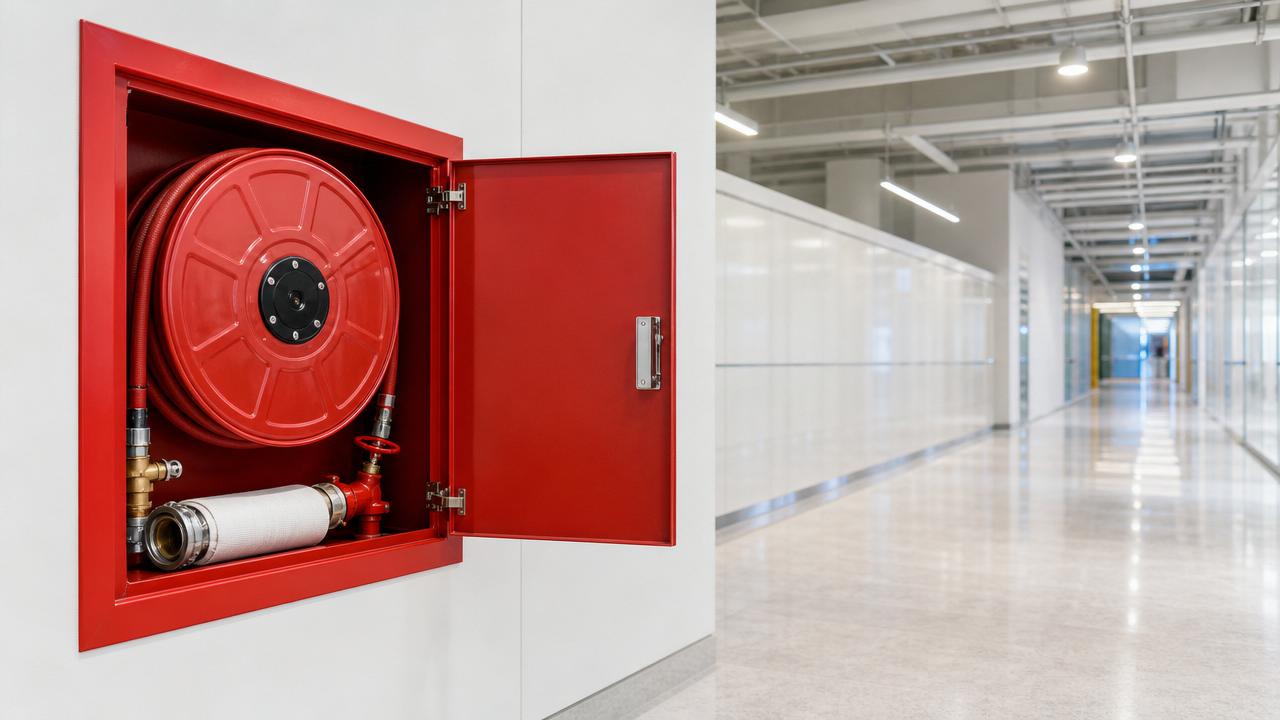
In facility planning, fire protection performance is increasingly judged by real access time, not only by equipment presence. That shift makes fire hose reel cabinets a design issue, not a simple enclosure choice.
Across mixed-use industrial, commercial, and institutional sites, cabinet geometry now affects compliance, response speed, and safe movement during stress. Small design decisions can create large delays when seconds matter.
For complex environments influenced by technical standards and operational benchmarking, cabinet planning must connect layout, visibility, ergonomics, and maintenance. That is why access performance has become a priority topic.
Access time is becoming a measurable fire protection benchmark
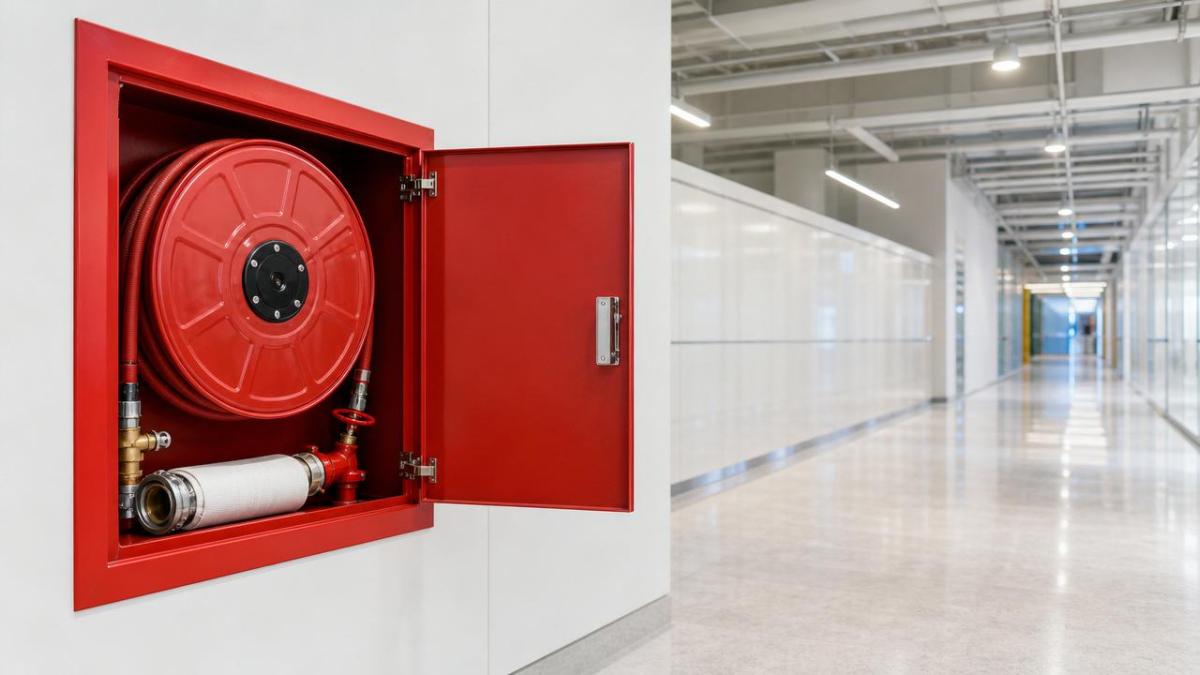
The old assumption was simple: install the reel, mark the location, and meet code. Today, emergency readiness is assessed through usability under pressure, smoke, noise, and constrained movement.
In that context, fire hose reel cabinets are no longer passive housings. They shape how fast a person identifies the unit, opens the door, releases the hose, and starts water delivery.
This change is visible across integrated facilities. Plants, laboratories, logistics hubs, and public buildings increasingly review cabinet reach, opening force, and obstruction risk during design validation.
The result is a wider industry move from compliance-by-installation to performance-by-access. That shift explains why cabinet design now receives more scrutiny during audits, retrofits, and new construction reviews.
Several design signals explain why fire hose reel cabinets matter more now
Facility layouts have changed. Corridors are busier, production cells are denser, and wall space competes with utilities, controls, and safety devices. Access paths are therefore less forgiving than before.
At the same time, risk reviews increasingly consider human factors. Under emergency conditions, even a compliant cabinet may perform poorly if the handle is hard to grip or the door swing is blocked.
Another signal is the stronger use of international benchmarking. Teams compare not only nozzle reach and pressure, but also cabinet visibility, serviceability, and deployment ease.
Key forces driving this shift
The cabinet details that most often slow emergency deployment
Access delays rarely come from one dramatic flaw. More often, several minor design issues combine. Together, they can add crucial seconds before the hose is even in hand.
1. Cabinet dimensions and internal clearance
If the cabinet is too shallow or too tight, hose movement becomes restricted. That can cause snagging, slower pull-out, or awkward body positioning during initial deployment.
Well-proportioned fire hose reel cabinets allow smooth unwinding and clearer hand access to valves and nozzles. Interior layout matters as much as the external box size.
2. Door swing direction and opening angle
A door that opens into a circulation route may be blocked by traffic, carts, or panic movement. A limited opening angle can also reduce usable space in front of the reel.
In many cases, access time improves when the door swing matches the likely approach path. This is especially important in corridors, loading areas, and narrow service zones.
3. Visibility and recognition under stress
Cabinets hidden behind architectural treatments, signage clutter, or equipment shadows are harder to identify quickly. Emergency use depends on instant recognition, not careful searching.
Fire hose reel cabinets should remain visually distinct from utility enclosures. Color contrast, clear marking, and unobstructed sightlines support faster reaction in low-clarity conditions.
4. Mounting height and reach ergonomics
A cabinet installed too high, too low, or too close to adjacent barriers forces awkward movement. That can slow door opening and delay valve operation.
Ergonomic mounting improves control during the first seconds of use. It also reduces the chance of fumbling when gloves, urgency, or poor visibility affect coordination.
The impact extends beyond safety equipment to broader facility performance
The design quality of fire hose reel cabinets influences more than emergency access. It also affects inspection results, layout flexibility, training effectiveness, and confidence in overall protection systems.
In advanced production environments, this matters because fire incidents can threaten high-value assets, temperature-sensitive materials, and tightly controlled process zones. Immediate intervention can limit downtime and contamination.
Where the effects appear most clearly
- Inspection readiness: accessible cabinets are easier to verify and maintain.
- Training outcomes: realistic drills become smoother when cabinet operation is intuitive.
- Layout resilience: good positioning reduces conflict with future equipment changes.
- Incident limitation: quicker hose deployment can reduce escalation at the source.
The strongest design priorities are now practical, visible, and testable
Current best practice favors cabinet choices that can be validated through actual movement, not only drawings. A cabinet should perform well in a walk-up test, a drill, and a maintenance check.
Priority checkpoints for fire hose reel cabinets
- Maintain a clear approach zone with no storage or movable obstructions.
- Confirm door swing does not conflict with escape routes or nearby equipment.
- Use cabinet dimensions that allow smooth hose extraction and valve access.
- Improve visibility with consistent marking and uninterrupted sightlines.
- Set mounting height for intuitive reach during stressful conditions.
- Review cabinet accessibility after every major layout modification.
A simple review framework can reduce hidden access delays
A useful next step is to assess cabinets in the same sequence a person would use them. This exposes practical delays that plan reviews may miss.
The next practical move is to test cabinet performance before the next emergency does
The most effective improvement is often a short field audit. Walk each location, simulate the approach, open the cabinet, and observe hose release in real conditions.
If fire hose reel cabinets are difficult to find, open, or use, the problem is already visible. Correcting door swing, spacing, height, or signage can deliver immediate safety value.
In modern facilities, access time is part of system quality. Reviewing fire hose reel cabinets with a performance mindset helps support faster response, stronger compliance, and more dependable protection.
Technical Specifications
Expert Insights

Chief Security Architect
Dr. Thorne specializes in the intersection of structural engineering and digital resilience. He has advised three G7 governments on industrial infrastructure security.
Related Analysis
- Sep 01, 2026How to Evaluate an Industrial Valves Distributor for Reliable Process PerformanceAuthor :Lina Cloud
- Aug 31, 2026How to Size Spring-Loaded Safety Relief Valves for Process Overpressure ScenariosAuthor :Dr. Elena Carbon
- Aug 30, 2026Laser PPE Requirements: Selecting Eyewear and Controls by Laser ClassAuthor :Dr. Aris Nano
Recommended News
- How to Evaluate an Industrial Valves Distributor for Reliable Process PerformanceAuthor :Lina Cloud

- How to Size Spring-Loaded Safety Relief Valves for Process Overpressure ScenariosAuthor :Dr. Elena Carbon

- Laser PPE Requirements: Selecting Eyewear and Controls by Laser ClassAuthor :Dr. Aris Nano

- Selecting High-Pressure Pump Shaft Seals for Abrasive, High-Temperature ServiceAuthor :Dr. Elena Carbon