Why do angular contact ball bearings fail early?
Author
Date Published
Reading Time
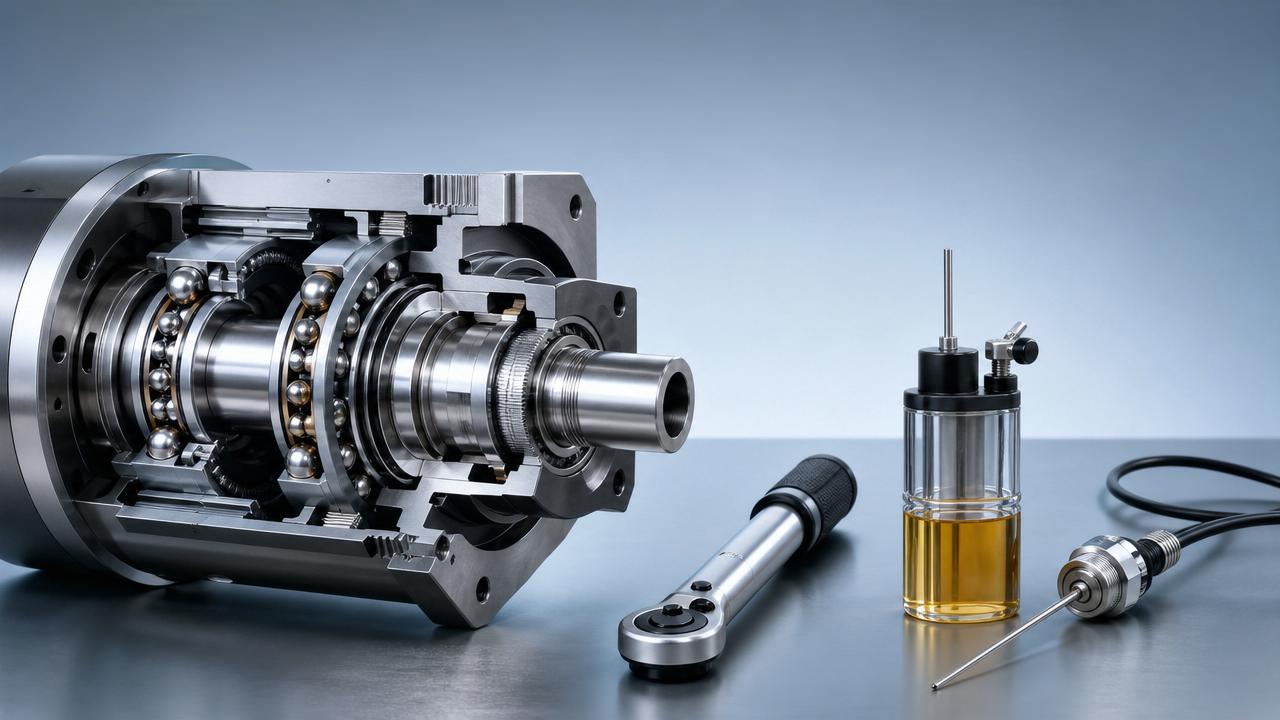
Early failure of angular contact ball bearings is rarely caused by a single defect; it often reflects a chain of issues involving mounting accuracy, preload control, lubrication, contamination, thermal expansion, and operating load.
For quality control and safety teams, understanding these failure mechanisms is essential to prevent unexpected downtime, equipment damage, and safety risks in high-precision industrial systems.
This article examines the most common root causes behind premature bearing failure and highlights practical inspection points that help improve reliability, compliance, and long-term operational stability.
Why angular contact ball bearings need checklist-based failure analysis
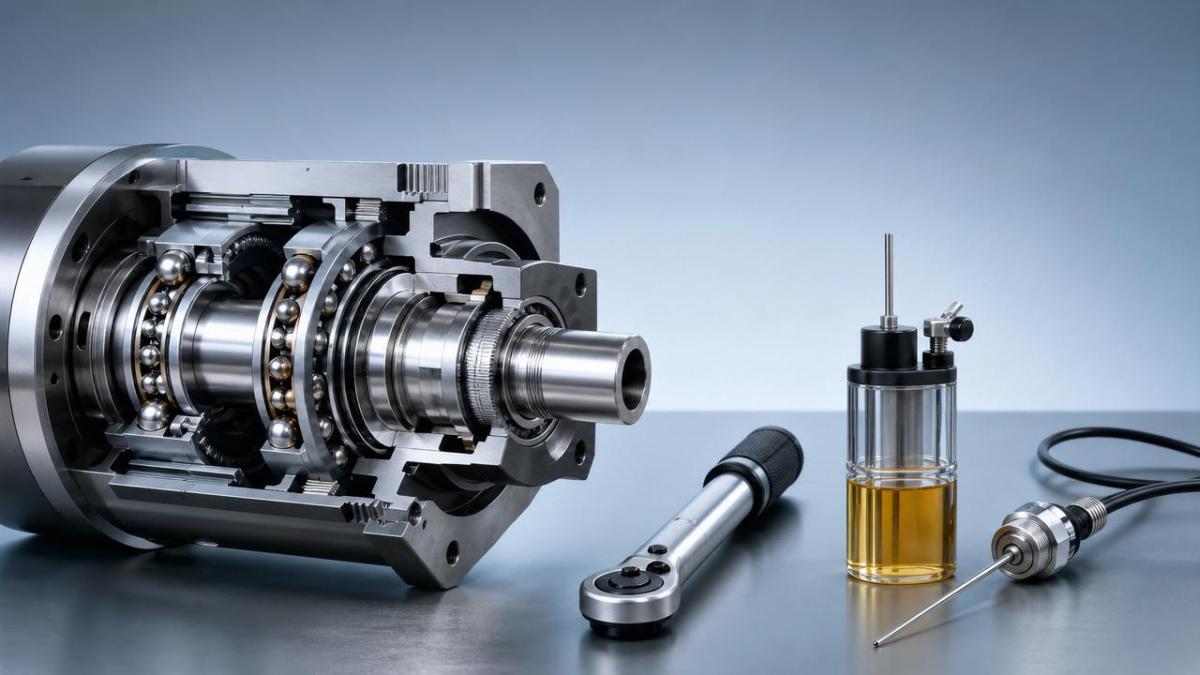
Angular contact ball bearings carry combined radial and axial loads through a defined contact angle. This geometry makes them powerful, but also sensitive.
Small errors in preload, shaft fit, lubricant selection, or thermal balance can quickly create stress concentration inside the raceway.
A checklist prevents isolated judgment. It connects installation records, vibration signatures, temperature trends, lubricant condition, and visual damage patterns.
This approach is especially valuable in spindles, pumps, compressors, robotics, laser systems, thermal-processing equipment, and precision rotating assemblies.
Core checklist for early failure of angular contact ball bearings
Use the following checklist before replacing failed angular contact ball bearings. Each item should be verified with measurable evidence, not assumption.
- Verify mounting direction, because reversed angular contact ball bearings cannot support the intended axial load path and may fail within hours.
- Measure shaft and housing fits against tolerance drawings to prevent creep, ring distortion, uneven loading, and abnormal raceway stress.
- Confirm preload value with assembly records, spacer grinding data, or torque measurement instead of relying on installer feel.
- Inspect lubricant type, fill quantity, viscosity grade, and relubrication interval to identify starvation, churning, or additive incompatibility.
- Check contamination control by reviewing seals, cleanroom handling, filtered air supply, wash procedures, and packaging conditions.
- Compare operating temperature with design limits, because thermal growth changes preload and can overload angular contact ball bearings.
- Analyze vibration spectra for ball-pass frequencies, cage instability, imbalance, misalignment, and resonance near operating speed.
- Review start-stop cycles, shock events, emergency stops, and transport vibration that may cause brinelling before normal operation begins.
- Examine electrical discharge marks, especially in motors, generators, plasma equipment, and inverter-driven high-speed machinery.
- Document raceway appearance, ball condition, cage wear, lubricant color, and debris morphology before cleaning any failed bearing.
Mounting errors that shorten bearing life
Incorrect mounting is one of the fastest ways to damage angular contact ball bearings. The damage may begin before startup.
Hammering, uneven press force, dirty tools, or force transmitted through rolling elements can create dents on the raceway.
Matched pairs also require strict orientation. Back-to-back, face-to-face, and tandem arrangements respond differently to axial load and stiffness needs.
Practical mounting checks
- Clean the shaft shoulder, housing bore, spacers, locknut, and tools before opening the bearing package.
- Apply force only to the ring being fitted, and avoid load transfer through balls and raceways.
- Record heating temperature during thermal mounting to prevent hardness loss, seal damage, or lubricant degradation.
- Verify axial clamping force after cooldown, because clearance and preload can shift after parts stabilize.
Preload problems in angular contact ball bearings
Preload gives angular contact ball bearings stiffness, positioning accuracy, and controlled running behavior. Too little preload causes skidding and vibration.
Too much preload increases friction, heat, contact stress, lubricant breakdown, and fatigue. The correct value depends on speed and load.
Thermal expansion can change preload during operation. A bearing that feels correct cold may become overloaded at working temperature.
Typical signs of preload failure
- Watch for rapid temperature rise after startup, especially when speed and external load remain unchanged.
- Investigate polished raceways with blue discoloration, because they often indicate excessive heat and preload.
- Check for ball smearing or cage wear, which may appear when preload is too low for stable rolling.
Lubrication failures and contamination risks
Lubrication separates surfaces, removes heat, and reduces wear. Poor lubrication is a common cause of early angular contact ball bearings failure.
Grease overfill can be as harmful as underfill. Excess grease increases churning, temperature, oxidation, and energy loss.
Oil-air systems require clean, dry, metered delivery. Any pressure fluctuation or nozzle misalignment can starve high-speed angular contact ball bearings.
Lubrication inspection points
- Confirm lubricant compatibility with bearing steel, cage material, seals, operating temperature, and surrounding process chemicals.
- Sample used lubricant for particles, water, oxidation, additive depletion, and abnormal metallic debris.
- Check relubrication intervals against actual speed factor, duty cycle, ambient temperature, and contamination exposure.
- Inspect seal lips, labyrinth gaps, purge pressure, and breather filters before blaming the bearing design.
Load, speed, and thermal effects across industrial systems
Angular contact ball bearings are often selected for high-speed machinery because they support axial load while maintaining rotational precision.
However, catalog ratings assume controlled conditions. Real systems experience misalignment, vibration, thermal gradients, and process-driven load variation.
Machine tool and precision spindle applications
In spindles, angular contact ball bearings face high speed, frequent acceleration, tool imbalance, and coolant contamination.
Thermal compensation, runout control, and lubricant cleanliness determine whether the spindle remains stable under cutting load.
Pumps, compressors, and process equipment
In pumps and compressors, axial thrust may change with pressure, cavitation, flow instability, or impeller wear.
When thrust exceeds assumptions, angular contact ball bearings can develop raceway fatigue, cage distress, and heat-related lubricant failure.
Energy-beam and thermal-processing equipment
Laser processing, electron beam systems, vacuum furnaces, and plasma equipment often combine heat, vacuum, vibration, and precision motion.
In these environments, angular contact ball bearings require careful material selection, outgassing control, lubricant validation, and thermal mapping.
Common overlooked causes of premature failure
Misalignment is often hidden. Even small angular error between shaft and housing can create edge loading and uneven raceway contact.
Cage instability may be mistaken for general noise. High acceleration, poor lubrication, or resonance can damage cages before fatigue appears.
Electrical erosion is frequently missed. Fluting, pitting, and dark lubricant may indicate current passing through angular contact ball bearings.
Storage damage can start long before installation. Humidity, vibration, poor packaging, and long shelf time can produce corrosion or false brinelling.
Counterfeit or mismatched bearings add severe risk. Incorrect contact angle, material quality, internal clearance, or preload class can destroy reliability.
How to investigate failed angular contact ball bearings
A reliable investigation preserves evidence. Do not wash, polish, or discard components before documentation is complete.
- Photograph the installed position, shaft, housing, seals, spacers, locknuts, lubricant condition, and nearby heat sources.
- Record operating speed, load, temperature, vibration, current leakage, lubrication schedule, and recent maintenance changes.
- Mark each ring and rolling element orientation to preserve load-zone information during disassembly.
- Compare damage patterns with ISO 15243 failure modes to separate fatigue, wear, corrosion, and electrical erosion.
- Review replacement history to identify whether failures repeat after similar operating hours or after specific interventions.
This process helps distinguish product defects from application-driven failure. It also supports corrective action instead of repeated replacement.
Practical actions to extend service life
Improving service life requires disciplined control of assembly, lubrication, operating conditions, and inspection feedback.
- Standardize assembly procedures with torque values, heating limits, cleanliness requirements, and orientation diagrams.
- Use calibrated tools for preload setting, shaft measurement, housing inspection, and vibration verification.
- Select angular contact ball bearings by contact angle, precision class, cage type, preload, speed rating, and lubrication method.
- Install temperature and vibration monitoring where downtime, safety, or process quality risks are significant.
- Control contamination through sealed handling, filtered lubrication, clean storage, and documented maintenance discipline.
- Validate design assumptions when duty cycles, speeds, loads, coolants, or process temperatures change.
Summary and next-step action guide
Angular contact ball bearings fail early when the real operating environment exceeds the assumptions used during selection and assembly.
The most common causes include incorrect mounting, unsuitable preload, lubrication failure, contamination, thermal growth, misalignment, shock loading, and electrical erosion.
The next step is to build a traceable failure checklist for each critical machine. Include fit data, preload records, lubricant evidence, and operating trends.
When the same failure repeats, treat it as a system problem. Recheck bearing selection, machine geometry, thermal behavior, and maintenance practice together.
With structured inspection and disciplined corrective action, angular contact ball bearings can deliver stable precision, longer service life, and safer industrial operation.
Technical Specifications
Expert Insights

Chief Security Architect
Dr. Thorne specializes in the intersection of structural engineering and digital resilience. He has advised three G7 governments on industrial infrastructure security.
Related Analysis
- Sep 01, 2026How to Evaluate an Industrial Valves Distributor for Reliable Process PerformanceAuthor :Lina Cloud
- Aug 31, 2026How to Size Spring-Loaded Safety Relief Valves for Process Overpressure ScenariosAuthor :Dr. Elena Carbon
- Aug 30, 2026Laser PPE Requirements: Selecting Eyewear and Controls by Laser ClassAuthor :Dr. Aris Nano
Recommended News
- How to Evaluate an Industrial Valves Distributor for Reliable Process PerformanceAuthor :Lina Cloud

- How to Size Spring-Loaded Safety Relief Valves for Process Overpressure ScenariosAuthor :Dr. Elena Carbon

- Laser PPE Requirements: Selecting Eyewear and Controls by Laser ClassAuthor :Dr. Aris Nano

- Selecting High-Pressure Pump Shaft Seals for Abrasive, High-Temperature ServiceAuthor :Dr. Elena Carbon