Industrial Microwave Processing Explained: Best Materials, Benefits, and Limits
Author
Date Published
Reading Time
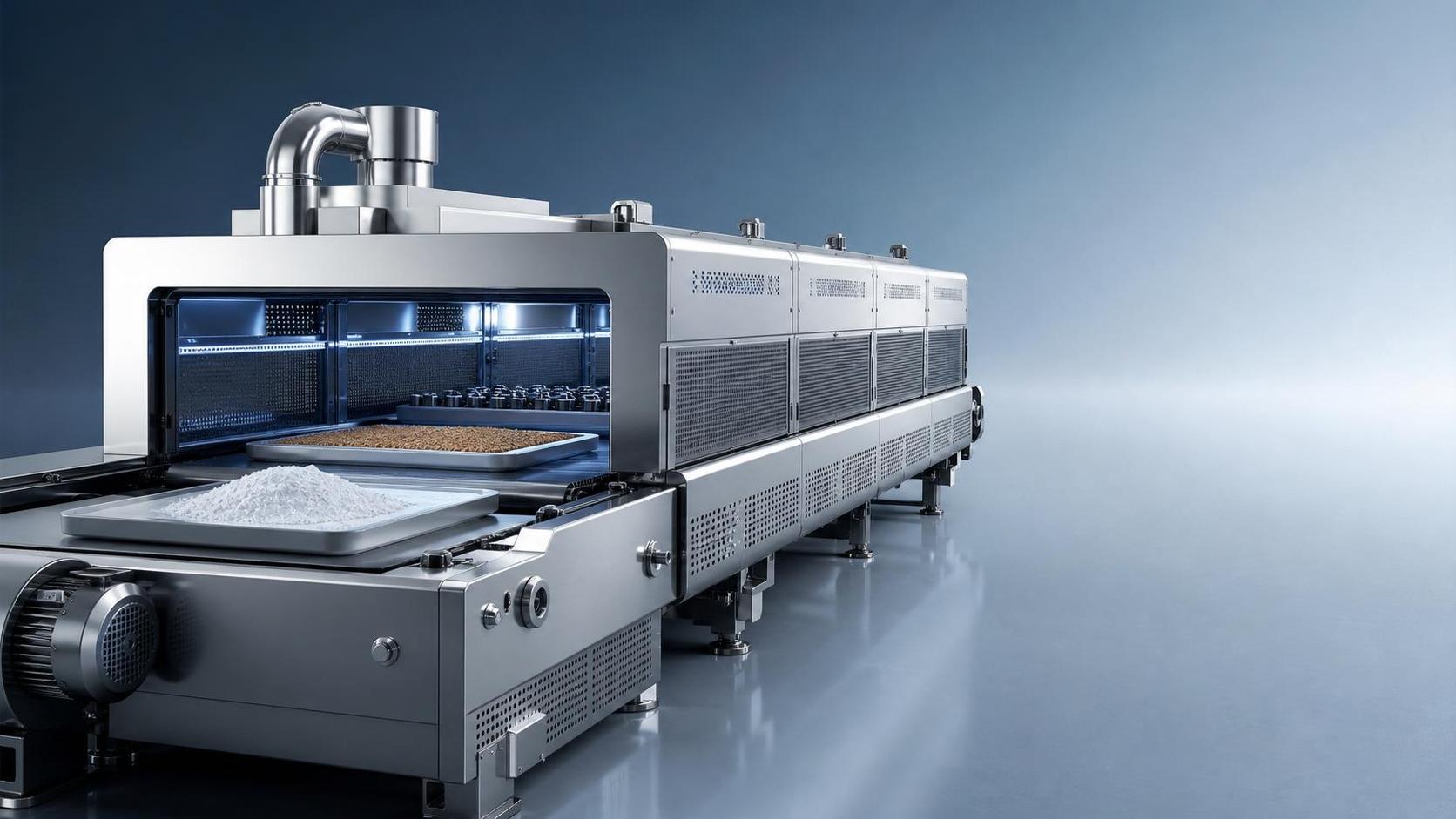
Industrial Microwave Processing has moved well beyond a niche heating method. It is now part of serious industrial discussions around faster thermal cycles, lower energy waste, and tighter process control across ceramics, chemicals, electronics, minerals, and advanced materials.
That attention is not only about speed. It reflects a broader shift toward precision thermal engineering, where heat delivery, material response, and regulatory consistency matter as much as output volume.
Within that context, Industrial Microwave Processing deserves a careful look. Its value depends heavily on material behavior, process design, and the limits of electromagnetic heating in real production environments.
Why the technology is drawing stronger industrial interest
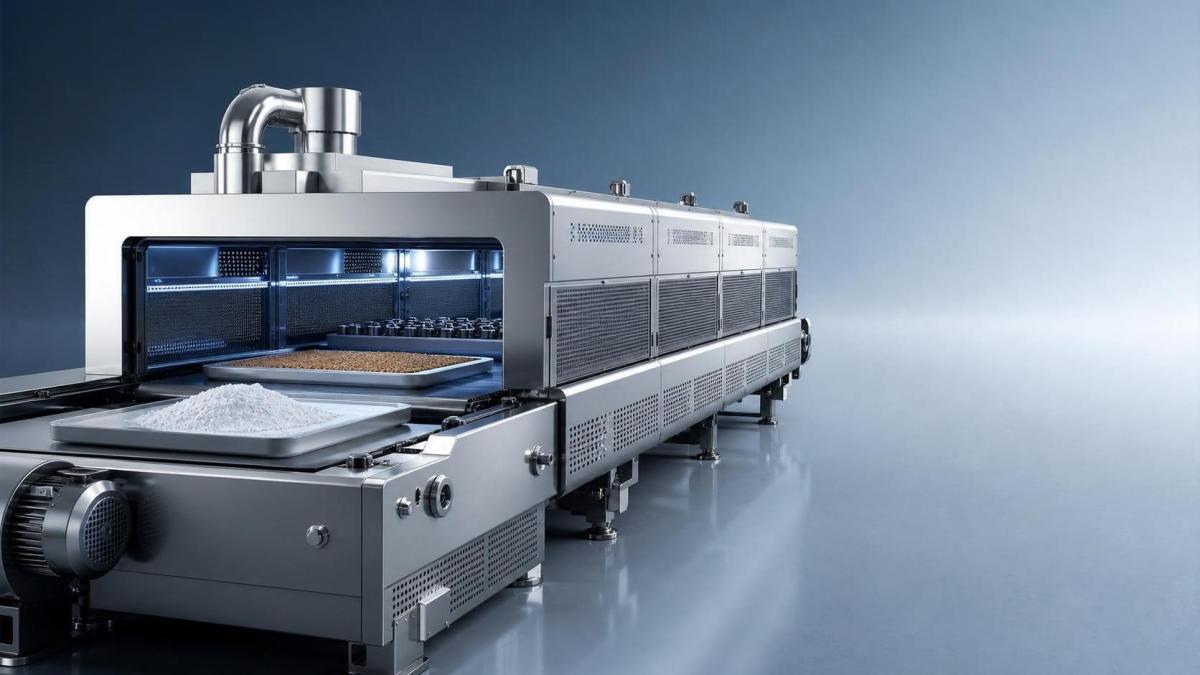
The image aligns with a central question: where microwave energy creates practical thermal advantages.
Conventional heating usually transfers energy from the surface inward. Industrial Microwave Processing works differently. It couples electromagnetic energy directly into materials that can absorb it, often producing volumetric heating rather than only external heat penetration.
In many industrial settings, that difference changes cycle time, temperature uniformity, and equipment footprint. Drying lines can shorten. Curing can become more selective. Certain synthesis and calcination steps may reach target conditions with lower apparent thermal lag.
This matters in sectors where thermal history influences microstructure, dielectric properties, bonding quality, porosity, or residual stress. It also matters where energy cost and decarbonization targets are becoming purchasing criteria rather than background concerns.
From a benchmarking perspective, this is where a platform such as G-EBT becomes relevant. Industrial Microwave Processing is not evaluated in isolation. It sits beside induction, vacuum heat treatment, plasma, lasers, and other high-control thermal methods that must be compared against process risk, throughput, and standards alignment.
What Industrial Microwave Processing really means in practice
At its core, Industrial Microwave Processing uses microwave-frequency electromagnetic fields to heat, dry, react, sinter, or cure materials. The mechanism depends on how electric dipoles, ions, and conductive phases respond inside the material.
Not every material responds the same way. Some absorb microwave energy efficiently. Some reflect it. Others absorb only after temperature rises or after a susceptor is introduced.
That is why the technology should be understood as a material-system approach, not simply a different furnace. Performance depends on dielectric loss, moisture content, geometry, density, field distribution, and the surrounding atmosphere.
In actual facilities, Industrial Microwave Processing may be configured for batch or continuous operation. It can support drying, binder removal, polymer curing, ceramic sintering, mineral treatment, waste valorization, food ingredient stabilization, and selected chemical reactions.
The strongest results usually appear where conventional conduction or convection heating is slow, uneven, or too energy intensive.
Best material candidates and where performance is strongest
Material compatibility is the first screening step. Industrial Microwave Processing performs best when the target material shows favorable dielectric behavior under operating conditions.
Materials that often respond well
- Moist or polar materials, including many slurries, powders, biomass streams, and water-containing products.
- Ceramics and ceramic precursors, especially where controlled internal heating improves densification or drying.
- Polymer systems and adhesives formulated for microwave-responsive curing or bonding steps.
- Certain catalyst beds, salts, oxides, and chemically active compounds used in synthesis or decomposition.
- Battery and electronic materials where thermal exposure must be carefully managed during drying or material preparation.
Materials that need more caution
- Highly conductive metals usually reflect microwave energy and can create arcing risks in unsuitable configurations.
- Very low-loss materials may heat poorly without susceptors or hybrid heating support.
- Large, dense, or geometrically complex parts can develop field-related nonuniformity.
- Multi-layer assemblies may respond unpredictably if each layer has different dielectric properties.
A useful rule is simple: the more the material response changes with temperature, moisture, or phase, the more pilot testing matters. Bench data should never be assumed to scale directly into production.
Benefits that justify evaluation
The appeal of Industrial Microwave Processing comes from several practical advantages, but each one depends on the process window being well matched to the material.
Faster internal heating
When microwave energy couples efficiently, heat is generated within the load. That can reduce warm-up delays and shorten total cycle time.
Lower energy waste in selected operations
Because energy is targeted more directly, less heat may be lost to surrounding structures. This is especially relevant in drying and moisture removal applications.
Better control for heat-sensitive products
Selective heating can help protect surfaces or adjacent layers when the desired reaction is internal or localized. In some systems, that reduces overheating and preserves product integrity.
Smaller process footprint
Compact equipment layouts are possible when the thermal cycle is shorter. That can influence line integration, utility planning, and retrofitting options.
These benefits explain why Industrial Microwave Processing is increasingly reviewed alongside plasma, induction, and controlled-atmosphere thermal technologies in advanced manufacturing programs.
Limits that should shape any investment decision
The strongest microwave projects are usually conservative about limitations. Industrial Microwave Processing is powerful, but it is not universally superior.
Field uniformity remains a technical challenge
Hot spots and cold spots can emerge from cavity design, load shape, and dielectric variation. Uniformity must be engineered, not assumed.
Scale-up can be misleading
A promising laboratory result may fail in production because larger loads alter field distribution, moisture migration, and residence-time stability.
Material data are often incomplete
Reliable dielectric property data across temperature ranges are not always available. Without that information, process design becomes more empirical and slower to validate.
Safety and compliance matter
Shielding, leakage control, atmosphere management, and power-system integration must meet industrial requirements. In regulated sectors, qualification can be more demanding than the heating concept itself.
This is one reason G-EBT’s cross-technology benchmarking model is useful. A process should be judged against measurable production criteria, recognized standards, and total operational risk, not against theoretical efficiency alone.
Where Industrial Microwave Processing makes the most business sense
The best candidates are usually not generic heating tasks. They are bottleneck steps where thermal response is closely tied to product quality or economics.
- Drying operations limited by slow conductive heat transfer or uneven moisture removal.
- Ceramic or powder processing routes that need shorter thermal cycles and cleaner internal heating behavior.
- Adhesive, composite, or polymer curing steps where selective heating improves throughput.
- Material synthesis or pretreatment stages where reaction kinetics benefit from direct energy coupling.
- Advanced production lines where energy benchmarking and process traceability are already formal evaluation criteria.
In contrast, routine bulk heating with low sensitivity to cycle time or internal thermal gradients may not justify the complexity of Industrial Microwave Processing.
How to assess fit before moving forward
A useful assessment starts with the process, not the equipment brochure. The first question is whether the thermal problem is really caused by slow heat transfer, poor uniformity, or excessive energy consumption.
The next step is to map the material response. That includes dielectric properties, moisture behavior, geometry changes, target temperature range, and sensitivity to local overheating.
Pilot trials should then measure more than temperature. Quality metrics, yield, microstructure, energy per unit output, maintenance demands, and shielding performance all belong in the evaluation set.
It is also worth comparing Industrial Microwave Processing with adjacent options such as induction, vacuum thermal treatment, or hybrid systems. In many cases, the right answer is not replacement but integration.
A grounded next step is to build a comparison framework around material compatibility, throughput targets, compliance requirements, and cost per qualified part or batch. That approach reveals whether Industrial Microwave Processing is a strategic fit, a niche solution, or a promising hybrid addition.
Technical Specifications
- Choosing CEE Plugs and Sockets for Generator Output: Ratings, IP Protection, and SafetyAuthor :Dr. Elena Carbon
- How to Choose Anti-Theft Display Stands for High-Value Retail ProductsAuthor :Dr. Aris Nano
- How to Specify Aerospace Precision Manufacturing Equipment for Tight-Tolerance PartsAuthor :Dr. Aris Nano
Expert Insights

Chief Security Architect
Dr. Thorne specializes in the intersection of structural engineering and digital resilience. He has advised three G7 governments on industrial infrastructure security.
Related Analysis
- Sep 22, 2026Choosing CEE Plugs and Sockets for Generator Output: Ratings, IP Protection, and SafetyAuthor :Dr. Elena Carbon
- Sep 21, 2026How to Choose Anti-Theft Display Stands for High-Value Retail ProductsAuthor :Dr. Aris Nano
- Sep 20, 2026How to Specify Aerospace Precision Manufacturing Equipment for Tight-Tolerance PartsAuthor :Dr. Aris Nano
Recommended News
- Choosing CEE Plugs and Sockets for Generator Output: Ratings, IP Protection, and SafetyAuthor :Dr. Elena Carbon

- How to Choose Anti-Theft Display Stands for High-Value Retail ProductsAuthor :Dr. Aris Nano

- How to Specify Aerospace Precision Manufacturing Equipment for Tight-Tolerance PartsAuthor :Dr. Aris Nano

- CCTV Camera Wholesale: How Distributors Can Evaluate MOQ, Warranty, and Product MixAuthor :Dr. Aris Nano