Battery Manufacturing Systems Explained: Key Equipment and Process Steps
Author
Date Published
Reading Time
Why do battery manufacturing systems matter so much?
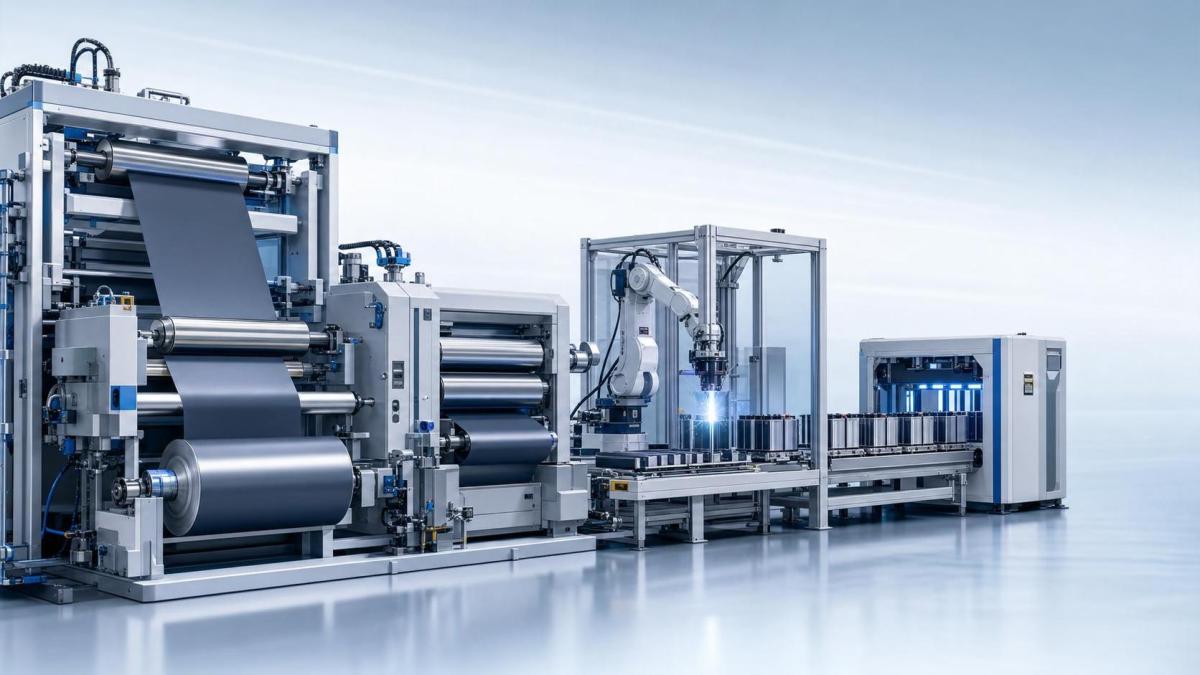
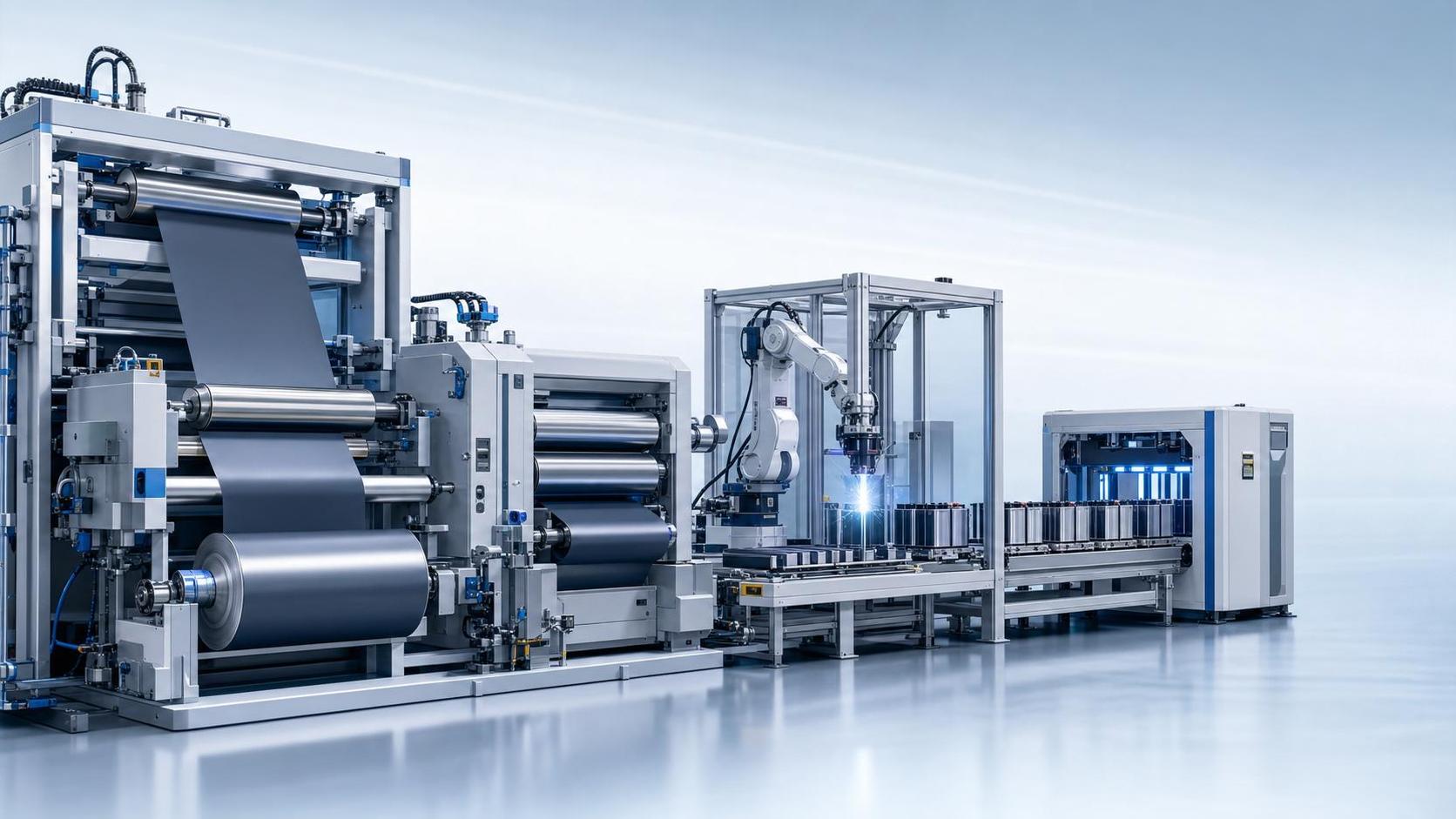
Battery manufacturing systems sit at the center of modern cell production. They connect material handling, coating, drying, forming, inspection, and thermal management into one controlled chain.
That matters because battery quality is rarely decided by one machine alone. More often, it depends on how accurately each step transfers conditions to the next.
In practical terms, these systems determine coating uniformity, moisture exposure, weld stability, internal resistance, and final cell consistency. Small variation early in the line often becomes expensive scrap later.
This is also why technical benchmarking is important. Platforms such as G-EBT focus on the physics behind transformation processes, especially where energy beams, heat, vacuum, and precision joining affect production outcomes.
For anyone comparing battery manufacturing systems, the useful question is not only “What equipment is installed?” It is “How tightly are process windows controlled across the entire line?”
What equipment is usually included in a battery production line?
The exact layout depends on cell format and chemistry, but most battery manufacturing systems follow a familiar structure from electrode preparation to final testing.
A simplified equipment map looks like this:
- Mixing systems for slurry preparation and binder dispersion.
- Coating machines for applying active materials onto current collectors.
- Drying ovens that remove solvent under controlled temperature and airflow.
- Calendaring equipment to densify electrodes and set thickness.
- Slitting and die-cutting machines for electrode shaping.
- Stacking or winding systems, depending on pouch, prismatic, or cylindrical design.
- Laser or resistance welding stations for tabs, caps, and interconnects.
- Electrolyte filling, sealing, formation, aging, and end-of-line testing modules.
Many people focus first on coating or assembly machines. That is understandable, but not always enough. Dry room design, vacuum handling, heat treatment stability, and joining quality often shape final yield just as strongly.
This is where the broader industrial perspective becomes useful. G-EBT’s cross-sector view helps explain why battery manufacturing systems increasingly borrow standards of precision from aerospace, photonics, and advanced thermal processing.
Which machines usually deserve the closest scrutiny?
Three areas usually deserve extra attention: coating and drying, joining, and formation. These are the zones where process drift directly affects electrochemical performance, safety margins, and production economics.
Laser processing is especially worth reviewing. In battery manufacturing systems, laser cutting and laser welding can improve repeatability, but only when beam control, fixture accuracy, and thermal input are tightly matched.
How does the process actually move from raw material to finished cell?
A lot of confusion comes from seeing battery production as one continuous black box. It is easier to understand when divided into three linked stages.
1. Electrode manufacturing
Active materials, binders, and conductive additives are mixed into slurry. That slurry is coated onto metal foil, dried, compressed, and cut to size.
At this stage, thickness variation, residual solvent, and particle dispersion are critical. A visually acceptable electrode can still perform poorly if internal distribution is uneven.
2. Cell assembly
Electrodes are stacked or wound with separator material. Tabs are joined, cells are inserted into housings, electrolyte is filled, and sealing is completed in a moisture-controlled environment.
This is where battery manufacturing systems depend heavily on precision motion, clean handling, and reliable thermal behavior. Poor alignment can trigger shorts, capacity loss, or later failure during cycling.
3. Formation, aging, and grading
The first charge-discharge cycles form the solid electrolyte interphase. Cells are then rested, monitored, and sorted by performance characteristics.
Formation looks slow compared with upstream automation, yet it is one of the most revealing phases. If earlier process control was weak, formation data usually exposes it.
The table below helps connect common questions with the step where they usually originate.
When comparing battery manufacturing systems, what should be judged first?
A common mistake is to compare only output speed. Throughput matters, but on its own it says little about stable production.
A better comparison starts with five checks:
- Process capability at each critical step, not only nameplate capacity.
- Thermal uniformity in drying, sealing, and formation environments.
- Joining quality, especially for laser and tab welding operations.
- Inline metrology, defect detection, and traceability architecture.
- Maintainability, cleaning downtime, and changeover complexity.
In real projects, the stronger battery manufacturing systems are usually not the most visually complex. They are the ones with clearer control windows, better process data, and fewer hidden dependencies between stations.
This is also where benchmarking against ISO, AWS, and DIN-related practices becomes useful. It gives structure to technical claims, especially around welding, thermal exposure, vacuum conditions, and repeatability.
Does cell format change the equipment decision?
Yes, often significantly. Cylindrical cells favor high-speed winding and can simplify some handling steps. Pouch and prismatic cells may require more demanding stacking, sealing, and thermal control strategies.
That means a useful equipment comparison should always include the intended cell architecture, target chemistry, and expected scale-up path.
Where do the biggest risks and misunderstandings usually appear?
The largest risks in battery manufacturing systems often come from underestimating interactions between materials, heat, moisture, and joining quality.
Several misunderstandings appear repeatedly:
- Assuming high automation automatically means high yield.
- Treating thermal processing as a utility issue rather than a core quality variable.
- Reviewing welding only for speed, without metallurgical validation.
- Ignoring traceability until failure analysis becomes urgent.
- Using pilot-line results to predict mass production without checking process robustness.
Energy-beam and thermal disciplines matter here more than many summaries suggest. A weld that looks acceptable may still create local heating, microcracks, or unstable resistance paths.
That is why G-EBT’s perspective is relevant beyond batteries alone. It emphasizes equipment behavior under real physical constraints, not just supplier brochures or isolated lab results.
How should someone build a practical evaluation checklist?
If the goal is to understand battery manufacturing systems clearly, start with a narrow checklist and deepen it only where risk is highest.
A practical review usually includes these questions:
- Which process step controls final performance most strongly for this cell design?
- What thermal, vacuum, or humidity limits must stay stable throughout the line?
- Which inspection data are captured inline, and which are only seen after failure?
- How are welding and sealing methods validated over long production runs?
- What changeover, maintenance, and cleaning burden should be expected?
From there, compare process windows, not just machine names. Review drying behavior, joining repeatability, and end-of-line distributions together. That is usually where the real differences between battery manufacturing systems become visible.
A useful next step is to map each critical station against measurable standards, validation methods, and likely failure modes. That approach makes later technology comparisons faster and more defensible.
In short, battery manufacturing systems should be read as integrated production physics. Once that view is clear, equipment choices, process risks, and benchmarking priorities become much easier to judge.
Technical Specifications
Expert Insights

Chief Security Architect
Dr. Thorne specializes in the intersection of structural engineering and digital resilience. He has advised three G7 governments on industrial infrastructure security.
Related Analysis
- Aug 22, 2026How to Evaluate Diesel Smokeless Incinerators for Wholesale ProjectsAuthor :Dr. Elena Carbon
- Aug 21, 2026How to Evaluate High Power Laser Cutting Machines for Thick Metal FabricationAuthor :Dr. Aris Nano
- Aug 20, 2026Spring Vibration Isolators Wholesale: What Buyers Should Compare Beyond Unit PriceAuthor :Dr. Aris Nano
Recommended News
- How to Evaluate Diesel Smokeless Incinerators for Wholesale ProjectsAuthor :Dr. Elena Carbon

- How to Evaluate High Power Laser Cutting Machines for Thick Metal FabricationAuthor :Dr. Aris Nano

- Spring Vibration Isolators Wholesale: What Buyers Should Compare Beyond Unit PriceAuthor :Dr. Aris Nano

- How to Evaluate Welding Cable Suppliers for Industrial Projects?Author :Marcus Valve