What defines reliable large-scale plasma processing solutions?
Author
Date Published
Reading Time
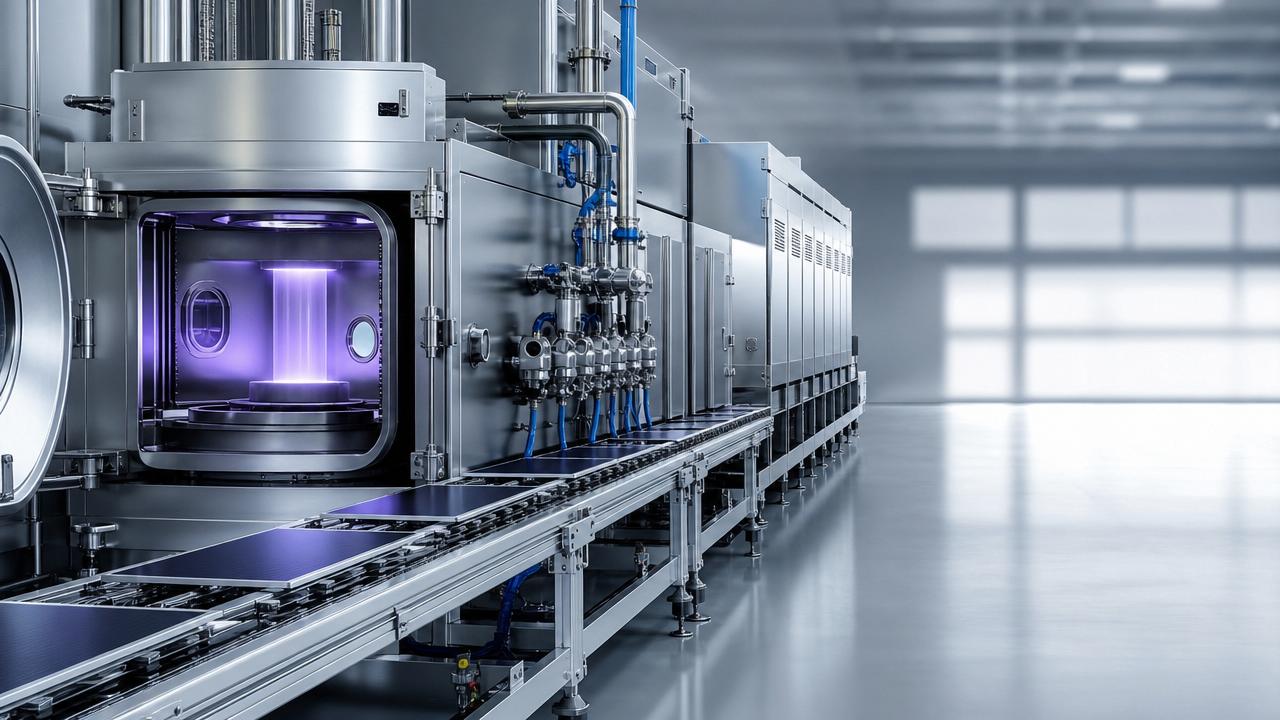
Reliable large-scale plasma processing solutions are defined by more than throughput alone. They rely on repeatable plasma behavior, uniform treatment results, safety discipline, and stable operation across long production cycles.
In advanced manufacturing, plasma systems influence cleaning quality, surface activation, coating adhesion, etching precision, and materials consistency. When production scales up, small process deviations can create costly downstream failures.
That is why technical evaluation of large-scale plasma processing solutions must focus on measurable engineering performance. A reliable platform supports process control, maintenance predictability, compliance readiness, and future capacity expansion.
Core definition of reliable large-scale plasma processing solutions
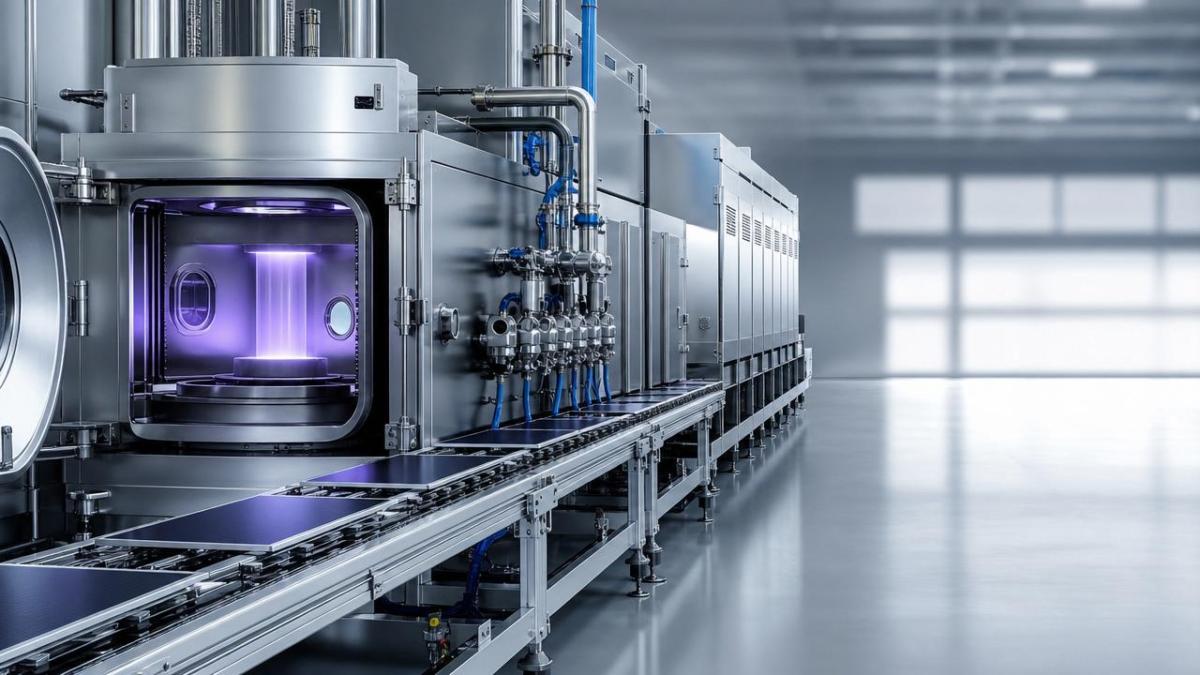
At the most practical level, reliable large-scale plasma processing solutions deliver consistent results over large work areas, high batch volumes, or continuous production environments. Reliability means both technical stability and operational dependability.
The term includes atmospheric plasma, low-pressure plasma, microwave plasma, and related industrial plasma platforms. The right configuration depends on substrate sensitivity, geometry complexity, contamination type, and required treatment depth.
A robust system should maintain tight control of power density, gas flow, chamber pressure, residence time, and thermal load. These variables determine whether the plasma process remains uniform as production scales.
For this reason, large-scale plasma processing solutions are not judged by nameplate power alone. They are defined by verified process windows, equipment uptime, reproducibility, and integration quality with surrounding manufacturing steps.
Key attributes that define reliability
- Uniform plasma distribution across the treatment zone
- Stable power delivery during long operating periods
- Controlled gas chemistry and repeatable pressure conditions
- Documented cycle repeatability across batches and shifts
- Predictable maintenance intervals and spare parts support
- Compliance with electrical, vacuum, emissions, and safety standards
Industry context and current evaluation priorities
Demand for large-scale plasma processing solutions is rising across electronics, automotive, energy, aerospace, medical components, packaging, and engineered materials. Production lines now require faster cycles without sacrificing surface quality.
This shift has changed how systems are compared. Evaluation now centers on process capability under real factory conditions, not only laboratory performance or short-run demonstrations.
In many sectors, plasma treatment is now a gateway step. If it fails, coating adhesion drops, contamination remains, or thermal and electrical interfaces become unstable. Reliability therefore affects the entire production chain.
Engineering factors behind dependable performance
The best large-scale plasma processing solutions combine sound plasma physics with industrial-grade equipment design. Reliability starts with source architecture, chamber construction, thermal management, and control system responsiveness.
1. Plasma source stability
Stable ignition and controlled discharge behavior are essential. Power fluctuations can change ion density, radical formation, and surface interaction, leading to inconsistent treatment quality.
2. Uniformity across scale
Large chambers, wide webs, and complex part fixtures create nonuniform treatment risks. Reliable large-scale plasma processing solutions use field balancing, gas distribution design, and validated fixture geometry.
3. Closed-loop process control
Sensors for pressure, flow, temperature, power, and sometimes optical emission help maintain stable operating windows. Closed-loop control reduces drift during long runs and enables reproducible recipes.
4. Material compatibility
Different polymers, metals, ceramics, composites, and battery materials respond differently to plasma exposure. A reliable system must achieve the target effect without over-etching, overheating, or altering critical dimensions.
5. Serviceability and maintainability
Component access, consumable life, diagnostic tools, and spare part availability strongly influence operational reliability. A technically advanced system loses value if downtime recovery is slow or unpredictable.
Business value of reliable large-scale plasma processing solutions
Reliable large-scale plasma processing solutions create value far beyond the plasma station itself. They stabilize product quality, support qualification programs, and reduce variation that can compromise high-value assemblies.
This is especially important where surfaces control bonding, sealing, printing, coating, sterilization readiness, or electrochemical performance. In such cases, plasma reliability directly affects yield and field performance.
- Lower scrap rates through more repeatable surface treatment
- Reduced rework caused by poor adhesion or incomplete cleaning
- Faster process validation with traceable operating data
- Better total cost control through planned maintenance behavior
- Improved line scalability for future product or volume expansion
In benchmarking terms, dependable plasma capability strengthens confidence in the full manufacturing route. It becomes easier to align cleaning, joining, coating, heat treatment, and inspection into a stable production architecture.
Typical application categories and selection logic
Selection of large-scale plasma processing solutions should match application demands, substrate behavior, line speed, and contamination profile. Different industries prioritize different treatment objectives.
Across these categories, reliable large-scale plasma processing solutions must prove that they can maintain the same treatment effect from the first part to the last part of the run.
Practical evaluation and implementation guidance
A structured review helps separate promising equipment from truly reliable large-scale plasma processing solutions. The most useful evaluations combine technical trials, documentation review, and production-oriented acceptance criteria.
Recommended checkpoints
- Confirm the target surface outcome with measurable indicators such as dyne level, adhesion strength, contact angle, or contamination reduction.
- Review uniformity data across the full treatment area, not only centerline or sample-point results.
- Assess recipe repeatability over multiple runs, shifts, and maintenance intervals.
- Check compatibility with upstream handling, downstream bonding, coating, or assembly steps.
- Verify support for alarms, data logging, remote diagnostics, and preventive maintenance planning.
- Confirm alignment with relevant ISO, DIN, electrical safety, and facility requirements.
It is also wise to examine how the plasma platform behaves under realistic contamination loads, seasonal utility variation, and long-cycle operation. Reliability often reveals itself outside ideal test conditions.
Final perspective and next-step focus
Ultimately, reliable large-scale plasma processing solutions are defined by controlled physics, proven engineering, and sustained production performance. The best systems deliver uniform results, transparent data, and manageable operating risk.
For technical benchmarking, the most dependable path is to compare process stability, maintenance behavior, compliance evidence, and scale-up consistency in one framework. This approach turns equipment selection into a measurable decision.
When reviewing large-scale plasma processing solutions, prioritize evidence over claims. Ask for run data, qualification records, and full-line integration details. Reliable performance is not assumed. It is demonstrated.
Technical Specifications
Expert Insights

Chief Security Architect
Dr. Thorne specializes in the intersection of structural engineering and digital resilience. He has advised three G7 governments on industrial infrastructure security.
Related Analysis
- Sep 01, 2026How to Evaluate an Industrial Valves Distributor for Reliable Process PerformanceAuthor :Lina Cloud
- Aug 31, 2026How to Size Spring-Loaded Safety Relief Valves for Process Overpressure ScenariosAuthor :Dr. Elena Carbon
- Aug 30, 2026Laser PPE Requirements: Selecting Eyewear and Controls by Laser ClassAuthor :Dr. Aris Nano
Recommended News
- How to Evaluate an Industrial Valves Distributor for Reliable Process PerformanceAuthor :Lina Cloud

- How to Size Spring-Loaded Safety Relief Valves for Process Overpressure ScenariosAuthor :Dr. Elena Carbon

- Laser PPE Requirements: Selecting Eyewear and Controls by Laser ClassAuthor :Dr. Aris Nano

- Selecting High-Pressure Pump Shaft Seals for Abrasive, High-Temperature ServiceAuthor :Dr. Elena Carbon