What Drives Environment & Ecology Cost in Manufacturing Projects?
Author
Date Published
Reading Time
What Drives Environment & Ecology Cost in Manufacturing Projects?
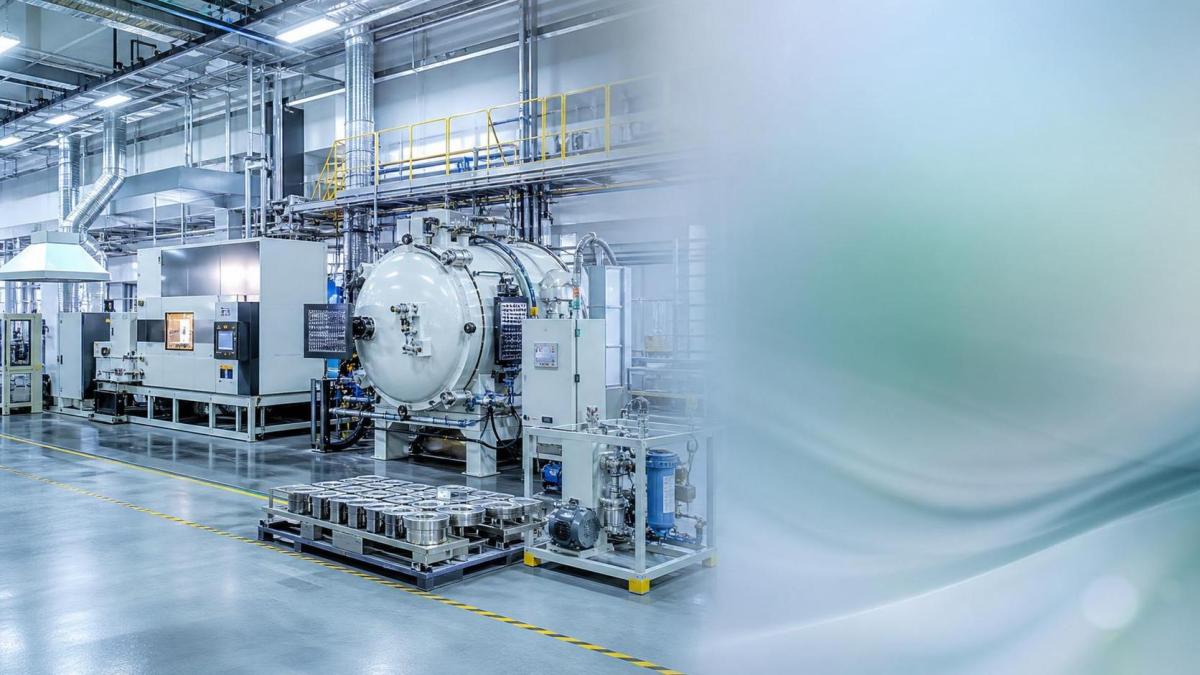
In advanced manufacturing, Environment & Ecology cost now shapes investment logic, plant design, and supplier choices.
It is no longer a side budget for permits and waste handling.
For energy-beam and thermal-processing projects, it often decides whether capacity expansion remains financially attractive.
This is especially true in laser processing, vacuum heat treatment, electron beam systems, welding lines, and plasma-based production.
The main reason is simple.
Environment & Ecology cost touches utilities, emissions, materials, compliance, reporting, and reputation at the same time.
That also means small technical decisions can create large cost differences over a project lifecycle.
From a procurement and cost perspective, the key question is not whether these costs exist.
The real question is what drives them, how fast they move, and where control is still possible.
Why Environment & Ecology cost keeps rising
The first driver is regulation.
Air emissions, wastewater, hazardous materials, and carbon reporting now face tighter scrutiny across major manufacturing regions.
Permits also take longer, and monitoring expectations are becoming more detailed.
The second driver is process intensity.
High-energy equipment concentrates heat, gas flow, vacuum demand, surface treatment chemistry, and power consumption in one production step.
That concentration improves throughput, yet it can also increase the Environment & Ecology cost per line if controls are weak.
A third driver is customer expectation.
OEMs increasingly ask suppliers for lifecycle data, energy intensity figures, and traceable environmental performance.
So Environment & Ecology cost becomes a commercial issue, not only an EHS issue.
The biggest cost drivers inside a manufacturing project
In practice, Environment & Ecology cost usually comes from six connected areas.
1. Energy consumption and thermal efficiency
Power demand is often the largest visible component.
Furnaces, lasers, induction systems, chillers, pumps, and vacuum equipment create a layered energy profile.
Poor thermal insulation, standby losses, and oversized systems raise operating cost quickly.
When electricity prices fluctuate, Environment & Ecology cost becomes harder to predict during project approval.
2. Emissions control and air treatment
Thermal and beam processes may generate fumes, particulates, VOCs, metal oxides, or process gases.
Extraction units, scrubbers, filters, and monitoring systems add both capital and recurring service cost.
If the original line design underestimates emission loads, retrofits become expensive and disruptive.
This is a common reason Environment & Ecology cost exceeds the first business case.
3. Water use and wastewater treatment
Cooling loops, rinsing stages, surface preparation, and cleaning operations consume more water than many teams expect.
The cost issue is not only intake volume.
Discharge quality, chemical residues, suspended solids, and temperature limits all affect treatment complexity.
Closed-loop reuse can reduce Environment & Ecology cost, but it requires good engineering from the start.
4. Waste classification and disposal
Spent filters, sludge, contaminated oil, solvents, abrasive dust, and rejected materials all create downstream obligations.
Once waste is classified as hazardous, transport, storage, documentation, and disposal costs rise sharply.
This part of Environment & Ecology cost is often underestimated during line selection.
5. Compliance, audits, and reporting
Sampling, recordkeeping, certification support, and external audits create ongoing cost even after commissioning.
When a project spans several jurisdictions, reporting formats and thresholds may differ.
That administrative load becomes a real part of Environment & Ecology cost.
6. Supply chain and material selection
The final cost driver sits upstream.
Shielding gases, alloys, coatings, quench media, cleaning agents, and packaging all affect environmental performance.
A cheaper consumable may raise emissions, reduce yield, or increase disposal cost later.
That is why Environment & Ecology cost must be assessed across the full process chain.
Why high-performance processes need closer cost benchmarking
Advanced equipment usually promises speed, precision, and better metallurgical control.
That promise is valid, but only part of the financial picture.
A laser cell with higher wall-plug efficiency may cut Environment & Ecology cost despite a higher purchase price.
A vacuum furnace with strong temperature uniformity may reduce scrap and rework, lowering waste-related costs.
An electron beam system with stable beam control may shorten cycle time and lower utility load per qualified part.
This is where technical benchmarking matters.
Comparing systems against ISO, AWS, and DIN expectations helps separate true efficiency gains from marketing claims.
For procurement teams, better benchmarking reduces the risk of hidden Environment & Ecology cost after installation.
A practical framework to evaluate Environment & Ecology cost
A useful evaluation model should stay simple enough for capital planning, yet detailed enough for technical review.
- Map direct cost sources by process step, not by department alone.
- Estimate utility intensity per qualified unit, not per machine hour only.
- Include filtration, maintenance, calibration, and reporting in total ownership cost.
- Model normal production, low-load operation, and upset conditions separately.
- Stress-test assumptions against future regulation and energy price scenarios.
This approach makes Environment & Ecology cost easier to compare across equipment options and plant locations.
Quick comparison table
How to reduce Environment & Ecology cost without hurting output
The best savings usually come from design choices made before installation.
- Choose equipment using qualified-part efficiency, not nameplate power alone.
- Integrate emission control early, instead of treating it as a later accessory.
- Reduce scrap through process stability, because poor yield magnifies every environmental cost.
- Standardize consumables where possible to simplify waste handling and supplier management.
- Use digital monitoring to catch abnormal energy, gas, or water use before costs escalate.
More importantly, cross-functional reviews should happen early.
Engineering, operations, sourcing, and compliance teams often see different parts of Environment & Ecology cost.
Bringing them together improves the quality of both vendor comparison and investment timing.
Final takeaway for project planning
Environment & Ecology cost in manufacturing projects is driven by far more than compliance paperwork.
It is shaped by equipment efficiency, emissions strategy, water design, waste profile, reporting burden, and material choices.
In high-energy beam and thermal-processing environments, these factors interact quickly and can change the economics of a project.
The most resilient projects treat Environment & Ecology cost as a technical and commercial benchmark from day one.
If the goal is smarter procurement, lower lifecycle risk, and stronger operational returns, this is the place to start.
Technical Specifications
- Choosing CEE Plugs and Sockets for Generator Output: Ratings, IP Protection, and SafetyAuthor :Dr. Elena Carbon
- How to Choose Anti-Theft Display Stands for High-Value Retail ProductsAuthor :Dr. Aris Nano
- How to Specify Aerospace Precision Manufacturing Equipment for Tight-Tolerance PartsAuthor :Dr. Aris Nano
Expert Insights

Chief Security Architect
Dr. Thorne specializes in the intersection of structural engineering and digital resilience. He has advised three G7 governments on industrial infrastructure security.
Related Analysis
- Sep 22, 2026Choosing CEE Plugs and Sockets for Generator Output: Ratings, IP Protection, and SafetyAuthor :Dr. Elena Carbon
- Sep 21, 2026How to Choose Anti-Theft Display Stands for High-Value Retail ProductsAuthor :Dr. Aris Nano
- Sep 20, 2026How to Specify Aerospace Precision Manufacturing Equipment for Tight-Tolerance PartsAuthor :Dr. Aris Nano
Recommended News
- Choosing CEE Plugs and Sockets for Generator Output: Ratings, IP Protection, and SafetyAuthor :Dr. Elena Carbon

- How to Choose Anti-Theft Display Stands for High-Value Retail ProductsAuthor :Dr. Aris Nano

- How to Specify Aerospace Precision Manufacturing Equipment for Tight-Tolerance PartsAuthor :Dr. Aris Nano

- CCTV Camera Wholesale: How Distributors Can Evaluate MOQ, Warranty, and Product MixAuthor :Dr. Aris Nano