Physics of transformation: why heat treatment results still vary
Author
Date Published
Reading Time
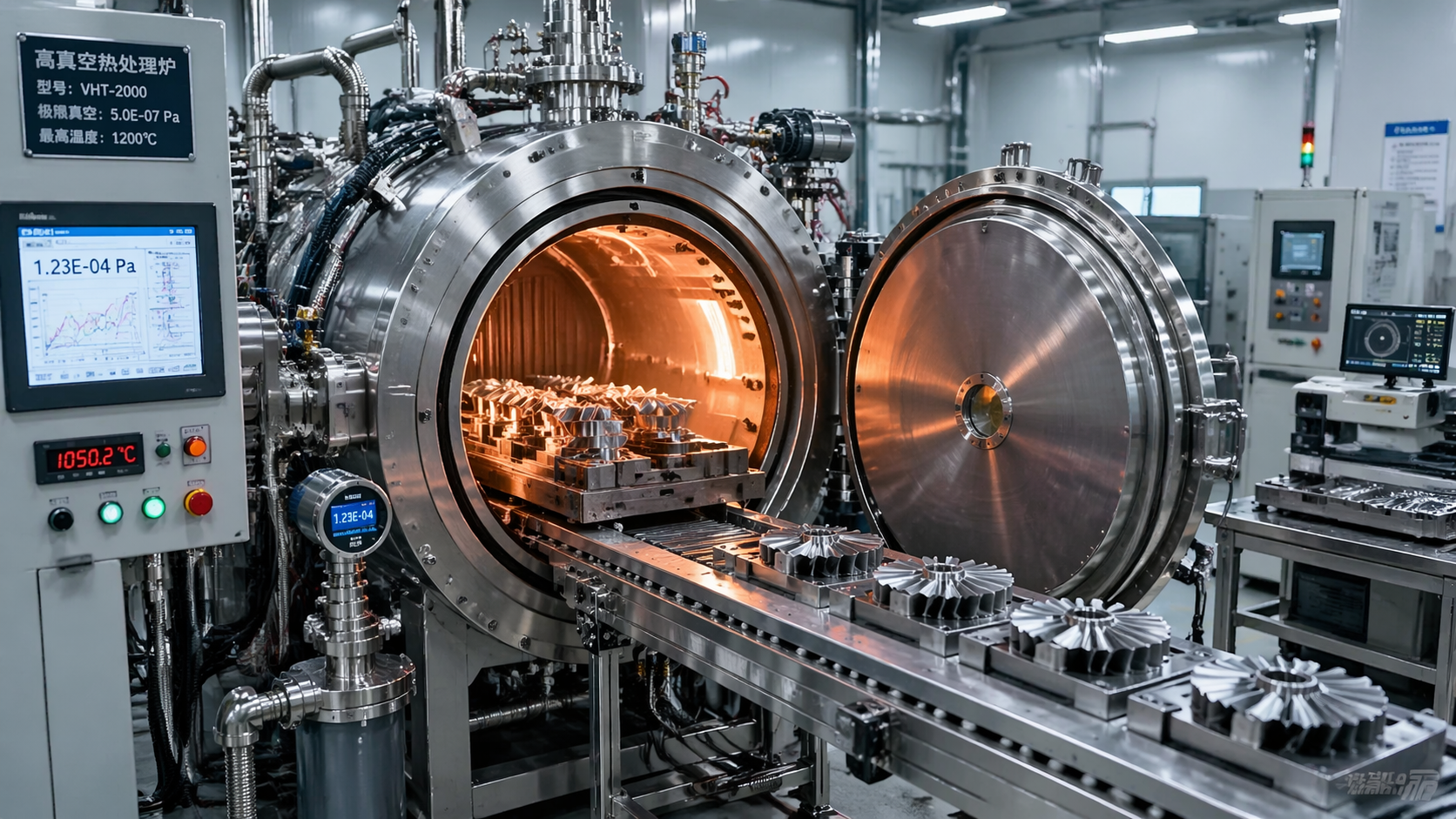
In the Physics of Transformation, heat treatment results still vary because true Energy Beam Control depends on far more than furnace settings alone. From High-vacuum Carburizing Furnaces and Electron Beam Melters to Fabrication Line Optimization for Aerospace Integrity, hidden variables across materials, process windows, and operator execution shape outcomes. This article helps technical evaluators, buyers, and plant leaders understand why Industrial-grade Supremacy demands system-level control.
For B2B manufacturers, inconsistent heat treatment is rarely a single-parameter problem. A part can pass hardness tests in one batch and fail distortion limits in the next, even when the recipe appears unchanged. In sectors such as aerospace, semiconductor tooling, advanced mobility, and battery production, a deviation of just 10–20°C, a few minutes of soak imbalance, or a vacuum purity shift can move results outside specification.
That is why technical benchmarking now extends beyond furnace nameplates and heating capacity. Procurement teams want lower risk, operators want repeatability, quality managers want traceability, and engineering leaders want process windows that survive scale-up. Understanding why heat treatment results still vary is the first step toward selecting equipment, controls, and service models that can support stable industrial output.
Why heat treatment variation persists in advanced manufacturing
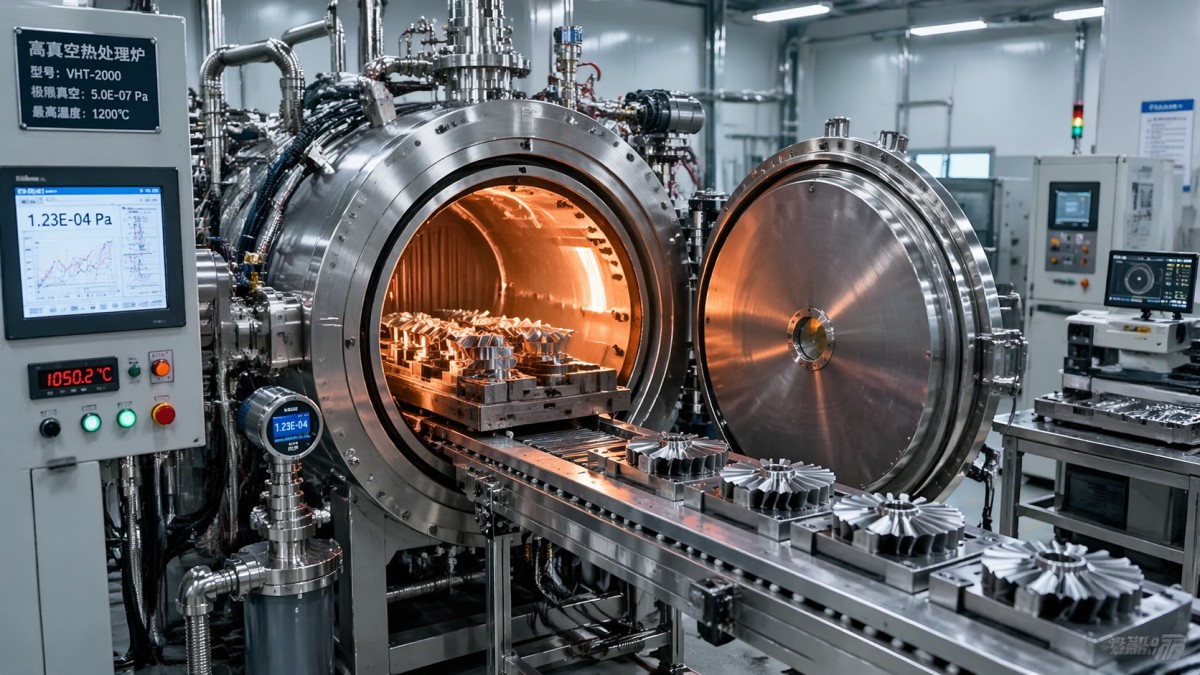
Heat treatment variation persists because thermal transformation is governed by a chain of interacting variables, not a single setpoint. Even in modern vacuum heat treatment, the actual metallurgical response depends on alloy chemistry, prior microstructure, part geometry, load density, fixturing, gas flow, cooling rate, and measurement accuracy. A furnace may hold a programmed temperature of 940°C, yet two locations in the load can still experience different thermal histories.
In high-value sectors, this variation becomes expensive very quickly. For example, case depth in carburizing, grain growth during solution treatment, or residual stress after quenching can all shift outside target windows if thermal uniformity or atmosphere control drifts. In practical terms, a cycle variation of 3%–5% can trigger rework, delayed inspection, scrap risk, or downstream joining problems.
Another reason results vary is that many plants still separate equipment performance from process capability. A furnace may be mechanically sound, but if thermocouple placement, calibration interval, or batch loading rules are inconsistent, the process will not deliver repeatable transformation behavior. In other words, equipment qualification without operational discipline only solves part of the problem.
For decision-makers, the key point is simple: heat treatment variation is usually systemic. It often originates from the interface between hardware, material condition, software logic, and human execution. This is particularly true when energy-beam and thermal-processing systems are integrated into larger fabrication lines where upstream machining, cleaning, or coating steps influence downstream thermal response.
The most common hidden variables
- Material lot variation, including minor differences in carbon, chromium, nickel, or residual elements that shift transformation kinetics.
- Part geometry effects, especially wall thickness changes, blind holes, sharp transitions, and mass concentration that alter heating and cooling rates.
- Batch loading density, where a 15%–25% increase in charge mass can change thermal lag and gas-quench response.
- Atmosphere and vacuum quality, including oxygen ingress, dew point instability, or contamination from prior cycles.
- Operator-dependent steps such as fixture selection, cycle confirmation, probe verification, and unloading timing.
What this means for procurement and technical evaluation
When evaluating thermal-processing systems, buyers should not only compare maximum temperature, chamber size, or quoted throughput. They should also examine uniformity validation, cooling reproducibility, control architecture, maintenance access, sensor redundancy, and service response. A lower initial purchase price can become costly if repeatability drifts after 6–12 months of production.
For distributors, project managers, and plant leadership, the right question is not “Can this furnace run the recipe?” but “Can this system maintain the recipe under real load, real shift conditions, and real production variability?” That distinction separates acceptable laboratory performance from industrial-grade process capability.
Material, geometry, and thermal mass: the physics behind inconsistent outcomes
The physics of transformation begins with the workpiece itself. Two components made from nominally the same alloy may respond differently if one has a different prior forging history, machining stress state, or surface condition. Heat treatment does not erase these differences; it interacts with them. This is why technical teams often see variation between prototype runs and full production batches.
Geometry amplifies the problem. Thin sections can reach target temperature faster than thick hubs or flanges, while edges may decarburize or overheat sooner than core sections if loading and shielding are not optimized. In vacuum carburizing or induction-assisted preheating, these effects can produce uneven case development, dimensional drift, or hardness gradients that remain hidden until final inspection.
Thermal mass is equally important. A 50 kg batch and a 300 kg batch do not behave the same, even under identical programmed parameters. Heating ramps, soak stabilization, and gas-quench dynamics shift with load size, fixture mass, and part-to-part spacing. In many plants, recipe settings are copied from one batch type to another without revalidating effective part temperature. That shortcut often explains why “the same process” gives different results.
For sectors such as aerospace integrity and precision tooling, the issue is not only hardness or case depth. Distortion limits may be as critical as metallurgical targets. A part that meets 58–62 HRC but exceeds flatness tolerance by 0.15 mm can still be a nonconforming part. This is why thermal-processing strategy must account for both phase transformation and dimensional control.
Typical process sensitivity by variable
The table below summarizes how common physical variables influence heat treatment outcomes across industrial environments.
The practical lesson is that thermal recipes should be linked to part family, alloy condition, and load architecture—not just product name. Plants that classify loads into 3–5 validated batch categories often achieve better repeatability than plants using one general recipe across all geometries.
Operational checkpoints for users and quality teams
- Verify incoming material certificates and compare key chemistry ranges before release to heat treatment.
- Document fixture mass and orientation to avoid hidden changes between shifts or operators.
- Use at least 2 measurement positions for critical parts when validating thermal response on new batches.
- Track dimensional distortion before and after treatment, not only hardness and microstructure.
Equipment capability versus process capability: where many plants misjudge risk
A common mistake in equipment selection is to assume that a technically advanced furnace automatically guarantees stable process outcomes. In reality, equipment capability and process capability are related but not identical. A vacuum furnace may achieve high ultimate vacuum, fast pumping, and nominal temperature accuracy, yet still produce variable parts if circulation, load layout, quench pressure, or thermal mapping are not aligned with the application.
This gap becomes more visible in high-vacuum carburizing furnaces, induction systems, and integrated beam-assisted processes. For example, if hot-zone uniformity is validated in an empty chamber but not under a 70% production load, the operational result can differ from qualification records. The same applies to electron beam melters and beam-based thermal systems, where beam focus, scan pattern, and chamber condition influence effective thermal input.
Technical evaluators should therefore review both static specifications and dynamic performance. Static specifications include chamber dimensions, maximum operating temperature, and pump-down time. Dynamic performance includes loaded uniformity, cooling reproducibility, recipe repeatability over 100 or more cycles, sensor drift behavior, and maintenance intervals. These are the factors that shape actual total cost of ownership.
For business evaluators and procurement officers, this distinction matters during supplier comparison. A system that supports better process logging, preventive maintenance, and spare-part traceability can reduce nonconformance risk more effectively than a system with only a higher temperature ceiling. In critical manufacturing, repeatability often creates more value than theoretical peak capacity.
What to compare during equipment assessment
The following comparison matrix highlights practical review points for buyers, engineering teams, and project leaders.
This table shows why technical due diligence should combine metallurgy, controls, and service analysis. In many projects, the winning system is the one with the strongest process governance and support structure, not simply the most aggressive quoted output.
Frequent sourcing mistakes
- Selecting based on chamber size alone without reviewing loaded thermal uniformity.
- Ignoring recipe security and operator permission levels in multi-shift environments.
- Underestimating maintenance consumables and the effect of delayed replacement cycles.
- Assuming that acceptance tests on one alloy family apply equally to all future products.
Operator execution, metrology, and line integration: the human and system factors
Even highly capable thermal equipment can deliver unstable outcomes when execution control is weak. Operators influence results through loading sequence, fixture orientation, thermocouple placement, cycle confirmation, transfer timing, and post-process handling. In some facilities, 2 operators running the same nominal recipe can still produce measurable differences because the actual workflow contains undocumented choices.
Metrology is another major source of variation. If temperature sensors drift, hardness testing methods differ between shifts, or distortion checks are performed at inconsistent time points after treatment, the plant may misread the process itself. A variation problem can look like a furnace problem when it is really a measurement problem. For critical applications, traceable calibration and standardized inspection windows are not optional.
Line integration also matters. Upstream cleaning residues, machining coolant contamination, or inconsistent preheat staging can alter heat transfer and surface reactions. Downstream processes such as welding, coating, grinding, or vacuum assembly may expose thermal-treatment instability that was not visible in immediate post-cycle inspection. This is why line-level optimization usually delivers better returns than isolated furnace tuning.
For project managers and plant leaders, a useful rule is to control the entire thermal workflow in 4 layers: input condition, equipment state, operator method, and output verification. If any one layer is unstable, repeatability declines. Plants that formalize work instructions, shift handover, and digital records often reduce process escapes within one or two production quarters.
A practical 5-step control routine
- Confirm material lot, cleanliness status, and fixture type before loading.
- Verify sensor health, vacuum or atmosphere readiness, and recipe revision level.
- Load by validated spacing and orientation rules, not by operator preference.
- Record cycle deviations in real time, including delays longer than 3–5 minutes.
- Check hardness, microstructure, and key dimensions within a fixed inspection window after unloading.
Where operators need clearer limits
Plants should define operator decision boundaries with precision. Examples include maximum allowable loading deviation, acceptable thermocouple reuse count, hold-time tolerance, and cooldown release criteria. When these rules are vague, experienced operators may compensate in different ways, creating hidden variation that only appears in audit or customer rejection data.
A good practice is to convert tribal knowledge into controlled work instructions supported by digital logs. This not only improves quality assurance but also simplifies onboarding for new staff, distributors supporting end users, and multi-site organizations aiming to standardize process performance across regions.
How to reduce variation: selection, validation, and continuous control
Reducing heat treatment variation requires a system-level approach that combines equipment selection, process validation, operational discipline, and service support. For many manufacturers, the improvement opportunity lies in narrowing the process window around what truly matters: effective part temperature, atmosphere integrity, cooling reproducibility, and consistent inspection. Attempting to solve variation only by changing recipe temperature often creates new problems elsewhere.
A strong implementation plan usually starts with process segmentation. Group parts by alloy family, geometry class, and critical quality requirement. Then validate each group using representative loads and measurable output targets such as hardness range, case depth band, distortion limit, and cycle repeatability over multiple runs. In many industrial settings, validating 3–5 part families delivers faster gains than trying to standardize every product at once.
Service strategy should not be overlooked. Preventive maintenance schedules, sensor replacement planning, and periodic thermal surveys are essential for long-cycle reliability. A plant that delays maintenance beyond recommended intervals may see a gradual drift that is difficult to detect until scrap rates rise. From a commercial standpoint, stable process capability supports more predictable lead times, lower quality cost, and stronger customer confidence.
For organizations comparing vendors or benchmarking upgrades, it is useful to evaluate not only the machine but also the support ecosystem: commissioning depth, application guidance, spare-part availability, training coverage, and response structure. In advanced energy-beam and thermal-processing environments, this ecosystem often determines whether a system remains stable after the first 12–24 months of use.
Recommended control priorities for buyers and plant leaders
The priorities below can guide investment and operational planning when consistency is the main objective.
The strongest long-term gains usually come from combining these 4 priorities rather than relying on one corrective action. Consistency in thermal processing is cumulative: each layer of control reduces uncertainty and strengthens final product integrity.
FAQ for evaluators, users, and procurement teams
How should buyers compare heat treatment systems beyond price?
Compare loaded uniformity, cooling reproducibility, data traceability, maintenance intervals, spare-part lead times, and application support. Price matters, but in most industrial programs the larger cost sits in process instability, scrap, delayed qualification, and customer claims over a 3–7 year ownership period.
Why do qualified recipes still fail after scale-up?
Scale-up changes batch mass, spacing, fixture design, and thermal lag. A recipe qualified on 10 parts may behave differently on 80 parts. Revalidation under representative production loads is essential, especially when output targets include both metallurgical properties and dimensional tolerances.
What inspection metrics are most useful for detecting variation early?
Use a combination of hardness, microstructure, case depth where relevant, and key dimensional checks. If the application is high precision, include distortion trend tracking and review results by batch, operator, and equipment condition. Early warning is usually visible in trend data before it appears in final rejection rates.
How often should process reviews be performed?
For stable production, many plants review critical process data monthly and conduct deeper capability reviews every quarter. Systems handling aerospace, semiconductor, or safety-critical parts may require tighter review cycles tied to audit requirements, calibration schedules, or customer-specific approval plans.
Heat treatment results still vary because transformation is controlled by a network of physical, operational, and organizational factors. Material condition, geometry, thermal mass, equipment capability, metrology quality, and operator execution all shape the final outcome. For manufacturers pursuing reliable throughput and quality assurance, the answer is not isolated parameter changes but a disciplined, system-level control strategy.
G-EBT supports this perspective by connecting high-energy equipment benchmarking with metallurgical rigor, process governance, and industrial decision criteria. If you are evaluating vacuum heat treatment, induction systems, electron beam equipment, or broader fabrication line optimization, now is the right time to review where variation truly begins and how it can be reduced. Contact us to discuss your application, request a tailored evaluation framework, or explore more thermal-processing solutions for high-spec manufacturing.
Technical Specifications
Expert Insights

Chief Security Architect
Dr. Thorne specializes in the intersection of structural engineering and digital resilience. He has advised three G7 governments on industrial infrastructure security.
Related Analysis
- Jun 19, 2026How to Read a Concrete Test Hammer and Avoid Common On-Site Accuracy ErrorsAuthor :Dr. Victor Gear
- Jun 19, 2026Pump Shaft Seals vs Mechanical Seals: What to Check Before ReplacementAuthor :Dr. Elena Carbon
- Jun 19, 2026Explosion Proof Enclosures: Types, Ratings, and How to Match Them to Hazardous AreasAuthor :Lina Cloud
Recommended News
- How to Read a Concrete Test Hammer and Avoid Common On-Site Accuracy ErrorsAuthor :Dr. Victor Gear

- Pump Shaft Seals vs Mechanical Seals: What to Check Before ReplacementAuthor :Dr. Elena Carbon

- Explosion Proof Enclosures: Types, Ratings, and How to Match Them to Hazardous AreasAuthor :Lina Cloud

- Centrifugal Water Pumps Explained: Key Parameters for Selection and Daily UseAuthor :Dr. Elena Carbon