How to Control Thermal Gradients During Laser Cladding?
Author
Date Published
Reading Time
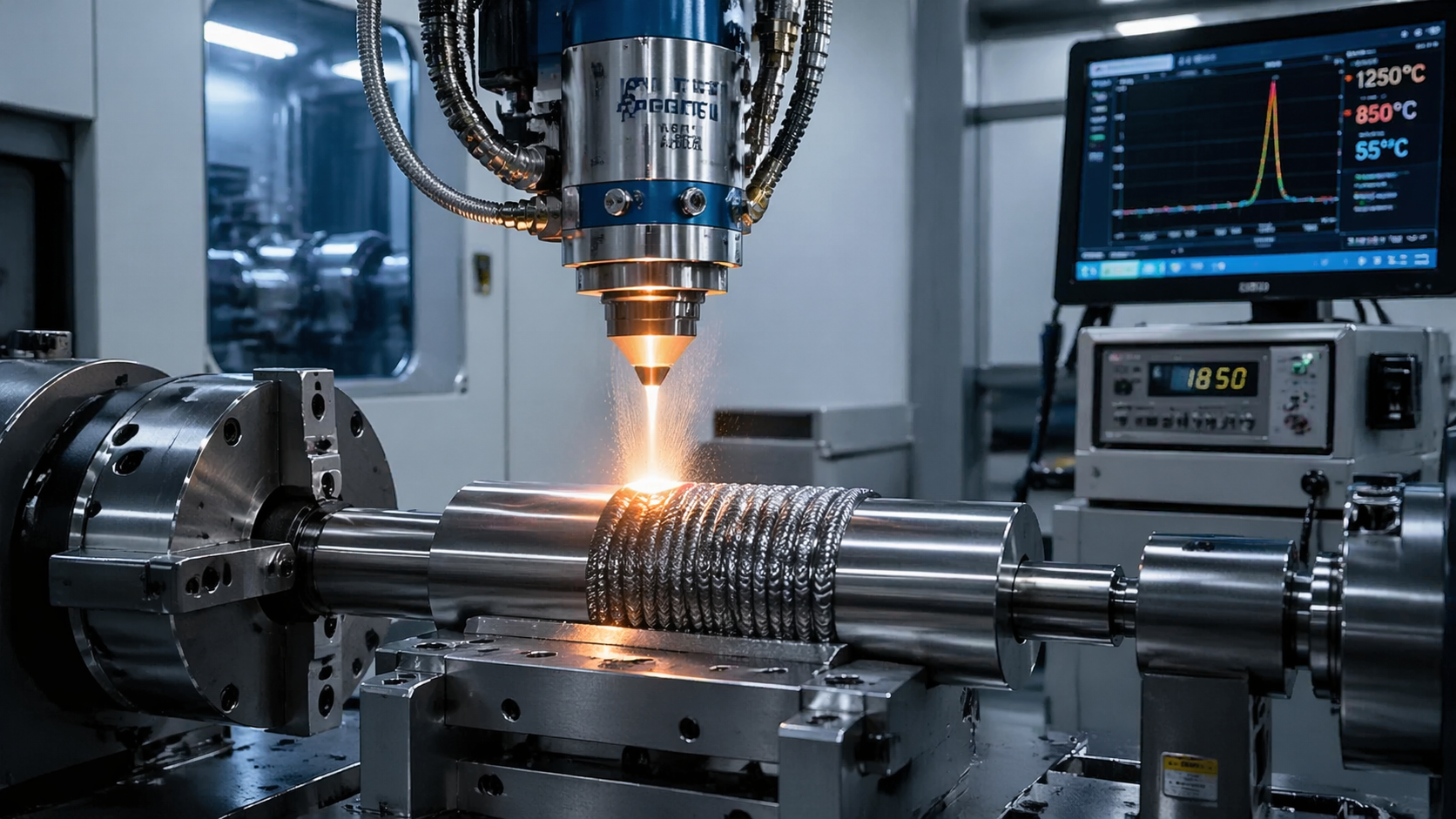
Controlling Thermal Gradients during Laser Cladding is essential for achieving stable melt pools, strong metallurgical bonding, and repeatable quality in Precision Manufacturing. For engineers, buyers, and decision-makers evaluating Fiber Lasers and advanced Laser Processing systems, understanding how heat input, scan strategy, shielding, and substrate conditions interact is critical. This guide explains practical methods to reduce distortion, cracking, and dilution while supporting demanding applications across Battery Manufacturing, Semiconductor Lithography, and other high-performance industrial environments.
In industrial laser cladding, thermal gradients are not just a metallurgical concern; they directly affect uptime, coating integrity, dimensional control, and downstream inspection results. A gradient that is too steep can increase residual stress, promote solidification cracking, and reduce bonding consistency. A gradient that is too low can widen dilution, overheat the substrate, and compromise the intended clad chemistry.
For operators, the challenge is process stability. For procurement teams, the challenge is selecting equipment with the right controllability, sensing capability, and support architecture. For technical managers and quality leaders, the priority is achieving repeatable results across different alloys, geometries, and duty cycles. The sections below explain how to manage thermal gradients through parameter control, path strategy, material preparation, and equipment selection.
Why Thermal Gradients Matter in Laser Cladding
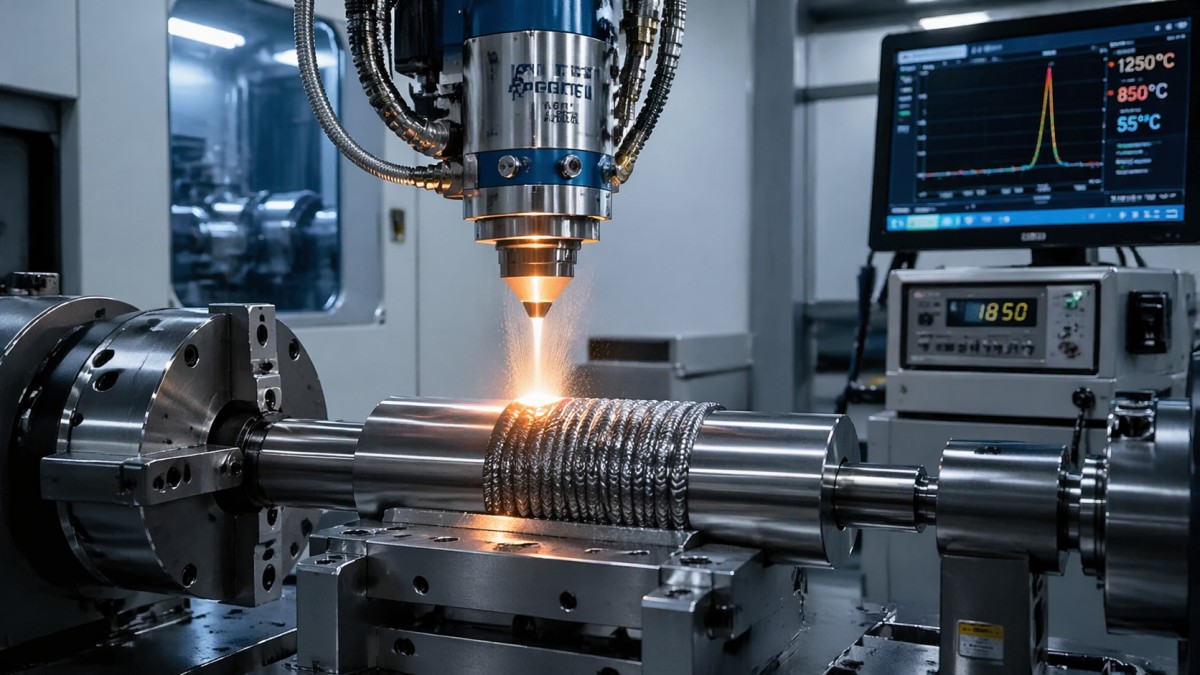
A thermal gradient is the temperature change across a given distance in the melt zone and heat-affected area. During laser cladding, this gradient governs heat flow from the molten pool into the substrate. When the temperature drop is extremely sharp, the cooling rate may become excessive, often reaching levels that promote hard, brittle microstructures in some alloys. In nickel, cobalt, iron-based, and tool-steel systems, that can translate into cracking risk, especially on thick sections or constrained parts.
In practical production, poor thermal gradient control appears as three common symptoms: visible distortion, inconsistent bead geometry, and unacceptable dilution. Typical dilution targets in precision cladding often fall in the 3% to 10% range, depending on application and alloy system. If heat is not controlled, dilution can rise beyond the acceptable window, reducing corrosion resistance, wear performance, or functional overlay thickness.
The impact becomes more critical in high-value sectors. Battery manufacturing lines may require low-distortion repair or surface enhancement of precision fixtures. Semiconductor-related tooling can demand tight dimensional tolerances, sometimes within ±0.05 mm to ±0.20 mm after finishing. Aerospace and energy components often require repeatable metallurgical bonding with minimal porosity and low crack incidence over long production runs.
Thermal gradients also influence productivity. If gradients are unstable, operators may need slower travel speed, more interpass waiting time, or additional post-processing. What looks like a metallurgical issue can quickly become a cost issue through lower throughput, higher scrap rates, and more extensive inspection cycles.
Key Variables That Intensify Gradient Problems
- Laser power set too high for the spot size, causing deep penetration and a narrow but very hot melt zone.
- Travel speed set too low, increasing local heat accumulation and widening the heat-affected zone.
- Powder feed mismatch, which destabilizes absorptivity and melt pool volume.
- Cold, thick, or highly conductive substrates that draw heat rapidly away from the clad zone.
- Unoptimized overlap ratios, often above 50%, which can increase reheating and residual stress.
These variables rarely act alone. In most industrial cells, two or three parameters interact at the same time, so thermal gradient control must be treated as a system-level task rather than a single-parameter adjustment.
Process Parameters That Stabilize the Melt Pool
The first step in controlling thermal gradients is to balance energy density, interaction time, and deposition rate. In many fiber-laser cladding setups, power may range from 1 kW to 6 kW for precision and medium-duty work, while travel speed often falls between 300 mm/min and 1500 mm/min. These values vary by alloy, spot size, and desired layer thickness, but the principle remains the same: avoid excessive peak temperature while maintaining enough energy for consistent wetting and bonding.
Spot size has a major effect. A small spot concentrates energy and can produce steep thermal gradients. A larger spot spreads the same power over a wider area, usually lowering peak thermal stress and improving bead smoothness, though it may reduce precision on narrow features. For many applications, a beam diameter in the 1.0 mm to 3.5 mm range offers a practical window for balancing deposition stability and thermal control.
Powder feed rate must also be synchronized. If feed is too low, the substrate absorbs too much direct energy and dilution rises. If feed is too high, powder may not fully melt, causing roughness, porosity, or weak bonding. In many industrial cells, stable feed settings sit within a repeatable band, often changing by no more than ±5% during validated production.
Operators should monitor melt pool width, bead height, and temperature trend in real time whenever possible. Closed-loop monitoring using pyrometers, coaxial cameras, or melt pool sensors does not eliminate thermal gradients, but it helps keep them within a controlled band over long shifts and varying part geometry.
Typical Parameter Effects on Thermal Gradient Control
The table below summarizes how common process adjustments influence gradient intensity, dilution, and risk. These are directional guidelines for engineering review rather than fixed settings.
The main takeaway is that thermal gradient control depends on coordinated tuning rather than isolated changes. If power is increased by 10% to 15%, teams often need to revisit spot size, speed, and feed together rather than expecting one offsetting parameter to solve the entire problem.
Practical Parameter Checklist
- Start with a target dilution window and acceptable bead geometry before selecting power.
- Validate at least 3 speed levels and 2 spot sizes during qualification.
- Track interpass temperature and hold it within a defined range, often 80°C to 250°C depending on alloy.
- Record powder feed stability over time, not just average setpoint.
Scan Strategy, Preheating, and Shielding Control
Even with correct power settings, poor path planning can create sharp thermal gradients. A long, uninterrupted scan on one side of a part may concentrate heat unevenly and pull the component out of tolerance. Alternating scan direction, segmenting long tracks, and balancing deposition around the part can reduce localized thermal buildup and residual stress. In many production cells, overlap ratios between 25% and 45% are used to maintain coverage without excessive reheating.
Preheating is one of the most effective methods for reducing thermal shock. Raising the substrate from ambient temperature to a controlled preheat band can reduce the temperature differential between the melt pool and base material. For crack-sensitive materials, preheat levels may range from 100°C to 350°C, while highly hardenable alloys may require more controlled procedures based on welding metallurgy and component geometry.
Shielding gas quality matters more than many teams assume. Argon is common, but gas flow rate, nozzle alignment, and ambient drafts all affect oxidation and heat transfer near the melt pool. Inconsistent shielding can alter absorptivity and bead wetting, creating indirect thermal instability. For enclosed or semi-enclosed cells, maintaining a stable gas environment can improve repeatability across shifts.
Interpass temperature management is equally important for multilayer cladding. If the next pass begins while the previous layer is still too hot, heat accumulation can drive grain coarsening, distortion, or loss of dimensional control. If the part cools too far, the process reintroduces a steep gradient. Many qualified procedures define an interpass window with a tolerance band of ±20°C to ±30°C.
Comparing Thermal Control Methods
Different control measures address different root causes. The table below helps technical and commercial teams compare where each method adds the most value.
For most B2B production settings, the best results come from combining at least two of these methods. Preheating alone may not solve distortion if the scan path remains unbalanced, and strong shielding alone cannot compensate for poor interpass discipline.
Common Path Planning Mistakes
- Starting every pass from the same edge, which concentrates heat and shrinkage in one direction.
- Using one overlap rule for all geometries instead of adjusting for corners, walls, and thin sections.
- Ignoring fixture thermal mass, even though fixtures can change cooling behavior significantly.
Material Preparation and Equipment Selection for Consistent Results
Thermal gradient control begins before the laser turns on. Surface contamination, oxide films, residual oil, or inconsistent roughness can disrupt laser absorption and create unstable melt behavior. For many industrial parts, cleaning must include degreasing, oxide removal, and controlled surface preparation. A roughness range such as Ra 1.6 to 6.3 µm may be acceptable depending on the application, but consistency is more important than chasing one universal value.
Powder quality is another major factor. Particle size distribution, morphology, moisture control, and storage discipline all affect deposition efficiency and melt pool stability. Common distributions such as 45–106 µm or 53–150 µm are widely used, but the correct band depends on nozzle design, laser power, and required bead resolution. Reused powder should be screened and documented to avoid drift in flowability or contamination level.
From a procurement perspective, machine capability should be judged by controllability rather than headline power alone. Decision-makers should review beam quality, spot adjustment range, powder feeder accuracy, sensor integration, motion system precision, and process recipe management. A system that holds feed accuracy within a narrow tolerance and supports data logging may deliver better long-term value than a higher-power system with weak process control.
For distributors, integrators, and project managers, service support is also part of thermal management. Qualification support, application engineering, spare parts availability, and response time can materially affect how fast a cladding line reaches stable production. A typical implementation cycle may take 2 to 6 weeks for straightforward applications and longer for regulated or multi-alloy environments.
What Buyers and Engineers Should Evaluate
The following matrix can support equipment selection when thermal gradient control is a critical success factor.
A disciplined buying decision should include at least 4 review points: validated sample quality, control architecture, service responsiveness, and compatibility with your alloy and geometry range. This is especially important where production lines serve multiple sectors, such as repair, precision tooling, and specialty surface engineering.
Minimum Preparation Steps Before Production
- Confirm substrate chemistry and hardness condition.
- Standardize cleaning and surface preparation procedures.
- Check powder batch consistency and storage history.
- Run a short qualification coupon before full-part production.
- Document interpass and preheat controls in the work instruction.
Implementation Risks, Quality Control, and FAQ
Once a process is qualified, thermal gradient control still requires routine verification. Production teams should inspect bead geometry, dilution trend, crack incidence, porosity indications, and hardness variation. Depending on part criticality, acceptance may include visual inspection, macro-etch checks, microhardness mapping, or non-destructive testing. In higher-specification environments, even a 0.2 mm shift in bead height or a small rise in porosity can trigger corrective action.
A frequent mistake is assuming the same recipe will transfer unchanged between different substrate masses or fixture designs. In reality, thermal conductivity, restraint, and local section thickness can alter cooling rate dramatically. Another common error is optimizing only for deposition speed. A 15% increase in throughput may look attractive, but if rework rises by 5% to 8%, the total operating cost often worsens.
Quality leaders should build a control plan with defined response limits. For example, teams may pause production if interpass temperature drifts beyond the approved band, if powder feed fluctuates outside validated tolerance, or if bead width deviates beyond a set threshold. These rules help prevent thermal instability from becoming a batch-level problem.
For B2B organizations managing capital equipment decisions, the most reliable path is to combine technical trials, process monitoring, operator training, and application support. This reduces the gap between laboratory success and production repeatability, especially in advanced sectors where laser processing quality affects downstream assembly, coating performance, or dimensional compliance.
How do you know if thermal gradients are too steep?
Typical warning signs include edge cracking, excessive hardness near the clad interface, narrow and deeply penetrating melt pools, and distortion after cooling. In production, repeated need for slower speeds, extra grinding, or rework on corners is often an indirect sign that the process window is too thermally aggressive.
Is preheating always necessary for laser cladding?
No. For some low-risk materials and thin sections, ambient-temperature processing may be acceptable. However, preheating becomes increasingly useful for crack-sensitive alloys, heavy sections, or parts with strong restraint. A controlled preheat of 100°C to 250°C is a common evaluation range during qualification.
What should procurement teams ask suppliers?
At minimum, ask for sample process windows, monitoring options, powder delivery repeatability, recommended maintenance intervals, and support for application trials. Also request clarity on commissioning time, spare parts lead time, and operator training scope. These points often matter as much as nominal laser power.
Risk Control Priorities
- Define acceptable interpass temperature before production begins.
- Control overlap ratio and scan order for every geometry family.
- Validate powder batch handling and shielding gas consistency.
- Review fixture design as part of thermal management, not only part positioning.
Thermal gradient control in laser cladding depends on disciplined coordination between process parameters, scan strategy, material condition, and equipment capability. Organizations that manage these factors well typically see better bead consistency, lower crack risk, tighter dimensional performance, and more predictable throughput. If you are evaluating fiber laser cladding systems, process benchmarking, or application-specific thermal control strategies, now is the right time to discuss your requirements in detail. Contact us to get a tailored solution, review suitable process windows, and explore more laser processing options for demanding industrial environments.
Technical Specifications
- Explosion-Proof Enclosure Prices: How Certification and Materials Affect Your QuoteAuthor :Dr. Aris Nano
- Selecting Heat Shrink Tubing for Wire Harnesses: Temperature, Ratio, and MaterialAuthor :Marcus Valve
- Selecting Servo Motors for CNC Machines: Torque, Speed, Inertia, and Duty CycleAuthor :Dr. Aris Nano
Expert Insights

Chief Security Architect
Dr. Thorne specializes in the intersection of structural engineering and digital resilience. He has advised three G7 governments on industrial infrastructure security.
Related Analysis
- Sep 13, 2026Explosion-Proof Enclosure Prices: How Certification and Materials Affect Your QuoteAuthor :Dr. Aris Nano
- Sep 12, 2026Selecting Heat Shrink Tubing for Wire Harnesses: Temperature, Ratio, and MaterialAuthor :Marcus Valve
- Sep 11, 2026Selecting Servo Motors for CNC Machines: Torque, Speed, Inertia, and Duty CycleAuthor :Dr. Aris Nano
Recommended News
- Explosion-Proof Enclosure Prices: How Certification and Materials Affect Your QuoteAuthor :Dr. Aris Nano

- Selecting Heat Shrink Tubing for Wire Harnesses: Temperature, Ratio, and MaterialAuthor :Marcus Valve

- Selecting Servo Motors for CNC Machines: Torque, Speed, Inertia, and Duty CycleAuthor :Dr. Aris Nano

- How to Evaluate a Brass Rod and Bar Manufacturer for Machining Quality and Supply ReliabilityAuthor :Dr. Aris Nano