Why Does Induction Heating Cut Cycle Time?
Author
Date Published
Reading Time
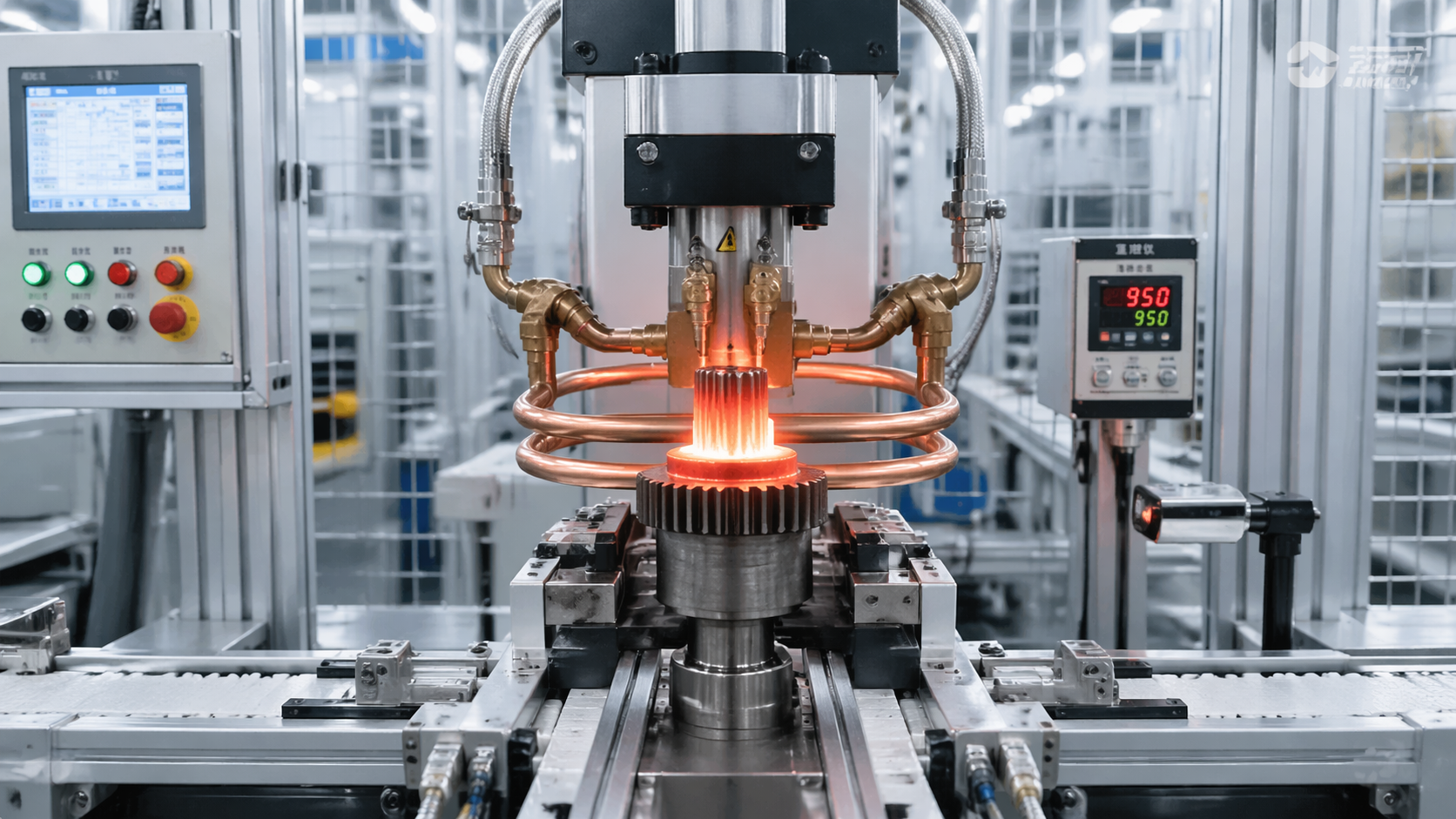
In precision manufacturing, every second of cycle time affects throughput, quality, and cost. Induction heating cuts cycle time because it puts energy directly into the workpiece, heats only the required zone, reaches target temperature quickly, and integrates well with automated production. For teams in battery manufacturing, semiconductor lithography support systems, metal joining, and other advanced processes, that means shorter waits, less thermal lag, more repeatable results, and better line efficiency. This article explains where the time savings come from, when they are most meaningful, and how engineers, operators, and buyers should evaluate the business case.
Why does induction heating reduce cycle time in real production?
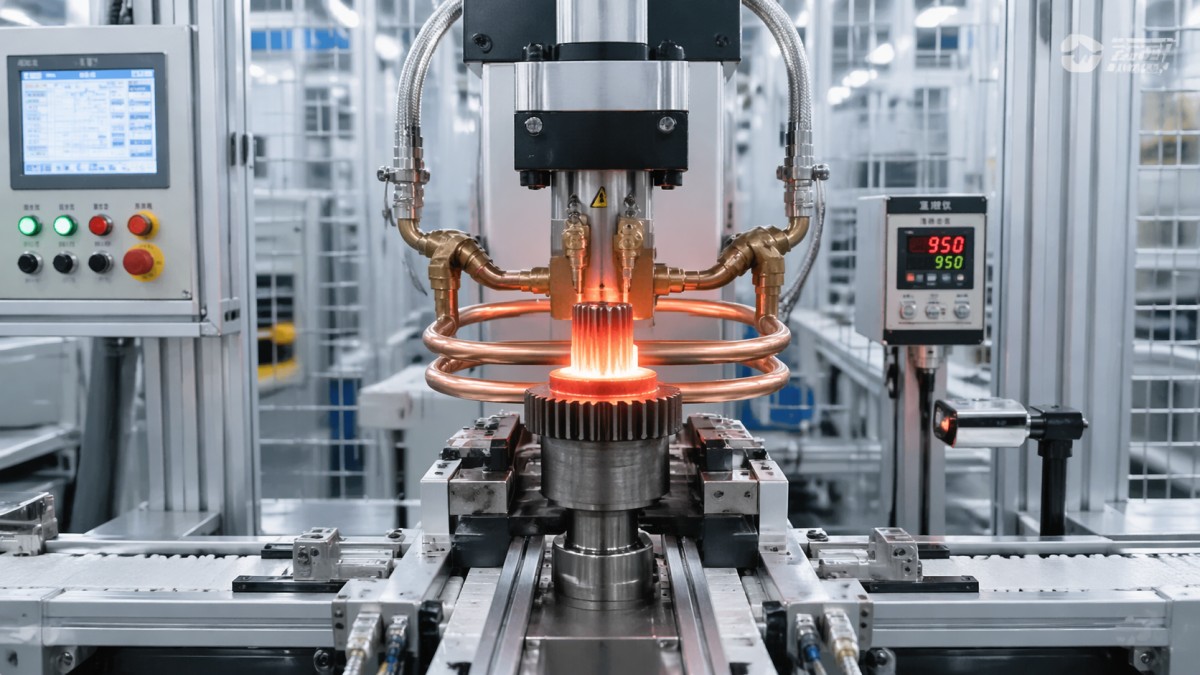
The short answer is simple: induction heating is fast because it generates heat inside the conductive part instead of transferring heat slowly from an external source.
That difference changes the entire production rhythm. In conventional heating methods, time is lost in several places: warming the heater itself, transferring heat through air or contact surfaces, waiting for the whole part or tooling mass to soak, and then managing excess heat that spreads beyond the target area. Induction heating avoids much of that delay.
In practical terms, induction heating cuts cycle time through five main mechanisms:
- Direct energy coupling: electromagnetic energy is converted into heat within the part, so response is almost immediate.
- Localized heating: only the required zone is heated, reducing unnecessary thermal mass.
- High power density: parts can reach process temperature in seconds rather than minutes.
- Less preheating and recovery time: there is no need to wait for large furnace chambers, hot plates, or burners to stabilize.
- Easy automation: induction systems can start, stop, and repeat cycles precisely, supporting high-throughput lines.
For production managers and project leads, this matters because cycle time is not just a technical metric. It directly affects throughput, WIP levels, takt matching, labor utilization, and equipment ROI.
Where does the time saving actually come from?
Many buyers hear that induction heating is “faster,” but the better question is which part of the cycle becomes shorter. The answer usually includes several stages of the process, not just heating time alone.
1. Faster ramp-up to target temperature
Induction systems can raise the temperature of a specific area very quickly, especially in metals and conductive assemblies. Instead of waiting for an oven atmosphere or heated platen to transfer energy gradually, the part responds almost immediately. This is especially valuable in brazing, shrink fitting, curing support operations, and preheating before welding.
2. Reduced soak time
Because the heat is concentrated where it is needed, the process often requires less soaking to bring the relevant zone into specification. In many applications, the goal is not to heat the entire component but to achieve a controlled thermal condition at a joint, edge, surface layer, or interference-fit zone.
3. Less cooling delay for adjacent areas
Conventional heating often introduces unnecessary heat into surrounding material, fixtures, and nearby assemblies. That creates extra delay before downstream handling, inspection, or assembly can continue. With induction heating, smaller heat-affected zones often mean shorter waiting time between steps.
4. Lower fixture and tooling heat load
If fixtures absorb less heat, they recover faster and remain more dimensionally stable. This helps both cycle speed and repeatability. In precision environments, such as semiconductor support hardware or fine metal assemblies, less fixture heating can also reduce drift and quality variation.
5. Better start-stop responsiveness in automated cells
Induction systems do not need the same warm-up behavior as many thermal alternatives. That makes them suitable for intermittent production, recipe changes, and synchronized automation. When a robot presents the part, heat can be applied exactly when needed, then stopped instantly.
Why is localized heating such a major advantage?
Localized heating is one of the biggest reasons induction heating improves cycle time. In many industrial processes, heating the entire part is inefficient and unnecessary.
Consider these examples:
- Brazing and joining: only the joint area needs to reach process temperature.
- Shrink fitting: only the ring or bore zone needs expansion.
- Surface hardening: only the wear-critical region requires treatment.
- Preheating before welding: only the weld zone and nearby material need conditioning.
- Precision support components: heating just one feature can avoid distortion elsewhere.
For operators and quality teams, this means the process can be both faster and more controlled. Instead of exposing the whole assembly to thermal stress, induction concentrates the energy in the useful region. That often leads to fewer defects, less oxidation, lower distortion risk, and reduced post-process correction.
How does induction heating improve throughput without sacrificing quality?
Fast cycle time only creates value if quality remains stable. In advanced manufacturing, a process that is fast but inconsistent is usually more expensive in the long run. Induction heating is often attractive because it combines speed with controllability.
Key quality-related advantages include:
- Precise power control: output can be tuned closely to the part and process recipe.
- Repeatable heating profiles: stable coil design, frequency selection, and closed-loop control improve consistency.
- Reduced contamination: no open flame and less contact-based thermal transfer.
- Smaller heat-affected zones: useful for dimensional control and metallurgical integrity.
- Easy sensor integration: pyrometers, thermal cameras, and process monitoring can support better control.
For sectors that demand high process discipline, such as aerospace, electronics-related hardware, battery production equipment, and precision assemblies, that combination is critical. The cycle is shorter not because the process is rushed, but because wasted thermal motion is removed.
What does this mean for cost, ROI, and procurement decisions?
For procurement teams and business evaluators, the key issue is not whether induction heating is technically faster. It is whether the time saved translates into measurable economic benefit.
In many cases, the answer is yes, especially when cycle time is a bottleneck or when thermal precision affects scrap and rework.
Typical value drivers include:
- Higher throughput per shift from shorter heating and handling windows
- Lower energy waste because the system heats targeted zones instead of large surrounding masses
- Reduced labor dependency through automation and recipe-based control
- Less scrap and rework from better thermal repeatability
- Smaller equipment footprint compared with some batch heating alternatives
- Shorter changeover logic in flexible manufacturing environments
However, the real ROI depends on application fit. Buyers should evaluate:
- The current cycle-time bottleneck
- Part geometry and material conductivity/magnetic behavior
- Required temperature range and thermal uniformity
- Production volume and duty cycle
- Coil design complexity and maintenance needs
- Integration with automation, QA, and safety systems
A good procurement decision should compare total process economics, not just equipment purchase price. In many lines, the strongest justification comes from throughput gain plus quality stability, not from energy savings alone.
In which applications is the cycle-time advantage strongest?
Induction heating does not outperform every method in every scenario. Its greatest cycle-time advantage appears when the process benefits from rapid, selective, repeatable heating.
High-value use cases include:
- Brazing and soldering of metallic components
- Preheating for welding and metal joining
- Shrink fitting and disassembly operations
- Surface hardening and case treatment support steps
- Tube, wire, strip, and continuous-line heating
- Precision assembly heating in automated manufacturing cells
In battery manufacturing and adjacent equipment production, induction heating can support fast thermal steps in selected metallic components, tooling, joining-related operations, and high-precision assembly workflows. In semiconductor-related support systems, it can be valuable where cleanliness, control, and localized thermal delivery matter more than bulk heating.
When will induction heating not be the best choice?
Decision-makers should also understand the limits. Induction heating is not automatically the best option for every thermal process.
It may be less suitable when:
- The material is non-conductive unless a susceptor or hybrid method is used
- The process requires uniform bulk heating of very large or complex masses
- Part geometry makes coil access difficult or inconsistent
- The application changes constantly and custom coil optimization becomes impractical
- The thermal requirement is slow, deep, whole-part soaking rather than rapid local heating
This is why application engineering matters. The fastest heating method in theory is not always the fastest production solution in practice. Coil design, frequency selection, part presentation, fixture design, and control strategy all affect actual cycle performance.
How should engineers and operators evaluate cycle-time performance?
If your team is considering induction heating, the most useful approach is to test the process using production-relevant metrics instead of general marketing claims.
Key evaluation points include:
- Time to target temperature
- Total part-in/part-out cycle time
- Temperature consistency across repeated runs
- Impact on dimensional stability and metallurgy
- Scrap, rework, and defect trends
- Energy consumption per good part
- Integration performance with upstream and downstream equipment
Operators should also
Technical Specifications
- Explosion-Proof Enclosure Prices: How Certification and Materials Affect Your QuoteAuthor :Dr. Aris Nano
- Selecting Heat Shrink Tubing for Wire Harnesses: Temperature, Ratio, and MaterialAuthor :Marcus Valve
- Selecting Servo Motors for CNC Machines: Torque, Speed, Inertia, and Duty CycleAuthor :Dr. Aris Nano
Expert Insights

Chief Security Architect
Dr. Thorne specializes in the intersection of structural engineering and digital resilience. He has advised three G7 governments on industrial infrastructure security.
Related Analysis
- Sep 13, 2026Explosion-Proof Enclosure Prices: How Certification and Materials Affect Your QuoteAuthor :Dr. Aris Nano
- Sep 12, 2026Selecting Heat Shrink Tubing for Wire Harnesses: Temperature, Ratio, and MaterialAuthor :Marcus Valve
- Sep 11, 2026Selecting Servo Motors for CNC Machines: Torque, Speed, Inertia, and Duty CycleAuthor :Dr. Aris Nano
Recommended News
- Explosion-Proof Enclosure Prices: How Certification and Materials Affect Your QuoteAuthor :Dr. Aris Nano

- Selecting Heat Shrink Tubing for Wire Harnesses: Temperature, Ratio, and MaterialAuthor :Marcus Valve

- Selecting Servo Motors for CNC Machines: Torque, Speed, Inertia, and Duty CycleAuthor :Dr. Aris Nano

- How to Evaluate a Brass Rod and Bar Manufacturer for Machining Quality and Supply ReliabilityAuthor :Dr. Aris Nano