What Makes Induction Heating Better Than Ovens?
Author
Date Published
Reading Time
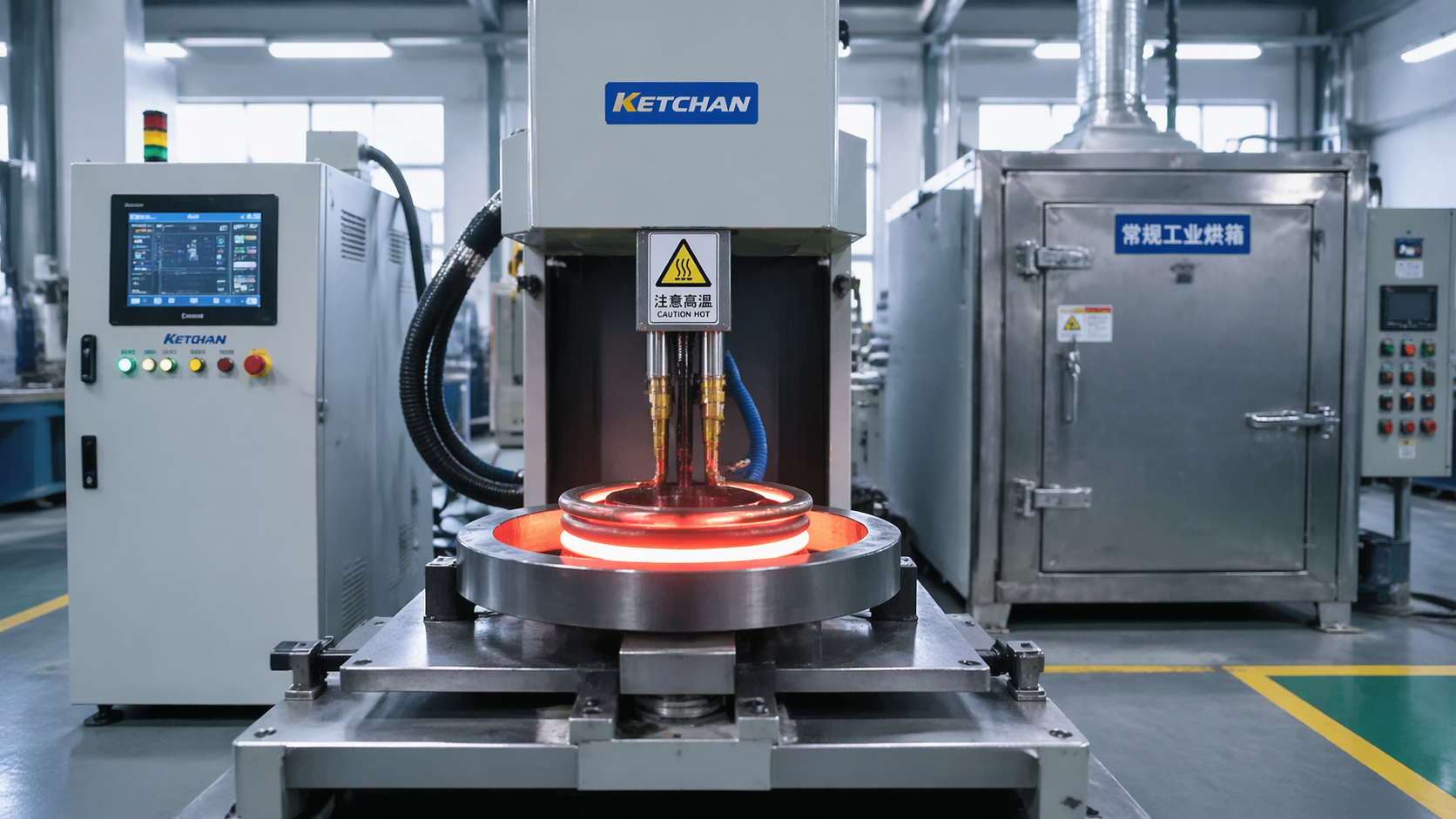
In precision manufacturing, the choice between Induction Heating and conventional ovens directly affects speed, energy efficiency, and control of thermal gradients. For sectors such as Battery Manufacturing and Semiconductor Lithography, where consistency and process integrity are critical, induction-based heating offers faster response, cleaner operation, and tighter thermal management. This article explores why Induction Heating is increasingly preferred across advanced industrial applications.
For researchers, operators, procurement teams, project managers, and corporate decision-makers, the comparison is no longer theoretical. It directly affects throughput, part quality, floor-space planning, safety controls, and long-term operating cost. In high-specification production lines, even a temperature deviation of a few degrees or a delay of several minutes can influence yield, metallurgical performance, or downstream process stability.
Within the broader thermal-processing landscape monitored by G-EBT, induction heating stands out because it applies energy directly to the workpiece or targeted zone rather than heating an entire chamber first. That difference changes the economics and the physics of production. It also explains why more advanced manufacturers are evaluating induction systems not as a niche alternative, but as a strategic replacement for conventional ovens in selected applications.
How Induction Heating Differs from Conventional Ovens
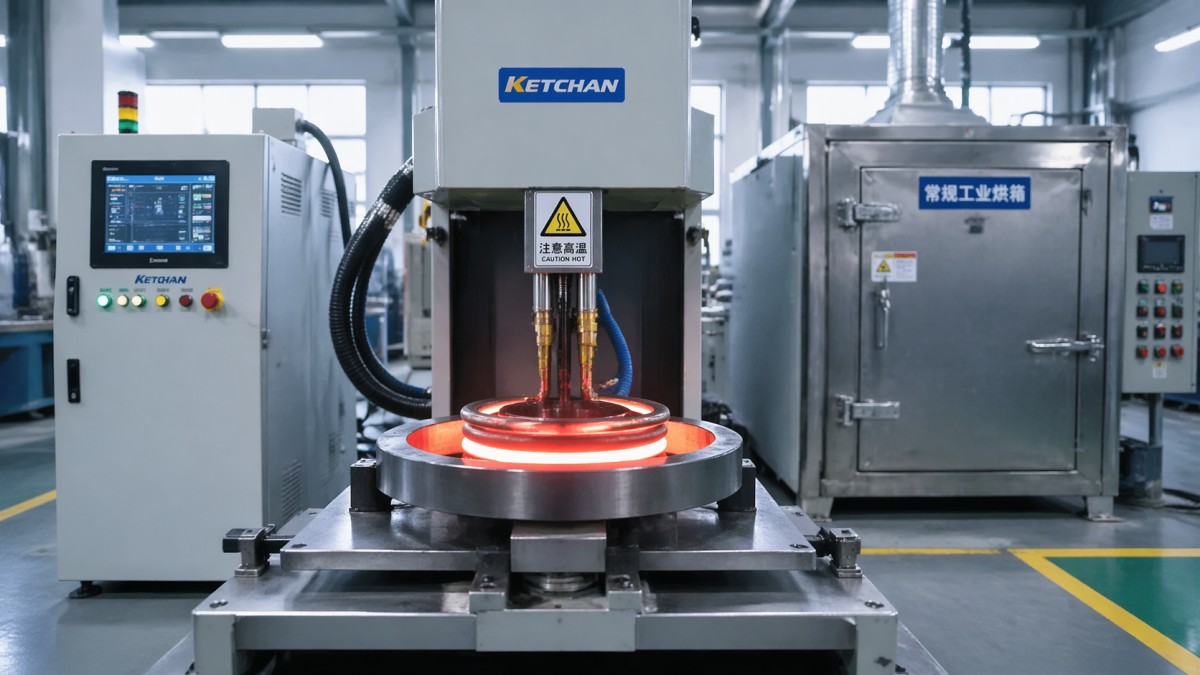
The core difference lies in the heating mechanism. Conventional ovens rely on convection, radiation, or a combination of both to raise the temperature of the surrounding chamber, the fixtures, and eventually the part. Induction heating, by contrast, generates heat within conductive materials through an electromagnetic field. Instead of waiting for heat to travel from air to surface and then into the component, the process can act almost immediately at the required area.
In practical terms, this means a process that may require 20–60 minutes of oven ramp-up can often be reduced to seconds or a few minutes with induction, depending on part geometry, material, coupling efficiency, and power level. For production managers, that time difference is not simply about speed. It affects queue length, batch scheduling, changeover frequency, and line responsiveness when demand varies across shifts or product families.
Ovens are still useful when large batch uniformity across multiple parts is the main requirement, especially for treatments that benefit from prolonged soaking. However, many industrial tasks do not require a full chamber to reach a stable temperature for extended periods. Brazing, shrink fitting, localized stress relief, preheating before welding, selective hardening, and controlled curing often benefit more from targeted energy delivery than from broad thermal exposure.
This distinction is especially relevant in industries where surrounding assemblies contain temperature-sensitive elements. In battery modules, electronic packaging, semiconductor tooling, and precision metal assemblies, unnecessary heating of adjacent materials can create dimensional instability, coating degradation, or seal damage. Induction helps reduce that risk by concentrating heat where it is required.
Direct Heating vs. Chamber Heating
A conventional oven heats the environment first and the component second. Induction heating reverses that logic by coupling energy directly into the conductive target. That is why induction systems often achieve faster thermal response, lower idle losses, and more precise temperature zoning in applications requiring repeatable heat profiles between 150°C and 1,100°C, depending on material and process design.
The table below highlights the most operationally relevant differences for industrial users comparing both technologies in manufacturing environments.
The key conclusion is not that ovens are obsolete, but that induction heating is often better when speed, thermal precision, and selective energy application matter more than bulk chamber capacity. That is why the technology is gaining traction across advanced fabrication lines with strict process windows and shorter takt times.
Why Induction Heating Improves Speed, Efficiency, and Process Control
In B2B manufacturing, “better” usually means measurable gains in three areas: cycle time, energy consumption, and process repeatability. Induction heating performs strongly in all three because the energy is concentrated and quickly adjustable. A power supply can respond in fractions of a second, making it possible to fine-tune thermal input during a process rather than waiting for an oven chamber to stabilize again after every opening, loading change, or recipe shift.
Energy efficiency is one of the most cited reasons for replacing ovens in suitable operations. When a plant uses an oven, it often heats air, insulation, fixtures, racks, and the empty volume of the chamber along with the part itself. Induction reduces these parasitic losses. In repetitive operations, especially those running 2 or 3 shifts per day, that difference can significantly reduce energy intensity per processed component.
Control of thermal gradients is another decisive advantage. In semiconductor-related tooling, battery tab joining preparation, and precision metal assemblies, uneven heating can create distortion, oxide formation, residual stress, or inconsistent microstructure. Induction coils can be designed to focus energy on a narrow band, while closed-loop systems using pyrometers or thermal cameras can maintain temperatures within a tighter band, often in the range of ±3°C to ±10°C depending on the setup.
Operational cleanliness also matters. Induction systems can reduce open hot surfaces, lower ambient heat load around workstations, and support cleaner process conditions where contamination control is important. For operators and EHS teams, the lower heat spill into the working environment may contribute to safer ergonomics and more stable nearby measurement or assembly conditions.
Key Performance Advantages in Daily Production
- Shorter start-up times, often cutting warm-up from tens of minutes to less than 5 minutes for many targeted tasks.
- Faster recipe changes because there is no need to cool and re-stabilize a large chamber volume.
- Lower heat exposure to surrounding parts, reducing the risk of damage to seals, coatings, adhesives, or electronics.
- More compact equipment footprints in selected cells, freeing floor space for automation, inspection, or buffer stations.
Where Ovens Still Retain an Advantage
Ovens may remain preferable for bulk treatments requiring long dwell times, simultaneous processing of many parts with similar profiles, or materials and geometries that are not well suited to induction coupling. The correct decision depends on application fit, not on a simple technology ranking. That is why benchmarking should focus on process objectives, part mix, and quality thresholds before a capital decision is made.
Application Scenarios Where Induction Outperforms Ovens
Induction heating is especially valuable in applications that need speed and selectivity rather than whole-volume heating. In battery manufacturing, one frequent requirement is controlled heating of tabs, connectors, or metallic interfaces before joining, forming, or sealing operations. Here, a temperature rise must happen quickly and repeatedly, often within a narrow process window, while avoiding damage to neighboring polymer layers or sensitive cell components.
In semiconductor lithography and precision equipment production, induction heating can support shrink fitting, localized brazing, or selective thermal conditioning of precision metal parts. These tasks often demand minimal contamination, low distortion, and a tightly managed thermal profile. Heating an entire assembly in an oven can introduce unnecessary risk, particularly when only one interface or ring-shaped zone requires energy input.
The automotive, aerospace, and industrial tooling sectors also benefit from induction for hardening, preheating, and stress-relief operations. In many of these cases, cycle time targets are below 3 minutes per part or even below 60 seconds in high-volume lines. An oven can struggle to deliver that responsiveness without creating bottlenecks or consuming excess floor space and utility load.
Distributors and system integrators should also note that induction equipment can be easier to integrate into automated cells. Robots, conveyors, and in-line sensors can be synchronized with induction power sources and custom coils, making the technology attractive for factories moving from batch processing toward semi-continuous or fully automated flow.
Typical Industrial Use Cases
The following table summarizes where induction heating usually delivers the highest comparative value against conventional ovens.
The common pattern across these use cases is simple: when only part of the component needs heat, induction usually creates a stronger business case. It reduces wasted energy, shortens handling time, and supports more predictable quality outcomes in tightly controlled industrial environments.
Selection Criteria for Procurement, Engineering, and Quality Teams
A successful comparison between induction heating and ovens should begin with application mapping rather than equipment preference. Procurement teams should ask whether the process requires batch uniformity or localized heat, whether cycle time is measured in minutes or seconds, and whether adjacent materials can tolerate full-assembly heating. These three questions alone often narrow the decision quickly.
Engineering teams should then review material type, part geometry, target depth of heating, frequency range, required power, and instrumentation. Induction systems may operate from a few kilowatts for small precision components to 100 kW or more for larger industrial tasks. Coil design is equally important. A poorly matched coil can reduce efficiency, widen the heat-affected zone, and make repeatability harder to maintain.
Quality and safety managers should look at temperature verification, recipe traceability, over-temperature protection, operator shielding, and maintenance access. A system that heats quickly but lacks robust feedback control can create compliance and yield issues. For sectors governed by internal validation protocols or external standards such as ISO, AWS, or DIN-related process expectations, documentation quality can be as important as heating speed.
Commercial evaluators should also consider total cost of ownership over 3–7 years rather than focusing on acquisition price alone. Energy usage, cycle reduction, scrap reduction, maintenance intervals, and floor-space savings may significantly change the economics. In many factories, the biggest return does not come from electricity savings alone, but from higher throughput and lower rework.
Practical Evaluation Checklist
- Define the target temperature range, hold time, and acceptable deviation, such as ±5°C or ±10°C.
- Measure current oven cycle time, including loading, ramp-up, soak, unloading, and waiting delays.
- Identify whether the full part or only 10%–30% of the part actually needs heating.
- Verify utility requirements, including electrical supply, cooling water, ventilation, and control integration.
- Request sample testing with representative parts before final capital approval.
Common Selection Mistakes
A frequent mistake is comparing only nameplate power. Two systems with the same nominal kW rating may perform very differently because of coil efficiency, frequency suitability, and fixture design. Another mistake is assuming ovens provide “safer” uniformity by default. If the process only needs local heating, chamber uniformity may be irrelevant while unnecessary heating introduces added risk.
Decision-makers should also avoid underestimating integration time. A standard induction power source may be available relatively quickly, but a production-ready solution with custom coil tooling, safety interlocks, and validation protocols may require 4–12 weeks depending on complexity. Early cross-functional review can reduce commissioning delays.
Implementation, Risk Control, and Long-Term Operating Value
Once a company decides to shift from ovens to induction heating for a given process, implementation should be treated as a controlled engineering project rather than a simple equipment swap. The most effective rollout usually includes part testing, coil optimization, control tuning, operator training, and validation under normal production conditions. A 5-step implementation plan is often sufficient for most industrial lines.
Risk control starts with understanding thermal targets and failure modes. If the process is too cold, bonding, fit, or metallurgical results may be incomplete. If it is too hot, the operation can damage coatings, warp thin sections, or alter material properties outside specification. That is why temperature monitoring and recipe locking are essential, especially in regulated or high-value manufacturing environments.
Maintenance planning is another area where induction often compares favorably with ovens. Ovens may require ongoing chamber cleaning, insulation inspection, burner or heater element service, and longer downtime for thermal recovery. Induction systems still need maintenance, especially for coils, cooling circuits, and power electronics, but the service profile can be more predictable when preventive checks are scheduled every 500–2,000 operating hours based on usage intensity.
From a long-term value perspective, the strongest advantage is flexibility. As production changes, induction systems can often adapt through new coil designs, revised power recipes, or automation updates without rebuilding an entire thermal line. For plants managing mixed product portfolios and increasing customization, that flexibility can be strategically more valuable than static batch heating capacity.
Suggested Implementation Framework
The table shows that implementation success depends on more than buying a power source. The transition works best when engineering, quality, EHS, and procurement align on the process window, test criteria, and maintenance plan before full-scale rollout.
FAQ for Industrial Buyers and Users
Is induction heating always more energy efficient than an oven?
Not always. It is usually more efficient when the task involves localized, rapid, or on-demand heating. If a process requires long-duration bulk soaking of many parts at once, an oven may still be competitive. Efficiency should be evaluated per part, per cycle, and per accepted output rather than by equipment type alone.
What industries benefit most from replacing ovens with induction?
Battery manufacturing, semiconductor tooling, metal joining, automotive components, aerospace subassemblies, and precision industrial equipment are among the strongest candidates. The common factor is the need for repeatable heat in a defined area with reduced effect on nearby materials or assemblies.
What should buyers check first during supplier evaluation?
Start with application evidence: sample trials, temperature control method, coil design capability, safety architecture, and integration support. Then review service factors such as spare part availability, expected lead time, training scope, and maintenance intervals. A technically strong system without implementation support can still become a project risk.
Induction heating is better than ovens in many advanced industrial scenarios because it delivers heat faster, uses energy more selectively, and offers tighter control over thermal gradients. For manufacturers working with precision parts, sensitive assemblies, or short takt times, those advantages translate into practical gains in throughput, consistency, and operating efficiency.
The right choice still depends on application fit, material behavior, and process goals. But when localized heating, fast response, and cleaner thermal management are required, induction heating often provides a stronger technical and commercial case than conventional ovens. For benchmarking support, application evaluation, or solution mapping across advanced thermal-processing environments, now is the time to get a tailored assessment.
Contact us to discuss your process requirements, request a customized comparison, or explore more thermal-processing solutions aligned with your production, quality, and procurement targets.
Technical Specifications
- Explosion-Proof Enclosure Prices: How Certification and Materials Affect Your QuoteAuthor :Dr. Aris Nano
- Selecting Heat Shrink Tubing for Wire Harnesses: Temperature, Ratio, and MaterialAuthor :Marcus Valve
- Selecting Servo Motors for CNC Machines: Torque, Speed, Inertia, and Duty CycleAuthor :Dr. Aris Nano
Expert Insights

Chief Security Architect
Dr. Thorne specializes in the intersection of structural engineering and digital resilience. He has advised three G7 governments on industrial infrastructure security.
Related Analysis
- Sep 13, 2026Explosion-Proof Enclosure Prices: How Certification and Materials Affect Your QuoteAuthor :Dr. Aris Nano
- Sep 12, 2026Selecting Heat Shrink Tubing for Wire Harnesses: Temperature, Ratio, and MaterialAuthor :Marcus Valve
- Sep 11, 2026Selecting Servo Motors for CNC Machines: Torque, Speed, Inertia, and Duty CycleAuthor :Dr. Aris Nano
Recommended News
- Explosion-Proof Enclosure Prices: How Certification and Materials Affect Your QuoteAuthor :Dr. Aris Nano

- Selecting Heat Shrink Tubing for Wire Harnesses: Temperature, Ratio, and MaterialAuthor :Marcus Valve

- Selecting Servo Motors for CNC Machines: Torque, Speed, Inertia, and Duty CycleAuthor :Dr. Aris Nano

- How to Evaluate a Brass Rod and Bar Manufacturer for Machining Quality and Supply ReliabilityAuthor :Dr. Aris Nano