How reliable is perimeter intrusion detection in rain?
Author
Date Published
Reading Time
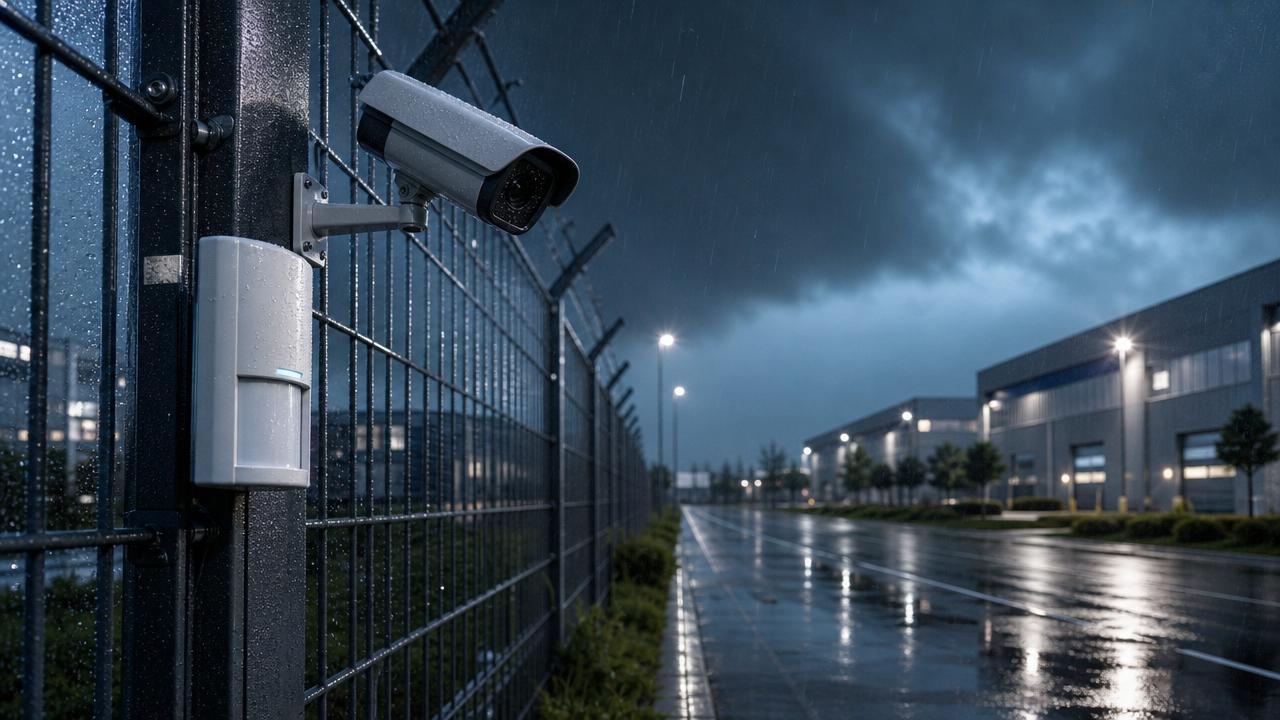
Rain is one of the most demanding real-world conditions for perimeter intrusion detection, often exposing weaknesses in sensor sensitivity, signal filtering, and false-alarm management.
The practical question is not whether equipment works in rain. It is whether it separates genuine intrusion from rainfall, runoff, vegetation, and noise.
For industrial sites, energy assets, laboratories, and fabrication facilities, reliable perimeter intrusion detection protects continuity, safety, and controlled access during severe weather.
Why Rain Changes the Reliability Baseline for Perimeter Intrusion Detection
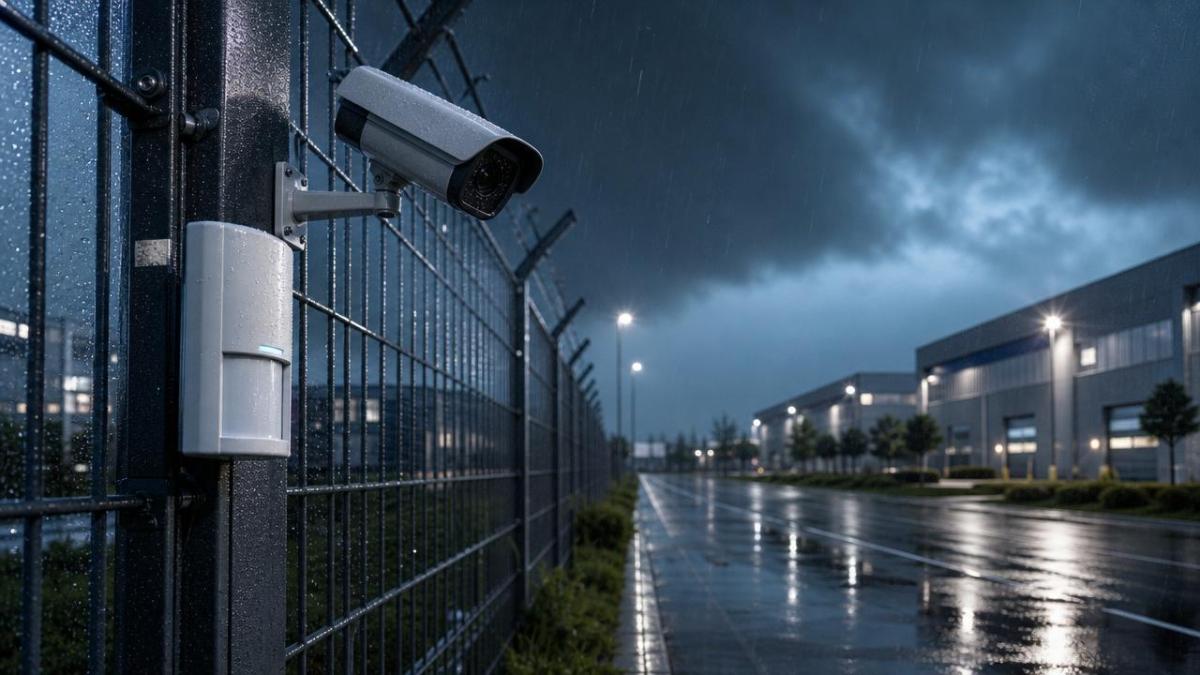
Rain changes the operating environment around a perimeter. It adds moving droplets, wet surfaces, acoustic noise, and unstable ground conditions.
A perimeter intrusion detection system that performs well in dry weather may behave differently when water covers fences, posts, cameras, or buried sensors.
Reliability therefore depends on three factors: detection probability, nuisance alarm rate, and recovery after rain intensity changes.
High sensitivity alone is not enough. Excessive sensitivity may turn rainfall into alarms, especially on long fence lines or exposed industrial boundaries.
The strongest perimeter intrusion detection designs use layered sensing, weather-aware analytics, and site-specific calibration rather than relying on one technology.
Scenario Background: Different Sites Face Different Rain Risks
Rain does not affect every perimeter equally. The same storm can create minor noise at one site and repeated alarms at another.
Open terrain, metal fencing, drainage design, lighting, nearby roads, and vegetation all influence perimeter intrusion detection reliability.
In energy, aerospace, semiconductor, and advanced manufacturing environments, weather resilience must be treated as an operational requirement.
Sites involving thermal processing, high-value fabrication, or controlled materials often require continuous protection during night rain and unattended periods.
The correct evaluation method starts with the scenario. Then it matches sensors, analytics, and response rules to that scenario.
Scenario 1: Fence Lines Exposed to Heavy Rain and Wind
Fence-mounted perimeter intrusion detection is common because it directly senses climbing, cutting, or lifting attempts along the boundary.
In rain, fences vibrate from wind, water impact, loose fabric, and attached debris. These effects can resemble intrusion signatures.
Reliability improves when the system uses adaptive thresholds, zone segmentation, and event pattern recognition rather than simple vibration triggers.
Shorter detection zones also help. They reduce uncertainty and allow weather-related disturbances to be isolated instead of affecting the whole perimeter.
For chain-link fencing, mechanical condition matters. Loose posts, rattling gates, and poor tension can reduce perimeter intrusion detection performance.
Key judgment point for fence scenarios
The system should alarm on sustained climb, cut, or forced entry patterns, not isolated raindrop impact or brief wind vibration.
Scenario 2: Open Yards, Storage Areas, and Outdoor Industrial Assets
Open yards often combine vehicle movement, stacked materials, shadow changes, drainage channels, and temporary obstructions.
For these spaces, perimeter intrusion detection may use radar, thermal cameras, video analytics, or microwave barriers.
Rain can reduce visibility for optical cameras. It may also create reflections from wet pavement, vehicles, or metal surfaces.
Thermal imaging may remain useful, but performance depends on temperature contrast, lens protection, and algorithm stability.
Radar-based perimeter intrusion detection often performs better in low visibility, although heavy rain can still affect range and clutter management.
The strongest setup usually combines wide-area detection with visual verification. Detection and verification should not depend on the same weather weakness.
Scenario 3: Critical Utility Corridors and Remote Boundaries
Pipelines, substations, renewable energy fields, and communication corridors often cover long, remote perimeters.
Rain creates access challenges and can delay physical response. Perimeter intrusion detection must therefore reduce false dispatches.
Long-distance fiber optic sensing can detect vibration along extended boundaries, but calibration is critical in storm-prone terrain.
Drainage culverts, service roads, and vegetation belts often become nuisance sources during intense rain.
A reliable perimeter intrusion detection plan should map these sources before final alarm rules are accepted.
For remote corridors, event location accuracy matters. It helps distinguish a localized intrusion from broad environmental disturbance.
Scenario 4: High-Security Manufacturing and Controlled Processing Sites
Advanced fabrication sites may include clean manufacturing, thermal-processing areas, laser systems, electron beam equipment, and restricted material zones.
In these environments, perimeter intrusion detection supports process continuity and asset integrity, not only conventional security.
Rain reliability is important because storms often occur during reduced staffing, shift changes, or limited visibility periods.
A false alarm can interrupt operations. A missed alarm can expose high-value equipment, controlled inputs, or sensitive production data.
For such sites, perimeter intrusion detection should integrate with access control, lighting, video verification, and incident records.
Integration enables better decisions during rain, especially when multiple sensor types report the same location.
Technology Behavior in Rain: What Usually Performs Best
No single perimeter intrusion detection technology is universally reliable in rain. Performance depends on site geometry and environmental exposure.
Layered perimeter intrusion detection usually provides the most dependable result. One sensor detects, another confirms, and analytics classify the event.
This layered model is especially useful where rain, fog, vegetation, and reflective surfaces occur together.
Different Rain Conditions Require Different Detection Priorities
Light rain mainly tests filtering accuracy. Heavy rain tests sensor stability, enclosure protection, and nuisance alarm handling.
Wind-driven rain is more difficult because it moves fences, branches, signs, cables, and loose coverings.
Standing water adds another concern. Reflections and surface movement can confuse perimeter intrusion detection based on video or microwave fields.
- Light rain: verify nuisance alarm filtering and lens cleanliness.
- Heavy rain: confirm stable detection across all zones.
- Wind-driven rain: inspect fences, vegetation, and loose structures.
- Post-rain conditions: evaluate runoff, mud, reflections, and drainage noise.
A reliable perimeter intrusion detection assessment should include both active rainfall and the hours after rainfall.
Testing Perimeter Intrusion Detection Reliability During Rain
Laboratory specifications are useful, but field testing reveals the real performance boundary during rain.
Testing should include controlled intrusion attempts and passive observation during natural weather events.
A balanced test measures detection probability, false alarm frequency, alarm location accuracy, and verification image quality.
It should also record rainfall intensity, wind speed, temperature, surface conditions, and vegetation movement.
- Define likely intrusion methods for each perimeter segment.
- Test in dry weather to establish the baseline.
- Repeat during light, moderate, and heavy rain.
- Review nuisance alarms by source and location.
- Adjust thresholds without sacrificing detection probability.
Perimeter intrusion detection should not be accepted solely because it alarms during a test. It must alarm correctly and consistently.
Scene-Fit Recommendations for Reliable Rain Performance
The best system design starts with the site’s rain behavior, not only the perimeter length.
Where uptime is critical, use redundant detection paths. Rain should not disable both detection and verification at the same time.
Environmental maintenance also matters. Trim vegetation, stabilize drainage, tighten fencing, and protect sensor housings before storm season.
Common Misjudgments When Evaluating Rain Reliability
A common mistake is treating false alarms as a software issue only. Mechanical site conditions often cause the problem.
Another mistake is testing only during light rain. Many failures appear during wind gusts, rapid runoff, or post-storm saturation.
Some evaluations focus on detection distance but ignore alarm classification. Distance means little if rain produces constant nuisance events.
Over-reliance on cameras is also risky. Rain on lenses, glare, fog, and poor lighting can weaken verification.
Perimeter intrusion detection should be judged by operational usefulness, not only by datasheet claims or ideal-condition demonstrations.
How Reliable Is Perimeter Intrusion Detection in Rain?
Perimeter intrusion detection can be highly reliable in rain when it is correctly matched to the site and properly commissioned.
Reliability decreases when drainage, vegetation, fence condition, camera placement, and sensor thresholds are ignored.
The most dependable systems combine environmental awareness, layered sensing, accurate alarm zoning, and disciplined maintenance.
For industrial and critical infrastructure environments, rain testing should be part of acceptance, not an afterthought.
G-EBT’s technical benchmarking perspective supports this approach: performance must be measured against real operating conditions and repeatable criteria.
Action Guide: Next Steps Before Selecting or Upgrading a System
Start with a rain-risk survey of the full boundary. Document water flow, fence condition, blind spots, and vegetation movement.
Then define acceptable alarm performance for each zone. Different areas may require different perimeter intrusion detection settings.
- Request field evidence from comparable rainy environments.
- Test detection and verification under actual rainfall.
- Use layered sensors where consequences are high.
- Include drainage and fence maintenance in the security plan.
- Review alarm logs after every severe weather event.
Reliable perimeter intrusion detection in rain is achievable. It requires scenario-based design, measured testing, and continuous adjustment after deployment.
When those steps are followed, rain becomes a manageable condition rather than a major weakness in perimeter protection.
Technical Specifications
Expert Insights

Chief Security Architect
Dr. Thorne specializes in the intersection of structural engineering and digital resilience. He has advised three G7 governments on industrial infrastructure security.
Related Analysis
- Aug 31, 2026How to Size Spring-Loaded Safety Relief Valves for Process Overpressure ScenariosAuthor :Dr. Elena Carbon
- Aug 30, 2026Laser PPE Requirements: Selecting Eyewear and Controls by Laser ClassAuthor :Dr. Aris Nano
- Aug 29, 2026Selecting High-Pressure Pump Shaft Seals for Abrasive, High-Temperature ServiceAuthor :Dr. Elena Carbon
Recommended News
- How to Size Spring-Loaded Safety Relief Valves for Process Overpressure ScenariosAuthor :Dr. Elena Carbon

- Laser PPE Requirements: Selecting Eyewear and Controls by Laser ClassAuthor :Dr. Aris Nano

- Selecting High-Pressure Pump Shaft Seals for Abrasive, High-Temperature ServiceAuthor :Dr. Elena Carbon

- How to Evaluate a Heat Treatment Equipment Supplier for Aerospace and Automotive PartsAuthor :Dr. Elena Carbon