Why do push button switches fail sooner than expected?
Author
Date Published
Reading Time
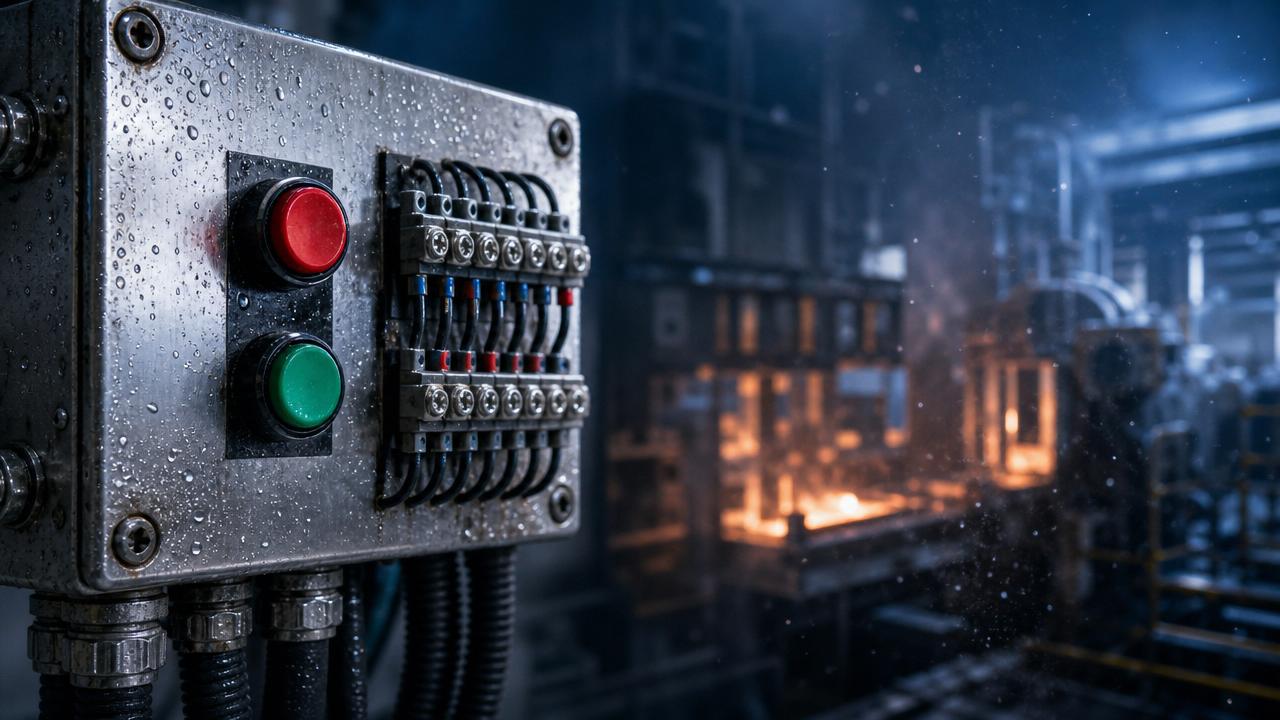
In high-demand industrial environments, push button switches often fail sooner than expected due to heat, dust, vibration, electrical overload, moisture, and weak maintenance practices.
In thermal-processing, welding, vacuum, laser, and automation systems, early switch failure can stop critical sequences and trigger repeat downtime.
Understanding failure mechanisms helps maintenance decisions become faster, cleaner, and more reliable across mixed industrial operating conditions.
Where push button switches fail first in demanding production scenes
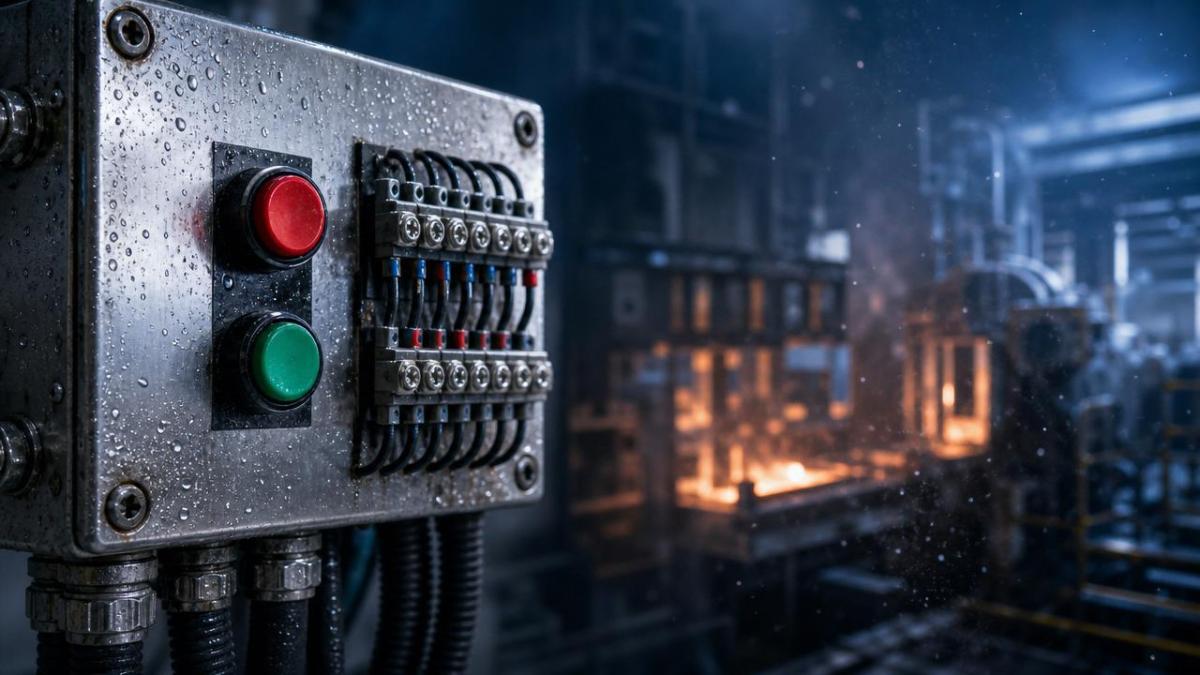
The first failure point is rarely random. It usually reflects the local operating scene around the control panel.
Push button switches installed near furnaces, welding cells, plasma stations, or vacuum equipment face different stress patterns.
A button on a clean control console may last for years. The same design near heat, oil, or vibration may degrade quickly.
The key is to connect the failure symptom with the working scene, not only with the component label.
Scene background: why the same switch performs differently
Push button switches are simple interfaces, but their reliability depends on mechanical, electrical, and environmental compatibility.
A normal start, stop, reset, or emergency command may involve thousands of operations under uneven field conditions.
In laser processing lines, fine particles and cooling moisture may enter panel openings. In welding cells, spatter and vibration dominate.
In vacuum heat treatment, radiant heat and thermal cycling can age plastics, seals, springs, and contact carriers.
This is why push button switches should be evaluated by scenario, not only by rated voltage or catalog appearance.
Heat-intensive scenes: contact aging and seal fatigue
Near heat treatment furnaces, induction heaters, and thermal chambers, elevated temperature accelerates insulation aging.
The actuator may still move normally, while the internal contact resistance increases beyond acceptable control limits.
Heat can harden rubber seals, deform plastic bezels, and weaken spring force. These changes create intermittent signals.
Push button switches in hot zones should be inspected for discoloration, loose terminals, brittle seals, and delayed rebound.
A thermal camera can reveal panel hot spots before the switch becomes a visible maintenance problem.
Dust, metal fines, and process residue around control panels
Dust is not only a cleanliness issue. It can change how push button switches feel, move, and conduct.
Laser cutting, grinding, additive manufacturing, and powder handling may create conductive or abrasive particles.
Particles can enter actuator gaps, increase friction, contaminate contacts, or bridge low-voltage signal circuits.
In dusty scenes, failure often starts as sticky movement, inconsistent actuation force, or slow reset behavior.
Choose suitable enclosure ratings, panel gaskets, and protective boots when push button switches face airborne contamination.
Vibration scenes: loose terminals and mechanical wear
Welding robots, presses, conveyors, pumps, and compressors create vibration that affects panel-mounted devices.
Push button switches may fail early when terminal screws loosen, contact blocks shift, or retaining rings lose clamping force.
The failure may appear as random machine stops, unstable reset commands, or unexplained controller input flicker.
Inspection should include torque verification, cable strain relief, panel cutout fit, and contact block locking position.
Where vibration is unavoidable, use anti-rotation features, secure wiring paths, and switch designs rated for mechanical shock.
Electrical overload scenes: arcing, pitting, and welded contacts
Many premature failures come from switching loads that exceed the practical capability of the contact block.
Push button switches should not directly interrupt heavy inductive loads unless the design and rating support that duty.
Solenoids, contactor coils, relays, and brake circuits can generate voltage spikes when de-energized.
Without suppression, the contacts may arc, pit, oxidize, or weld closed after repeated operations.
Use interposing relays, snubbers, flyback diodes, or surge suppressors where circuit behavior creates damaging transients.
Moisture and chemical scenes: corrosion inside the interface
Moisture affects push button switches in washdown areas, cooling systems, outdoor panels, and humid plant zones.
Condensation can form inside panels when temperature cycles pull humid air through small openings.
Corrosion increases contact resistance and may cause low-level signals to disappear before high-power circuits show problems.
Chemical vapors from cleaning agents, plating lines, or process fluids can attack seals and plated contact surfaces.
For wet or corrosive scenes, prioritize sealed operators, compatible materials, drain strategy, and controlled panel ventilation.
Different scene requirements for push button switches
Scenario-based adaptation advice for longer service life
The right adaptation plan starts with environment, circuit duty, operation frequency, and failure consequence.
- Select push button switches with suitable IP rating for dust, splash, or washdown exposure.
- Use contact ratings that match real loads, including inductive and inrush conditions.
- Add surge suppression where coils, solenoids, or relays create switching spikes.
- Separate low-level control signals from noisy power wiring inside the panel.
- Apply scheduled inspection for buttons used in start, stop, reset, and emergency functions.
For mission-critical stations, replacement intervals should reflect observed cycle count and environment, not only calendar age.
Common misjudgments that make failures repeat
A common mistake is replacing push button switches without identifying the condition that damaged the previous component.
If the root cause is heat, moisture, vibration, or arcing, the new part may fail in the same way.
Another mistake is judging reliability only by appearance. Internal contacts may be degraded while the operator looks clean.
Low-voltage circuits are especially sensitive to oxidation, contamination, and minor resistance changes.
Maintenance records should connect symptoms, environment, circuit design, and replacement history for each recurring station.
Practical diagnosis checklist before replacement
- Check whether the actuator sticks, tilts, rebounds slowly, or feels rough.
- Measure contact resistance under realistic switching conditions.
- Inspect terminals for looseness, oxidation, overheating, or insulation damage.
- Review circuit loads and confirm that suppression devices are present.
- Look for dust paths, moisture traces, cracked boots, and damaged panel seals.
- Compare the installation with the component rating and actual duty cycle.
This checklist helps distinguish a weak switch from a weak application environment.
Action path: turn switch failures into reliability data
Premature failure of push button switches is usually a sign of mismatch between component design and field conditions.
Document the failed position, machine state, environmental exposure, measured resistance, and circuit load each time.
Then adjust sealing, mounting, wiring, suppression, material selection, or replacement intervals based on the pattern.
In complex energy-beam and thermal-processing systems, small interface devices can determine whether advanced equipment runs predictably.
Treat push button switches as scenario-dependent reliability points, and failures become preventable maintenance signals rather than unexpected stops.
Technical Specifications
Expert Insights

Chief Security Architect
Dr. Thorne specializes in the intersection of structural engineering and digital resilience. He has advised three G7 governments on industrial infrastructure security.
Related Analysis
- Jun 02, 2026Industrial Wall Sockets Buying Guide: Ratings, Materials, and Safety StandardsAuthor :Dr. Elena Carbon
- Jun 02, 2026CCTV Camera Wholesale Guide: Resolution, Night Vision, and MOQ ExplainedAuthor :Dr. Aris Nano
- Jun 02, 2026Handheld Laser Welder Factory Selection: Power, Support, and Quality ChecksAuthor :Dr. Aris Nano
Recommended News
- Industrial Wall Sockets Buying Guide: Ratings, Materials, and Safety StandardsAuthor :Dr. Elena Carbon

- CCTV Camera Wholesale Guide: Resolution, Night Vision, and MOQ ExplainedAuthor :Dr. Aris Nano

- Handheld Laser Welder Factory Selection: Power, Support, and Quality ChecksAuthor :Dr. Aris Nano

- Wholesale Lightning Arresters: Key Specs for Bulk PurchasingAuthor :Dr. Aris Nano