Why wholesale traffic cones vary so much in durability
Author
Date Published
Reading Time
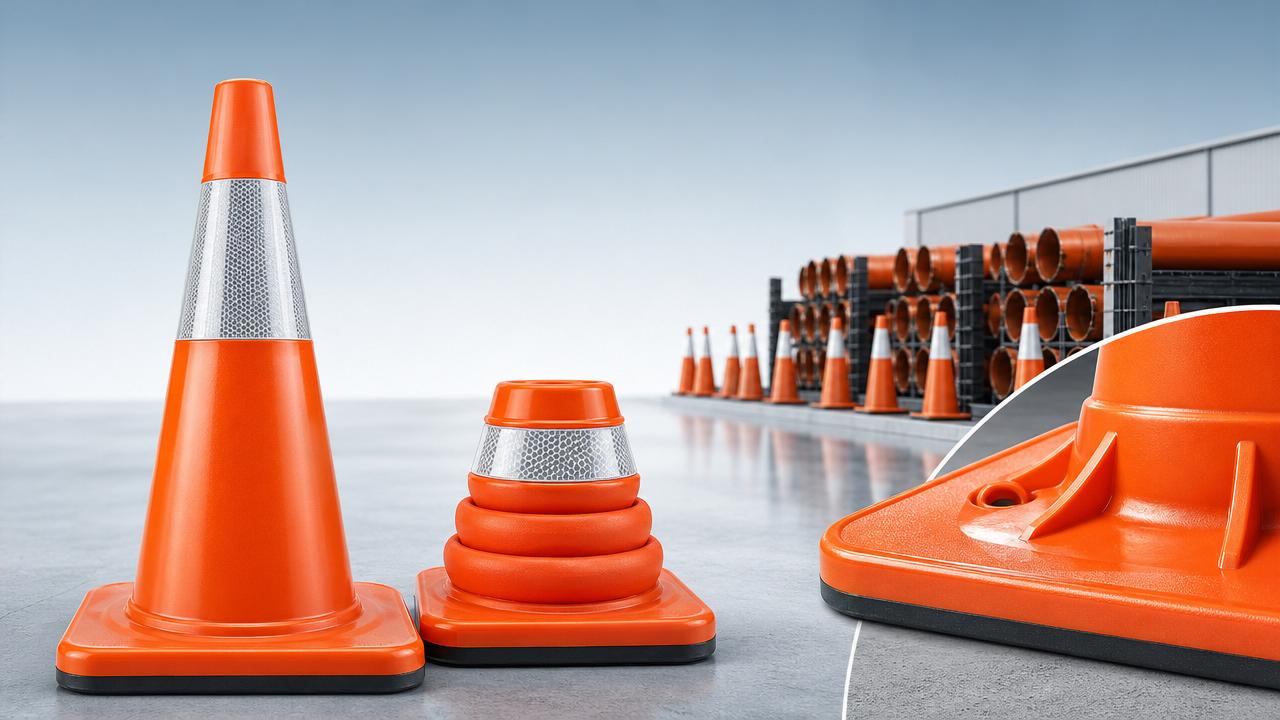
Why do wholesale traffic cones that look similar perform so differently in the field? Durability is rarely a simple price issue. It comes from resin choice, wall design, UV stabilization, base balance, molding precision, and batch consistency. When these variables are ignored, wholesale traffic cones may crack, fade, lean, or fail after repeated impacts. A checklist-based evaluation makes selection far more reliable.
Why a checklist matters when comparing wholesale traffic cones
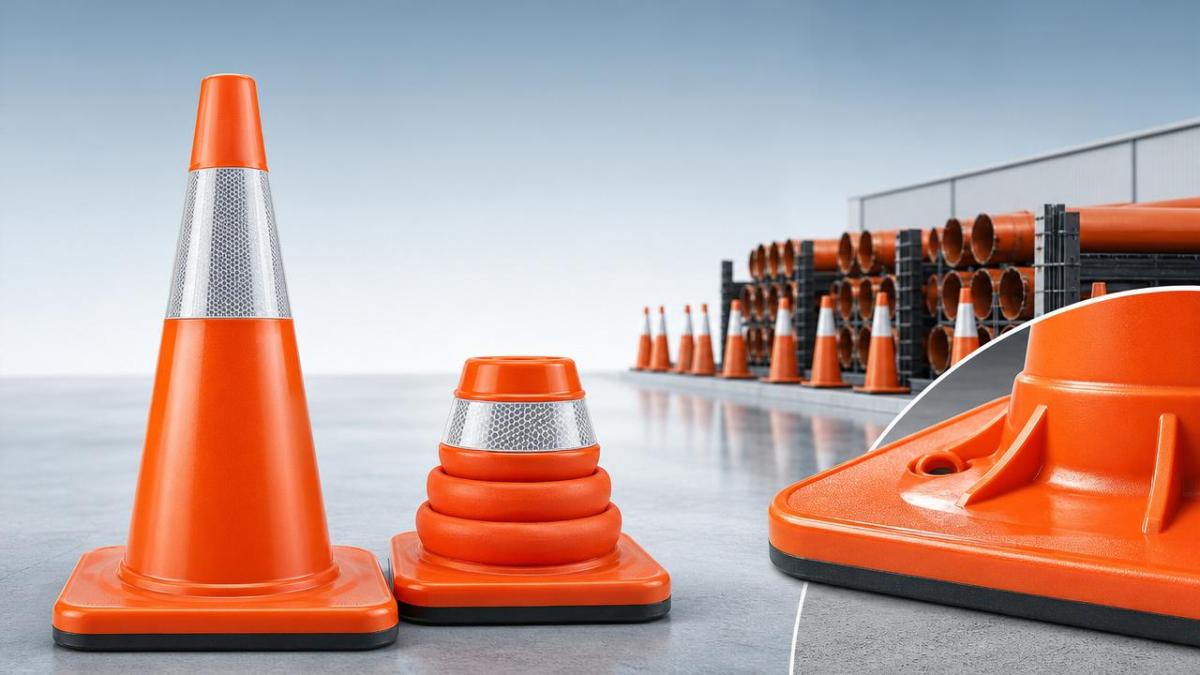
Field performance is shaped by many small engineering decisions. Two cones can share size, color, and reflective bands, yet behave very differently under sunlight, vehicle contact, wind, and storage pressure.
A checklist reduces guesswork. It helps compare wholesale traffic cones by measurable factors instead of appearance alone. That approach improves service life, lowers replacement frequency, and supports safer deployment across mixed environments.
For general industry use, durability also affects logistics efficiency. Longer-lasting cones reduce disruption, simplify inventory planning, and limit quality variation between projects, sites, and maintenance cycles.
Core durability checklist for wholesale traffic cones
Use the following checklist before ordering wholesale traffic cones in volume. Each point addresses a common source of premature field failure.
- Check resin composition first. Prefer PVC or high-grade blends with proven flexibility, because low-cost recycled content often turns brittle in cold weather or soft in heat.
- Measure wall thickness across the cone body. Uniform thickness improves impact recovery, while thin zones near the collar or top can split after repeated handling.
- Verify UV stabilization additives. Outdoor wholesale traffic cones without adequate UV protection fade quickly, lose surface integrity, and become more prone to cracking over time.
- Inspect base weight and geometry. A stable base helps cones resist wind and turbulence, but poor bonding between base and body can shorten useful life.
- Review rebound behavior after compression. Durable wholesale traffic cones should return to shape after being bent, stacked, or lightly impacted during normal traffic control work.
- Examine reflective collar quality. Sheeting adhesion matters as much as brightness, because peeling collars reduce visibility and create early replacement even when the cone body survives.
- Request molding consistency data. Flashing, voids, bubbles, and uneven pigment distribution often signal weak process control and unstable long-term durability.
- Test performance across temperature ranges. Some wholesale traffic cones remain flexible in winter, while others stiffen sharply and crack during deployment or transport.
- Confirm stackability under load. Cones stored tightly for long periods should separate cleanly and keep shape without permanent deformation at the top section.
- Compare certification and compliance details. Conformance to relevant visibility and material standards can indicate stronger process discipline, not just regulatory box-ticking.
What to ask for in sample evaluation
Do not rely on catalog photos. Ask for production samples from the same batch design intended for shipment. Then compare weight, finish, odor, flexibility, and reflective bond quality.
Simple field tests can reveal a lot. Compress the cone body, twist the top, inspect the base joint, and leave samples under sunlight and moisture for a short observation cycle.
How application scenarios change durability needs
Roadside and highway environments
Roadside use places the highest stress on wholesale traffic cones. Vehicle drafts, accidental tire strikes, UV exposure, rain, and rough pavement all accelerate wear.
In this setting, heavier bases, stronger reflective collars, and better rebound performance matter more than cosmetic finish. Lightweight cones may save upfront cost but fail sooner.
Warehouses, yards, and industrial facilities
Indoor and semi-outdoor locations often involve forklift contact, dragging, and repeated repositioning. Here, abrasion resistance and base attachment are especially important.
Wholesale traffic cones for industrial sites do not always need the same UV package as highway products, but they must tolerate oils, dust, and frequent handling without splitting.
Events, parking control, and temporary guidance
Event use often prioritizes portability and quick setup. Even so, cheap wholesale traffic cones can warp in stacked transport or lose collars after repeated loading cycles.
For these applications, balance low weight with recovery strength. A cone that is easy to move but unable to keep shape will create recurring replacement and uneven presentation.
Commonly overlooked issues that reduce cone life
Too much focus on unit price
The lowest quote can hide thinner walls, weaker resin, or poor UV protection. Shorter life usually raises the real cost of wholesale traffic cones over the operating period.
Assuming all recycled material is equal
Recycled content is not automatically a problem. The issue is uncontrolled formulation. Poor blending can cause inconsistent flexibility, color variation, and unpredictable cracking behavior.
Ignoring climate-specific performance
A cone that performs well in mild weather may fail in freezing winters or high-heat regions. Temperature exposure should always be part of wholesale traffic cones evaluation.
Overlooking reflective collar durability
Many replacements happen because reflectivity degrades before the cone body breaks. If sheeting peels, cracks, or dulls early, service value drops sharply.
Skipping batch-to-batch verification
Initial samples may be strong, while later production changes materials or weight. Reconfirming batch consistency protects against hidden quality drift in wholesale traffic cones supply.
Practical steps for better selection and longer service life
- Define the actual use case first, including exposure time, weather, traffic intensity, stacking frequency, and visibility requirements.
- Create a short technical specification covering material, cone height, weight tolerance, wall thickness, collar type, and target temperature range.
- Request at least two sample sets and compare them side by side under the same handling and outdoor exposure conditions.
- Record failure points during testing, such as base separation, permanent bending, collar peeling, or brittle cracking near the top.
- Use landed life-cycle cost, not only purchase price, when comparing wholesale traffic cones from different sources.
- Keep a retained approval sample for future deliveries so incoming batches can be checked against the original accepted standard.
A simple comparison table
Conclusion and next action
Wholesale traffic cones vary in durability because their real performance is built into the material system, structural design, and production discipline. Similar appearance does not mean similar service life.
Use a checklist, test real samples, and compare field-specific requirements before placing volume orders. That process gives a clearer view of which wholesale traffic cones will hold shape, maintain visibility, and deliver lower replacement cost over time.
Start with a written specification, validate samples under realistic conditions, and approve only batches that match the benchmark. That single step improves durability decisions immediately.
Technical Specifications
Expert Insights

Chief Security Architect
Dr. Thorne specializes in the intersection of structural engineering and digital resilience. He has advised three G7 governments on industrial infrastructure security.
Related Analysis
- Sep 01, 2026How to Evaluate an Industrial Valves Distributor for Reliable Process PerformanceAuthor :Lina Cloud
- Aug 31, 2026How to Size Spring-Loaded Safety Relief Valves for Process Overpressure ScenariosAuthor :Dr. Elena Carbon
- Aug 30, 2026Laser PPE Requirements: Selecting Eyewear and Controls by Laser ClassAuthor :Dr. Aris Nano
Recommended News
- How to Evaluate an Industrial Valves Distributor for Reliable Process PerformanceAuthor :Lina Cloud

- How to Size Spring-Loaded Safety Relief Valves for Process Overpressure ScenariosAuthor :Dr. Elena Carbon

- Laser PPE Requirements: Selecting Eyewear and Controls by Laser ClassAuthor :Dr. Aris Nano

- Selecting High-Pressure Pump Shaft Seals for Abrasive, High-Temperature ServiceAuthor :Dr. Elena Carbon