Aerospace integrity starts with the defects you cannot see
Author
Date Published
Reading Time
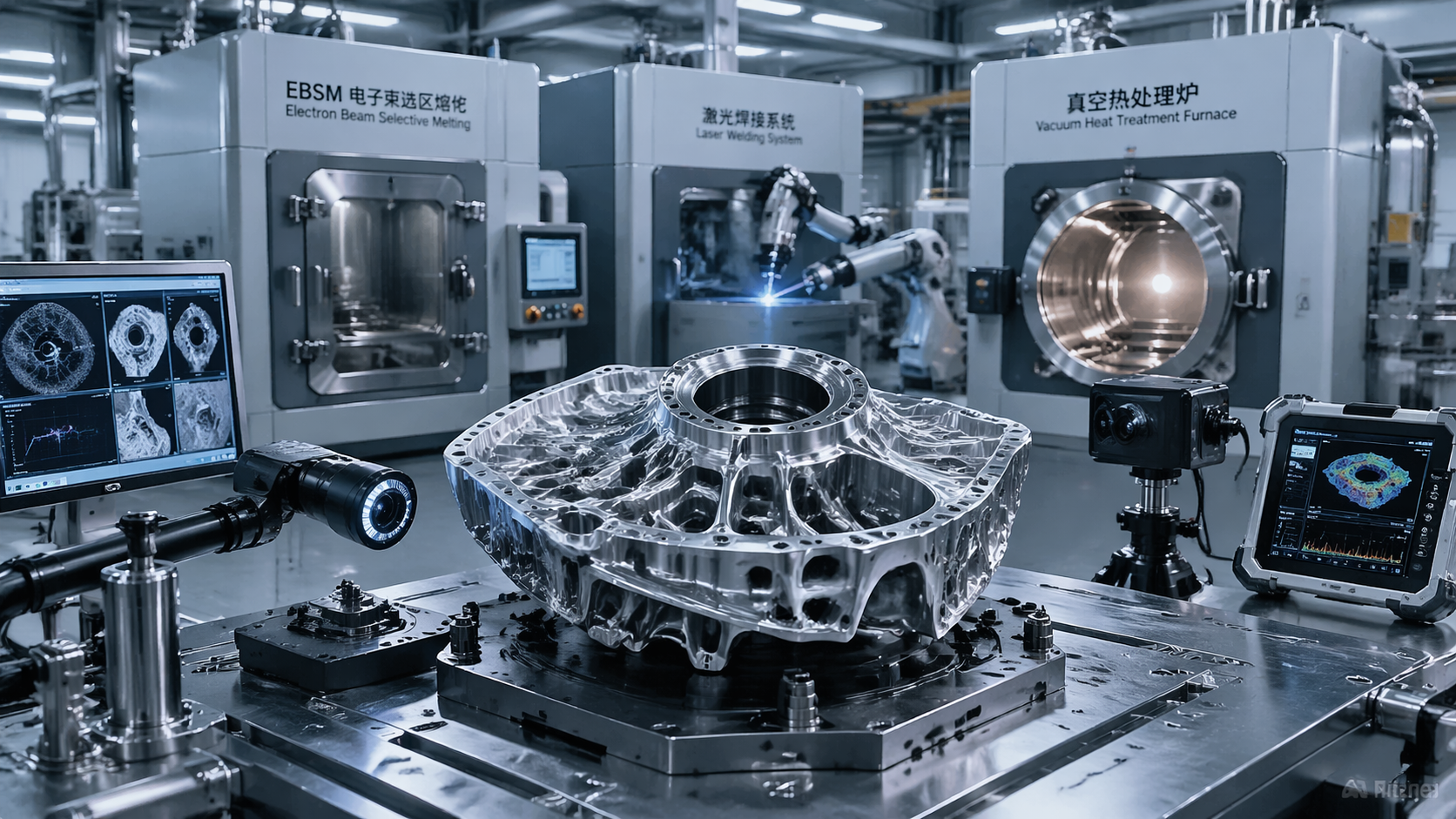
Aerospace Integrity depends on mastering what standard inspection often misses: hidden micro-defects shaped by Energy Beam Control, thermal gradients, and process drift. From Electron Beam Melters to High-vacuum Carburizing Furnaces, and from a handheld laser welder factory to a cnc laser cutting machine factory and laser cleaning machine factory, Fabrication Line Optimization is where the Physics of Transformation meets Industrial-grade Supremacy.
Why invisible defects become visible risks in aerospace and advanced manufacturing
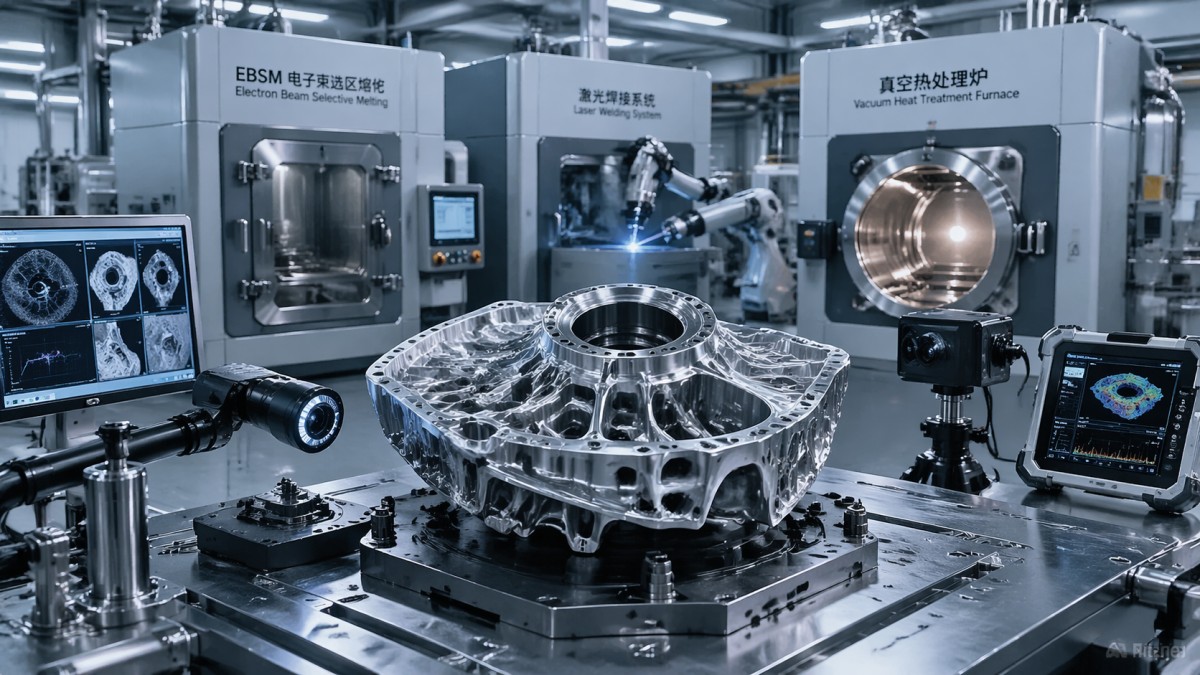
For aerospace structures, propulsion parts, battery housings, semiconductor fixtures, and safety-critical welded assemblies, the most expensive failure often begins below the surface. A part may pass dimensional inspection and still contain porosity, lack of fusion, heat-affected brittleness, contamination, or residual stress. These defects are not random. They usually emerge from unstable beam power, inconsistent thermal gradients, poor vacuum control, shielding errors, or process drift across repeated production cycles.
This is why inspection alone is not enough. Quality teams may detect symptoms at the end of the line, but root causes are normally formed upstream in energy delivery and thermal history. In practical terms, a 3-stage quality strategy works better than an end-point check: process qualification, in-process control, and final verification. That approach reduces rework, lowers scrap risk, and gives procurement and engineering teams a clearer basis for comparing suppliers.
G-EBT focuses on this exact gap between hardware capability and metallurgical outcome. By benchmarking Laser Processing & Photonic Manufacturing, Electron & Ion Beam Equipment, Vacuum Heat Treatment & Induction Heating, Specialized Welding & Metal Joining, and Industrial Microwave & Plasma Processing against ISO, AWS, and DIN-aligned expectations, G-EBT helps decision-makers judge not only what a machine can do on paper, but what it can hold consistently across 8-hour, 16-hour, or continuous production windows.
For information researchers and project leaders, the key question is no longer “Which machine looks advanced?” It is “Which process chain prevents hidden defect formation under real production conditions?” That question changes selection priorities. Beam stability, vacuum integrity, thermal repeatability, traceability, and operator discipline move ahead of brochure-level peak power claims.
- Hidden defects often originate from 4 controllable domains: energy input, thermal distribution, material condition, and environment cleanliness.
- Aerospace-grade fabrication usually requires more than one validation layer, commonly including procedure qualification, operator control, and non-destructive evaluation.
- For procurement, comparing capital equipment without process capability data can create a false low-cost decision.
Which process variables most often create micro-defects you cannot see?
In energy-beam and thermal-processing environments, micro-defect formation usually tracks back to a limited set of variables. Even when part geometry is stable, small deviations in power density, focal position, vacuum level, heating rate, dwell time, cooling rate, or surface condition can shift the metallurgical result. For operators and technical evaluators, this means machine specification sheets must be read alongside process-window stability and maintenance discipline.
Core defect drivers across beam and thermal systems
Electron beam melting and welding can deliver deep penetration and clean joining, but only if vacuum quality, beam alignment, and part fixturing remain controlled. In vacuum heat treatment, a narrow temperature spread and repeatable quench behavior are essential; otherwise, hardness variation, distortion, or surface chemistry issues may appear. In laser cutting, welding, and cleaning, focal drift, reflectivity changes, and contamination can reduce consistency over batches ranging from prototype quantities to medium-volume and large-volume production.
The table below helps technical, quality, and purchasing teams connect typical hidden defects with process causes and practical verification points. This is especially useful when evaluating an Electron Beam Melter, a high-vacuum carburizing furnace, or support equipment sourced through a handheld laser welder factory, cnc laser cutting machine factory, or laser cleaning machine factory.
A useful lesson from cross-industry benchmarking is that hidden defects often increase gradually rather than suddenly. A line may run well for 2–4 weeks and then drift due to optics contamination, fixture wear, vacuum seal aging, or recipe changes. That is why G-EBT emphasizes measurable control windows, preventive maintenance intervals, and traceable process records instead of single-point performance demonstrations.
Three questions evaluators should ask
- Can the supplier define the acceptable process window, not just the peak machine capability?
- What drifts first after 100, 500, or 1,000 production cycles: beam output, thermal uniformity, fixture accuracy, or cleanliness?
- Which verification methods are built into the line before defects reach final inspection?
How to compare equipment and suppliers for fabrication line optimization
Comparing suppliers in advanced manufacturing is rarely a simple price exercise. A lower initial quote can hide higher operating risk if process qualification takes longer, spare parts lead times exceed 4–8 weeks, or operator training is incomplete. This is especially true when evaluating solutions connected to aerospace integrity, where a handheld laser welder factory, cnc laser cutting machine factory, or laser cleaning machine factory may all appear capable, but differ significantly in process support depth and line integration maturity.
A structured procurement review should separate equipment capability from application readiness. Equipment capability includes power range, vacuum performance, thermal control logic, maintenance access, and digital traceability. Application readiness includes sample validation, metallurgical understanding, fixture strategy, qualification documents, and after-sales response. G-EBT’s benchmarking perspective is valuable here because it connects hardware comparison with the real industrial protocols required for repeatable outcomes.
Practical supplier comparison framework
The table below is designed for procurement teams, commercial evaluators, quality managers, and engineering leads who need a shortlisting method that goes beyond headline specifications. It covers 5 critical dimensions commonly used in industrial equipment screening.
This framework makes one point clear: the best supplier is not always the one with the highest specification, but the one that can hold process discipline across installation, validation, and routine operation. For many projects, the most relevant timeline is not only machine shipment in 6–12 weeks, but also stable production readiness within the following 2–6 weeks.
A 4-step selection path
- Define the defect-sensitive application, materials, thickness range, and target output before requesting quotations.
- Ask suppliers to explain process limits, not just nominal capability, especially for thermal uniformity, beam control, and repeatability.
- Review service, qualification support, and documentation readiness in parallel with price.
- Use pilot samples or benchmark trials to compare stability over more than one batch.
What standards, controls, and implementation steps reduce hidden-defect risk?
For aerospace and other high-reliability sectors, hidden-defect prevention depends on documented control rather than operator intuition alone. Although exact requirements vary by part and process, most projects should align with a practical framework covering procedure definition, machine calibration, operator qualification, material traceability, inspection planning, and deviation handling. Standards such as ISO, AWS, and DIN are useful references because they organize expectations around repeatability, documentation, and verification.
In implementation terms, successful projects often move through 4 phases: application review, sample validation, production qualification, and routine monitoring. Each phase answers a different risk question. Application review confirms process suitability. Sample validation checks metallurgical and geometric outcome. Production qualification verifies repeatability over multiple runs. Routine monitoring prevents slow drift after handover. Skipping one of these phases usually increases downstream inspection cost.
Six control points worth documenting
- Material condition before processing, including cleanliness, surface state, and batch traceability.
- Equipment status, such as beam calibration date, vacuum condition, thermal sensor verification, and optics maintenance cycle.
- Recipe control, including power, dwell, ramp rate, shielding conditions, and hold-time limits.
- Fixture and part-position repeatability across prototype, pilot, and production lots.
- Inspection plan covering in-process checks and final NDT or metallographic review where appropriate.
- Deviation response rules for alarm events, out-of-window conditions, and requalification triggers.
G-EBT’s value in this phase is not limited to generic process advice. Its cross-pillar benchmarking helps teams understand whether a defect problem should be solved by laser parameter refinement, vacuum heat treatment adjustment, plasma cleaning before joining, or a different beam technology altogether. That broader technical view is especially useful when one line includes multiple transformation steps and defects are transferred from one stage to the next.
For project managers and safety or quality leaders, a practical audit rhythm is often monthly for process records, quarterly for capability review, and event-based after major maintenance or material changes. Those intervals are common industrial control habits, not rigid rules, but they help keep hidden-defect risk visible before it reaches field performance or customer claims.
FAQ: what buyers, engineers, and quality teams ask before they commit
How do we know whether hidden defects come from the machine or from the process recipe?
Start by separating equipment condition from application settings. Check calibration status, maintenance history, vacuum or shielding stability, and alarm logs first. Then review the recipe window across at least 3 conditions: nominal, low boundary, and high boundary. If defects change sharply with recipe movement, the process window may be too narrow. If defects persist across settings, machine condition, fixturing, cleanliness, or material variability may be the stronger cause.
What should procurement request from a handheld laser welder factory, cnc laser cutting machine factory, or laser cleaning machine factory?
Ask for more than a quote. Request parameter range guidance, sample validation support, maintenance intervals, critical spare parts lists, training content, and compliance-related documentation. For many buyers, 5 items are essential: application match, process stability evidence, operator training plan, service response expectations, and delivery plus commissioning schedule. This reduces the chance of buying a technically capable machine that is operationally weak.
Are higher power systems always better for aerospace integrity?
Not necessarily. Higher power can increase throughput, but it may also tighten thermal control demands and enlarge the cost of errors. For defect-sensitive parts, stable energy delivery and repeatable heat input often matter more than peak output alone. A system with a well-controlled process window and good traceability may outperform a more powerful unit if the application requires tight metallurgical discipline rather than maximum speed.
What is a realistic timeline for evaluation and implementation?
For many industrial projects, a practical sequence is 1–2 weeks for technical scoping, 2–4 weeks for sample or parameter review, and 2–6 weeks for installation, commissioning, and qualification after delivery, depending on system complexity. Larger lines involving electron beam, vacuum heat treatment, or integrated welding and cleaning cells may require longer because utility preparation, safety review, and validation documents take time.
Why choose a benchmarking-driven partner and what should you discuss next?
When aerospace integrity, semiconductor precision, or next-generation battery quality is at stake, the core issue is not only machine procurement. It is transformation control. G-EBT is built for that decision environment. Its strength lies in linking energy-beam equipment and thermal-processing systems to the metallurgical, regulatory, and operational realities that determine whether hidden defects stay hidden or are prevented at the source.
For R&D directors, chief engineers, procurement officers, quality managers, and distributors, this approach shortens decision cycles because it compares technologies through the lens of practical deployment. Instead of evaluating laser systems, electron beam equipment, high-vacuum furnaces, plasma tools, or specialized welding solutions in isolation, you can assess how they perform within one fabrication line, one qualification strategy, and one compliance framework.
What you can contact us about
- Parameter confirmation for defect-sensitive materials, thickness ranges, and joining or heat-treatment objectives.
- Product selection across laser processing, electron beam equipment, vacuum heat treatment, induction heating, welding, joining, plasma, and cleaning workflows.
- Delivery-cycle review, including equipment lead time, commissioning sequence, and qualification planning.
- Custom solution discussion for integrated fabrication line optimization where multiple process steps influence final integrity.
- Compliance and documentation questions related to ISO, AWS, DIN-aligned expectations, inspection records, and validation logic.
- Sample support and quotation communication for projects comparing an Electron Beam Melter, a high-vacuum carburizing furnace, or systems sourced from a handheld laser welder factory, cnc laser cutting machine factory, or laser cleaning machine factory.
If your team is deciding between process routes, validating a new supplier, or troubleshooting defects that standard inspection still cannot explain, a benchmarking-led discussion is the fastest place to start. Share your material type, part geometry, output target, qualification needs, and current defect concerns. That creates a concrete basis for technology comparison, risk review, and a more reliable path to industrial-grade supremacy.
- cnc laser cutting machine factory
- laser cleaning machine factory
- handheld laser welder factory
- Laser Processing
- Photonic Manufacturing
- Electron Beam Equipment
- Ion Beam Equipment
- Vacuum Heat Treatment
- Induction Heating
- Specialized Welding
- Metal Joining
- Plasma Processing
- Aerospace Integrity
- Energy Beam Control
- Thermal Gradients
- Electron Beam Melters
- High-vacuum Carburizing Furnaces
- Industrial-grade Supremacy
- Physics of Transformation
- Fabrication Line Optimization
- Industrial Microwave
- Plasma Cleaning
Technical Specifications
- Choosing CEE Plugs and Sockets for Generator Output: Ratings, IP Protection, and SafetyAuthor :Dr. Elena Carbon
- How to Choose Anti-Theft Display Stands for High-Value Retail ProductsAuthor :Dr. Aris Nano
- How to Specify Aerospace Precision Manufacturing Equipment for Tight-Tolerance PartsAuthor :Dr. Aris Nano
Expert Insights

Chief Security Architect
Dr. Thorne specializes in the intersection of structural engineering and digital resilience. He has advised three G7 governments on industrial infrastructure security.
Related Analysis
- Sep 22, 2026Choosing CEE Plugs and Sockets for Generator Output: Ratings, IP Protection, and SafetyAuthor :Dr. Elena Carbon
- Sep 21, 2026How to Choose Anti-Theft Display Stands for High-Value Retail ProductsAuthor :Dr. Aris Nano
- Sep 20, 2026How to Specify Aerospace Precision Manufacturing Equipment for Tight-Tolerance PartsAuthor :Dr. Aris Nano
Recommended News
- Choosing CEE Plugs and Sockets for Generator Output: Ratings, IP Protection, and SafetyAuthor :Dr. Elena Carbon

- How to Choose Anti-Theft Display Stands for High-Value Retail ProductsAuthor :Dr. Aris Nano

- How to Specify Aerospace Precision Manufacturing Equipment for Tight-Tolerance PartsAuthor :Dr. Aris Nano

- CCTV Camera Wholesale: How Distributors Can Evaluate MOQ, Warranty, and Product MixAuthor :Dr. Aris Nano