High-vacuum carburizing furnaces: where cycle time really goes
Author
Date Published
Reading Time
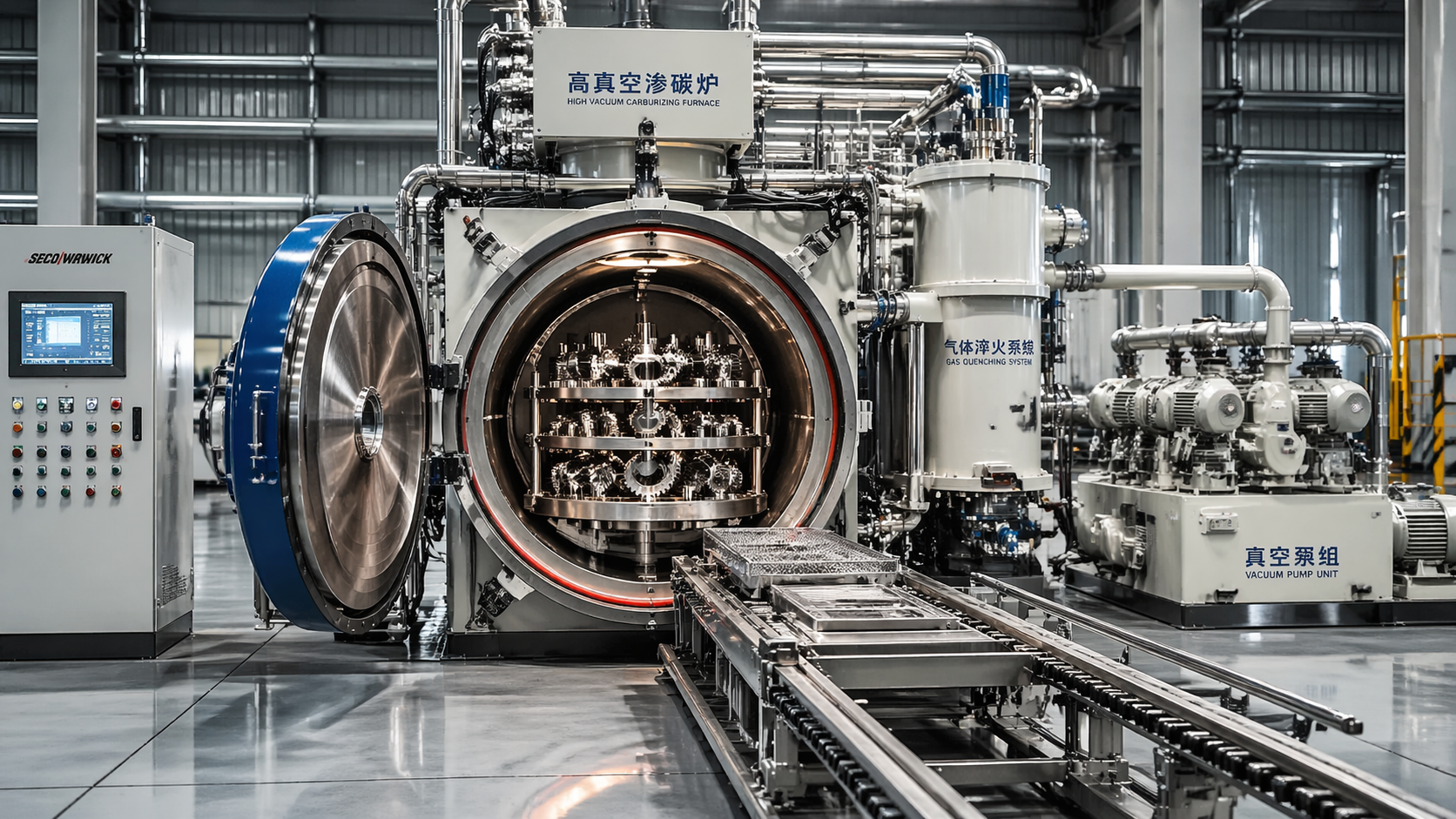
In High-vacuum Carburizing Furnaces, cycle time rarely disappears inside the vacuum itself—it accumulates across heating, diffusion, quenching, loading logic, and Fabrication Line Optimization decisions. For teams focused on Aerospace Integrity, Energy Beam Control, and Industrial-grade Supremacy, understanding where each minute goes is essential to benchmarking against Electron Beam Melters and other advanced processes with the right Physics of Transformation lens.
Where does cycle time really go in a high-vacuum carburizing furnace?
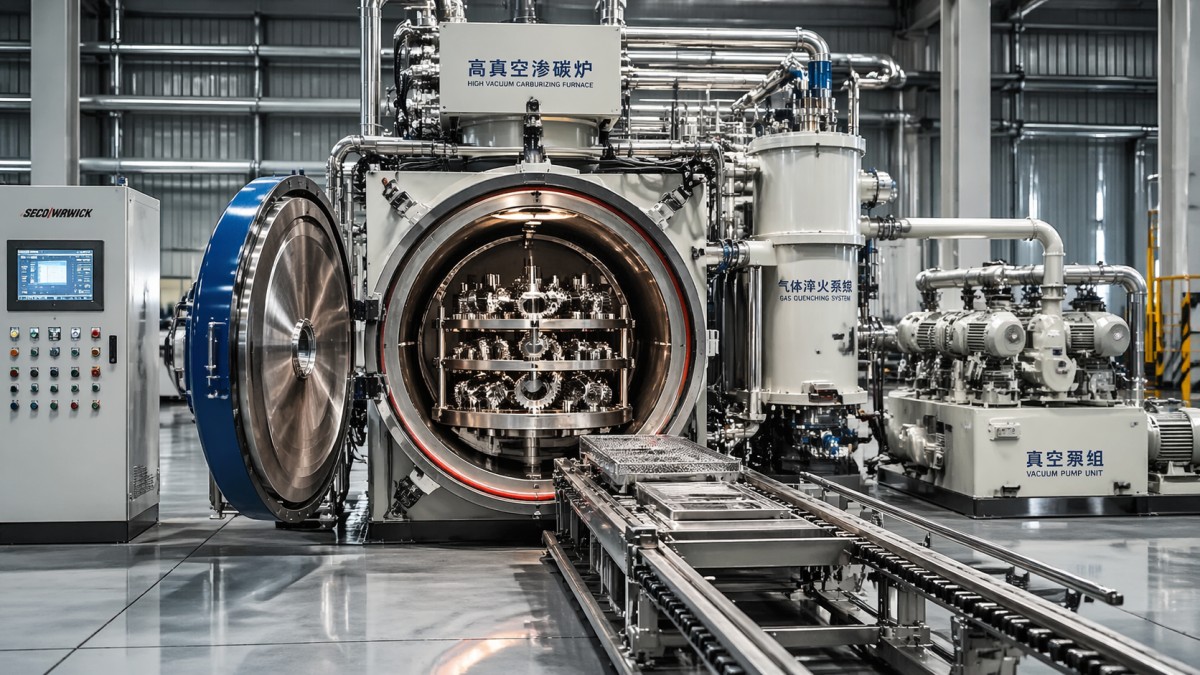
For many buyers and process engineers, the phrase high-vacuum carburizing furnace immediately suggests that vacuum level is the main determinant of throughput. In practice, that is only one variable. A full production cycle is usually shaped by 5 linked stages: loading, evacuation, heating, carburizing and diffusion, then quenching or controlled cooling. On parts with strict case-depth tolerance or distortion limits, the non-cutting time between these stages often becomes the largest hidden loss.
In typical industrial operation, evacuation may consume only several minutes once seals, pumps, and charge condition are stable. By contrast, heating a dense load from ambient to carburizing temperature can take far longer, especially when load mass, fixture design, and spacing reduce radiant efficiency. A line targeting repeatable case depth over 0.4 mm to 1.2 mm often finds that thermal equalization, not vacuum generation, is the real pacing step.
This matters across the broader industrial landscape represented by G-EBT. Aerospace components, semiconductor tooling parts, battery manufacturing hardware, and precision mechanical assemblies all require different balances of metallurgical performance, dimensional control, and takt discipline. A furnace that looks fast on paper can still underperform in a fabrication line if loading patterns, recipe transitions, and quench readiness are not benchmarked as one system.
The 5 process segments that usually dominate throughput
- Load preparation and fixture arrangement: poor spacing increases thermal lag and can add 10–30% to heating time.
- Evacuation and leak stabilization: normally short when equipment integrity is sound, but highly sensitive to maintenance condition.
- Ramp-up and soak: often the longest block when parts have high section thickness or mixed geometry.
- Carburizing plus diffusion: selected to meet target carbon profile rather than headline speed.
- Gas quenching or transfer to quench: determines hardness response, distortion risk, and chamber availability for the next load.
Users focused only on nominal furnace temperature range or pump capacity may miss a basic point: cycle time is a queueing problem as much as a thermal problem. If loading waits 15 minutes, quench preparation waits another 10 minutes, and recipe confirmation adds 5 minutes, an apparently efficient process has already lost half an hour before metallurgy is complete.
Which technical factors extend heating, diffusion, and quenching time?
When technical evaluators compare high-vacuum carburizing furnaces, they should separate controllable process time from structurally fixed equipment time. Heating delay can come from part mass, emissivity, fixture shielding, load density, and chamber uniformity. Diffusion time depends on target case profile, alloy chemistry, and final hardness requirement. Quenching time depends on transfer logic, gas pressure capability, fan power, and load geometry. These are not interchangeable losses, and each calls for a different procurement or engineering response.
A common mistake is to compare only cycle time per batch without normalizing for case depth, load weight, and distortion tolerance. For example, one recipe may finish in 3–5 hours for shallow cases on small precision parts, while another may run 6–10 hours because it supports deeper effective case requirements and lower dimensional movement. Procurement teams need to ask what the time actually buys in metallurgical quality, not just how long the chamber door stays closed.
The table below helps map where time typically accumulates and what should be checked before assuming the furnace itself is undersized.
This breakdown is useful for plant managers and commercial teams because it translates a technical discussion into investment questions. If heating is the bottleneck, a larger chamber alone may not help. If quenching is the bottleneck, better gas-flow design or different load segmentation may create more capacity than a second furnace purchase.
What process teams should measure every week
Operational metrics that reveal hidden delay
- Time from door close to temperature ramp start.
- Minutes required to reach thermal equalization across the full load.
- Recipe dwell versus actual metallurgical target achieved.
- Quench-ready delay between diffusion completion and effective cooling start.
- Unplanned idle time per shift, per week, and per product family.
In many facilities, just 4 tracked metrics over 2–4 weeks can expose whether the true issue lies in thermal design, recipe discipline, maintenance, or material flow. That insight is exactly where cross-process benchmarking becomes valuable, especially when teams compare vacuum heat treatment with electron beam, induction, or other high-energy manufacturing steps within one production architecture.
How does high-vacuum carburizing compare with other advanced thermal processes?
Decision-makers in complex manufacturing lines rarely evaluate a furnace in isolation. They compare it against alternative hardening routes, outsourced thermal processing, and adjacent capital investments such as induction systems or electron-beam-enabled workflows. The right question is not whether high-vacuum carburizing is universally faster, but whether it creates the best combination of case performance, cleanliness, distortion control, and scheduling fit for the intended product family.
For aerospace integrity and precision engineering, vacuum-based processing often wins where surface cleanliness, oxidation control, and repeatable metallurgy are critical. However, if a plant runs extremely high-volume, limited-geometry parts with simple hardening requirements, other routes may offer shorter takt at lower capital complexity. That is why G-EBT emphasizes benchmarking against standards and process physics rather than using one-dimensional productivity claims.
The comparison below is designed for technical assessment, procurement screening, and executive discussion.
The table shows why procurement cannot rely on a single metric. A plant pursuing 24/7 utilization may prefer one route, while a line serving low-to-medium batch, high-value parts may justify vacuum processing because it reduces post-treatment cleaning, contamination risk, and quality escapes. In advanced fabrication environments, time saved after the furnace can be just as valuable as time saved inside it.
Why cross-benchmarking matters
G-EBT’s institutional advantage is the ability to compare high-vacuum carburizing furnaces not only within vacuum heat treatment, but against neighboring process pillars such as induction heating, laser-enabled manufacturing, or electron and ion beam equipment. That broader view helps engineering leaders judge whether a cycle-time issue is truly a furnace issue or a line-balance issue involving upstream machining, downstream inspection, or fixture strategy.
For project managers, this reduces the risk of solving the wrong bottleneck. For distributors and commercial evaluators, it also improves quoting accuracy by aligning equipment selection with production rhythm, compliance burden, and total process architecture.
What should buyers, operators, and quality teams check before selecting a system?
A successful high-vacuum carburizing furnace purchase starts with the load, not the brochure. Buyers should define 3 core groups of data before technical comparison: part geometry and alloy range, target case-depth window, and required throughput by shift or by week. Without these inputs, quoted cycle time has little decision value. A chamber optimized for compact gears may not be efficient for long shafts, mixed assemblies, or heavily fixtured aerospace hardware.
Quality and safety teams should also specify what must be documented at acceptance. Common requirements include temperature uniformity evidence, recipe traceability, quench parameter logging, alarm history, and preventive maintenance accessibility. In regulated sectors or critical-contract manufacturing, documentation discipline can be as important as heat-up speed. A system that processes quickly but cannot support audit-ready records may create downstream approval delays.
The following selection framework is useful when commercial, technical, and operations teams need a common decision language.
This table is especially relevant for enterprise decision-makers because it connects technical details with business impact. A furnace with a slightly longer nominal cycle may still produce a stronger return if it supports a wider recipe envelope, cleaner processing, and fewer nonconformance events over a 2–5 year operating horizon.
A practical 6-point procurement checklist
- Define the top 10 part families by load mass, geometry, and case-depth requirement.
- Request cycle-time assumptions in writing, including load density and quench conditions.
- Compare recipe flexibility for shallow, medium, and deep case applications.
- Review maintenance intervals for pumps, seals, fans, and instrumentation.
- Clarify FAT and SAT content, including documentation and operator training scope.
- Assess integration with MES, traceability, and quality records if the line is digitally managed.
For distributors and project integrators, this checklist improves specification quality early in the sales cycle. For end users, it reduces change orders, commissioning delays, and the common mismatch between expected and actual batch output.
What compliance, implementation, and operating risks are often underestimated?
Even well-selected high-vacuum carburizing furnaces can underperform when implementation planning is weak. Lead time for capital projects often spans several stages: specification freeze, manufacturing, factory acceptance, installation, then site acceptance and process qualification. In many industrial settings, the total project window may run 12–24 weeks or more depending on customization, utilities, and local approval procedures. Teams that budget only for hardware delivery usually face the biggest schedule surprise.
Compliance risk is another blind spot. While exact requirements vary by sector and geography, buyers commonly need traceable control over temperature, process recording, and maintenance history. If the production environment serves aerospace, medical-adjacent, defense-linked, or tightly audited industrial chains, document completeness can become a release condition. That makes control architecture, data retention, and calibration planning part of cycle-time strategy, because requalification after poor documentation can cost more than slow processing.
Operators also face recurring practical risks that reduce available furnace time more than most purchase spreadsheets show.
Common operating mistakes that inflate cycle time
- Using mixed loads without validating thermal equalization, which causes longer soak and uncertain case results.
- Treating fixture design as secondary, even though it can materially influence heating efficiency and quench response.
- Delaying preventive maintenance on seals, pumps, and cooling subsystems until vacuum stability declines.
- Running recipes copied from another alloy family without rechecking diffusion assumptions and hardness targets.
- Ignoring line-side logistics, so finished loads wait for unload capacity and the next batch misses its start slot.
For cross-functional teams, the lesson is simple: the furnace cycle is not only a metallurgical recipe. It is a managed sequence involving utilities, fixtures, software, handling, and quality release. G-EBT’s multi-pillar benchmarking approach is valuable here because many hidden losses appear at the interfaces between technologies, not inside a single chamber.
FAQ for research, evaluation, and purchasing teams
How should we estimate real cycle time for our parts?
Estimate cycle time from at least 4 inputs: load mass, geometry mix, target case depth, and quench requirement. Ask suppliers or benchmarking partners to separate evacuation, heating, diffusion, and cooling time instead of giving one total number. A batch that appears to need 5 hours in theory may require 6–8 hours in line reality once loading, stabilization, and discharge are included.
Are high-vacuum carburizing furnaces suitable for both small and large batches?
Yes, but suitability depends on load architecture, not just chamber size. Small high-value batches often benefit from cleanliness and process control, while larger batches need careful fixture and quench planning to avoid long equalization time. Buyers should compare small-batch flexibility and large-batch repeatability separately rather than assume one chamber performs equally well in both modes.
What should procurement prioritize if budget is limited?
Prioritize the factors that most affect stable output: usable load capacity, recipe range, quench capability, controls, and maintenance accessibility. It is often better to buy a system with a realistic process window and strong documentation support than a nominally faster configuration that creates repeated downtime or qualification issues. Budget-limited projects should also compare in-house processing against outsourced thermal treatment over a 12–36 month horizon.
How long does implementation usually take?
Implementation varies with customization and plant readiness, but buyers should plan for multiple steps rather than a single delivery event. A practical schedule often includes specification review, equipment build, FAT, shipping and installation, SAT, then recipe qualification. If utilities, safety review, or digital integration are not prepared in parallel, commissioning can slip well beyond the hardware arrival date.
Why work with G-EBT when evaluating cycle time, specifications, and investment options?
G-EBT is built for organizations that need more than product literature. Because our scope spans Vacuum Heat Treatment & Induction Heating, Laser Processing & Photonic Manufacturing, Electron & Ion Beam Equipment, Specialized Welding & Metal Joining, and Industrial Microwave & Plasma Processing, we help teams evaluate cycle-time claims in the broader context of line physics, compliance, and industrial transformation strategy.
This is especially useful for R&D directors, chief engineers, procurement officers, project managers, and distributors who must compare not only one furnace against another, but one process architecture against another. We translate technical variables such as thermal gradients, vacuum integrity, quench behavior, and standards alignment into procurement-ready evaluation logic that can support internal review, supplier dialogue, and capital planning.
If your team is assessing high-vacuum carburizing furnaces, we can support 5 concrete areas of inquiry: parameter confirmation, process-route comparison, delivery and implementation checkpoints, documentation and standards expectations, and specification alignment for quotation or tender preparation. That helps reduce rework during technical clarification and shortens the path from research to a defensible investment decision.
What you can contact us about now
- Confirming whether your target case depth, alloy family, and load mass fit a high-vacuum carburizing route.
- Comparing vacuum carburizing with induction, atmosphere treatment, or other advanced thermal options.
- Reviewing expected cycle-time composition, including heating, diffusion, quenching, and handling losses.
- Discussing documentation, ISO/DIN-oriented compliance expectations, and acceptance planning.
- Requesting support for specification sheets, supplier comparison, custom configuration review, or quotation communication.
If cycle time, metallurgy, and line fit all matter at once, a narrow equipment comparison is rarely enough. Contact G-EBT to discuss your part profile, production target, standards requirements, and project timeline so you can make a more informed decision before committing to specification, budget, or vendor shortlist.
- Laser Processing
- Photonic Manufacturing
- Ion Beam Equipment
- Vacuum Heat Treatment
- Induction Heating
- Specialized Welding
- Metal Joining
- Plasma Processing
- Aerospace Integrity
- Battery Manufacturing
- Energy Beam Control
- Thermal Gradients
- Electron Beam Melters
- High-vacuum Carburizing Furnaces
- Industrial-grade Supremacy
- Physics of Transformation
- Fabrication Line Optimization
- Industrial Microwave
Technical Specifications
- Choosing CEE Plugs and Sockets for Generator Output: Ratings, IP Protection, and SafetyAuthor :Dr. Elena Carbon
- How to Choose Anti-Theft Display Stands for High-Value Retail ProductsAuthor :Dr. Aris Nano
- How to Specify Aerospace Precision Manufacturing Equipment for Tight-Tolerance PartsAuthor :Dr. Aris Nano
Expert Insights

Chief Security Architect
Dr. Thorne specializes in the intersection of structural engineering and digital resilience. He has advised three G7 governments on industrial infrastructure security.
Related Analysis
- Sep 22, 2026Choosing CEE Plugs and Sockets for Generator Output: Ratings, IP Protection, and SafetyAuthor :Dr. Elena Carbon
- Sep 21, 2026How to Choose Anti-Theft Display Stands for High-Value Retail ProductsAuthor :Dr. Aris Nano
- Sep 20, 2026How to Specify Aerospace Precision Manufacturing Equipment for Tight-Tolerance PartsAuthor :Dr. Aris Nano
Recommended News
- Choosing CEE Plugs and Sockets for Generator Output: Ratings, IP Protection, and SafetyAuthor :Dr. Elena Carbon

- How to Choose Anti-Theft Display Stands for High-Value Retail ProductsAuthor :Dr. Aris Nano

- How to Specify Aerospace Precision Manufacturing Equipment for Tight-Tolerance PartsAuthor :Dr. Aris Nano

- CCTV Camera Wholesale: How Distributors Can Evaluate MOQ, Warranty, and Product MixAuthor :Dr. Aris Nano