When high-vacuum carburizing furnaces outperform gas carburizing
Author
Date Published
Reading Time
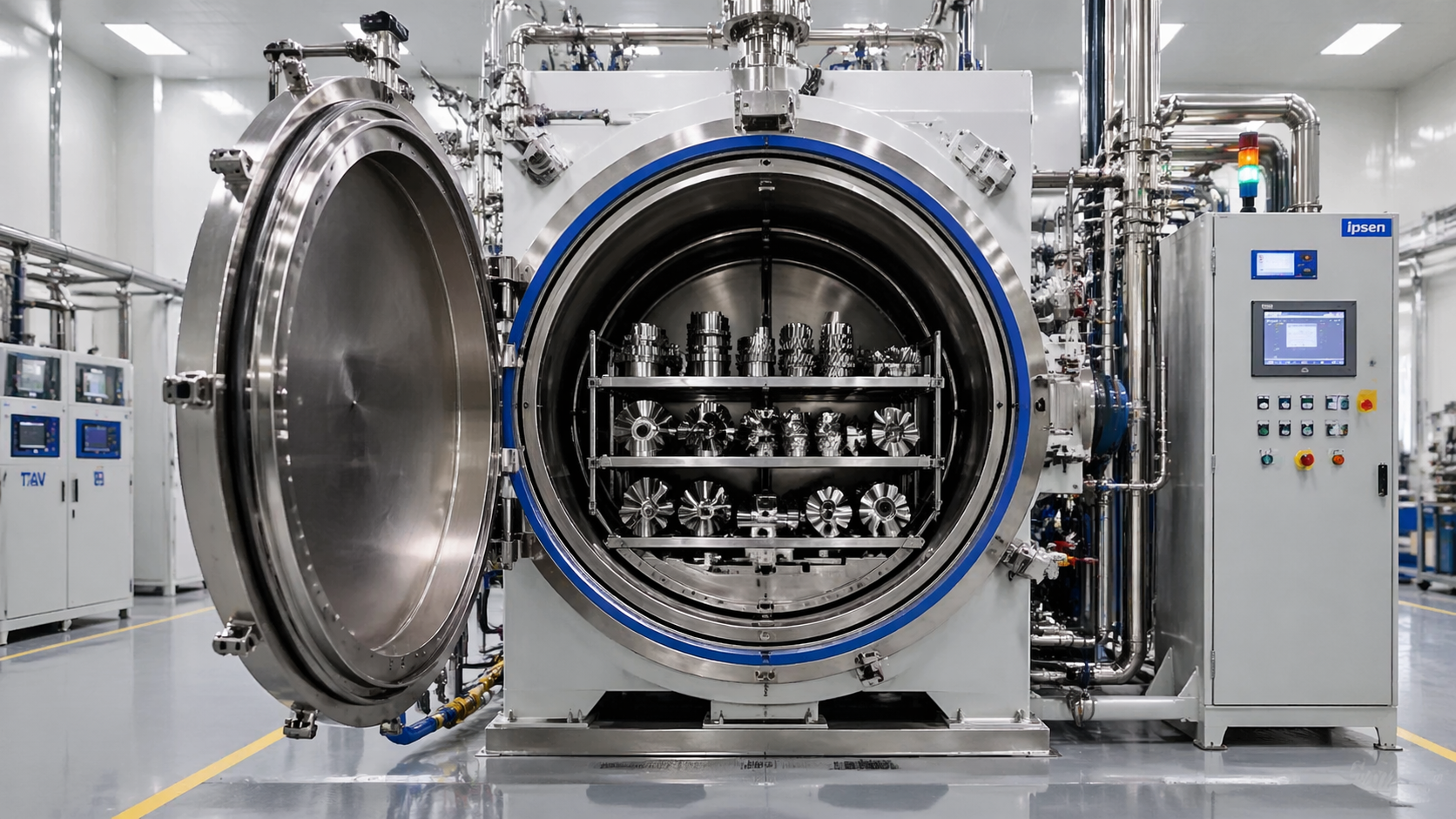
When high-vacuum carburizing furnaces outperform gas carburizing, the advantage is usually not theoretical—it appears in measurable outcomes: cleaner surfaces, tighter case-depth consistency, lower oxidation risk, better distortion control, and a more controllable path for high-value parts. For engineers, buyers, and technical evaluators, the real question is not whether vacuum carburizing is “better” in general, but when its process capability, quality stability, and downstream manufacturing benefits justify the investment. In sectors where Aerospace Integrity, repeatability, and Fabrication Line Optimization matter, high-vacuum carburizing often becomes the stronger choice—especially within broader Energy Beam Control and advanced thermal-processing strategies.
When is a high-vacuum carburizing furnace the better choice?
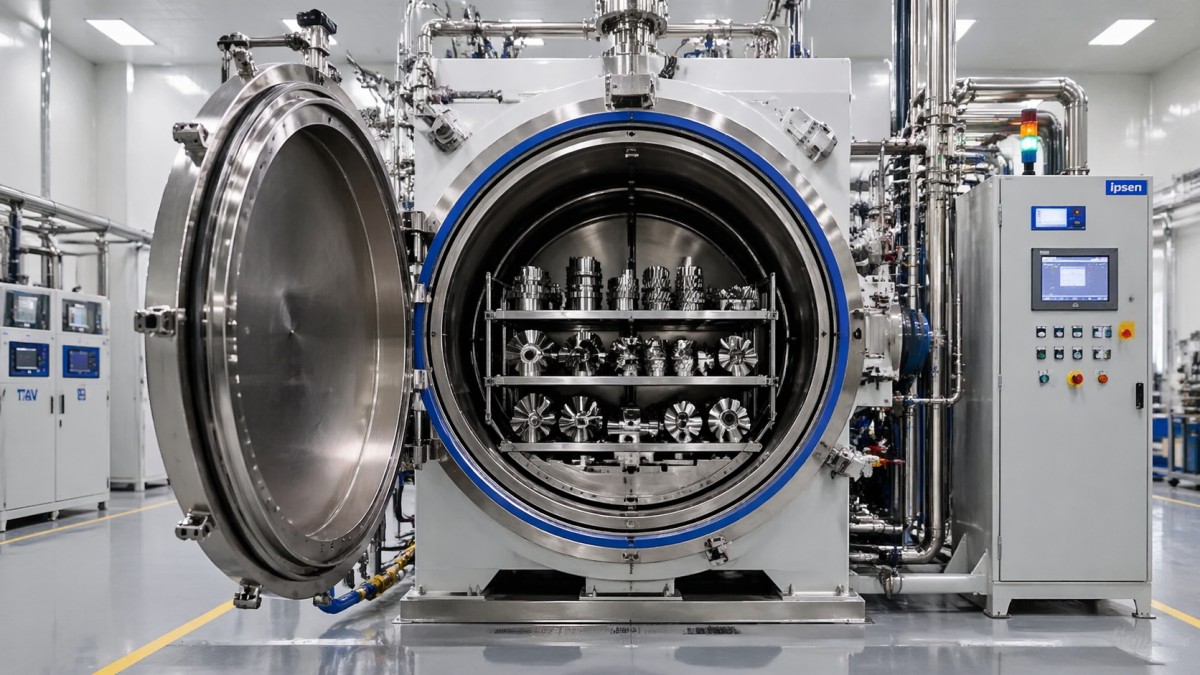
The core search intent behind this topic is practical comparison for decision-making. Most readers are trying to determine whether a high-vacuum carburizing furnace offers enough technical and commercial advantage over conventional gas carburizing for their specific production environment.
In simple terms, high-vacuum carburizing furnaces outperform gas carburizing when manufacturers need:
- very clean, oxidation-free or low-oxidation part surfaces,
- high consistency in case depth and carbon profile,
- lower distortion on complex or precision components,
- strong process repeatability for critical industries,
- better integration with high-end metallurgical quality systems,
- reduced post-treatment cleaning and rework,
- greater control over alloy-sensitive or geometrically demanding parts.
Gas carburizing remains effective and economical for many high-volume, less demanding applications. But when part value is high, tolerances are tight, quality escapes are costly, or contamination must be minimized, vacuum technology often delivers a clearer operational advantage.
What decision-makers and technical teams care about most
Different readers approach this comparison from different angles, but their concerns tend to converge around a few critical questions:
- Engineers and metallurgists: Can the furnace produce the required case characteristics consistently without surface damage or excessive distortion?
- Operators and production teams: Is the process stable, repeatable, and easier to control in daily use?
- Quality and safety managers: Does it reduce contamination risk, quality variation, and compliance concerns?
- Procurement and business evaluators: Will the higher capital cost produce lower total cost through scrap reduction, shorter finishing steps, and stronger customer acceptance?
- Executives and project leaders: Does the technology support long-term competitiveness in advanced manufacturing sectors?
That means a useful comparison should focus less on generic definitions and more on process capability, part suitability, cost logic, production risks, and implementation fit.
Where high-vacuum carburizing furnaces clearly outperform gas carburizing
1. Surface cleanliness and oxidation control
One of the strongest advantages of high-vacuum carburizing is the cleaner treatment environment. Compared with traditional gas carburizing, vacuum processing greatly reduces surface oxidation and intergranular surface issues linked to atmosphere-related reactions. This matters when parts must move into precision grinding, coating, joining, or final assembly with minimal surface correction.
2. Better process control and repeatability
Vacuum carburizing is typically valued for precise control of temperature, pressure, and carbon transfer conditions. This makes it attractive for manufacturers that need narrow process windows and low lot-to-lot variation. In highly regulated or benchmark-driven environments, repeatability is often more valuable than nominal throughput alone.
3. Improved performance on complex geometries
For complex-shaped components, blind holes, intricate tooth forms, and high-value transmission or aerospace parts, vacuum carburizing can provide more uniform treatment response than conventional atmosphere-based methods. While actual results depend on load design, alloy, quench strategy, and recipe engineering, vacuum technology is often favored where geometric complexity increases quality risk.
4. Lower downstream finishing burden
Because parts emerge cleaner, manufacturers may reduce post-process washing, descaling, corrective finishing, or defect sorting. This can improve total line efficiency even if the furnace itself is more capital-intensive.
5. Stronger fit for advanced manufacturing ecosystems
Organizations already investing in systems such as Electron Beam Melters, precision vacuum equipment, or tightly controlled thermal workflows often prefer process platforms with the same quality philosophy. In that context, high-vacuum carburizing aligns naturally with broader Energy Beam Control, traceability, and industrial benchmarking requirements.
When gas carburizing may still be the smarter option
High-vacuum carburizing is not automatically the best answer in every plant. Gas carburizing may remain preferable when:
- part geometry is relatively simple,
- surface appearance and oxidation sensitivity are less critical,
- high-volume production economics outweigh precision advantages,
- existing atmosphere-furnace infrastructure is already optimized,
- the application can tolerate broader variation without major downstream cost.
For many commodity or mid-tier applications, gas carburizing still offers a practical and cost-effective route. The comparison becomes more favorable to high-vacuum carburizing as part criticality, quality requirements, and rework cost rise.
Which applications benefit most from high-vacuum carburizing?
High-vacuum carburizing furnaces tend to show the strongest value in applications where metallurgical consistency and dimensional control are business-critical. Common examples include:
- aerospace transmission and structural drivetrain components,
- high-performance automotive and e-mobility gears, shafts, and bearing-related parts,
- precision industrial tooling and motion-control components,
- medical or high-cleanliness mechanical parts,
- energy-sector components requiring reliable case properties and traceable processing,
- premium industrial parts where scrap, distortion, or surface contamination is expensive.
In these cases, the value is rarely based on carburizing alone. It comes from total manufacturing impact: fewer rejects, more stable hardness profiles, less finishing, more predictable dimensional behavior, and stronger customer confidence.
How to evaluate the business case beyond furnace price
For procurement teams and executives, the main mistake is comparing only capital expenditure. A better evaluation looks at total economic effect across the line.
Key business-case factors include:
- Scrap and rework reduction: How much does process stability lower nonconformance cost?
- Distortion-related savings: Can the plant reduce corrective machining, fixture complexity, or part loss?
- Post-process cleaning savings: Are there measurable reductions in cleaning, descaling, or surface recovery steps?
- Quality assurance efficiency: Does tighter repeatability reduce inspection burden or customer complaints?
- Market access: Does vacuum capability help win aerospace, premium automotive, or high-spec industrial contracts?
- Compliance and traceability: Does the furnace support stronger documentation and process governance?
In advanced B2B manufacturing, a furnace should be evaluated as a quality-enabling asset, not just a heating device. That is especially true when the treated parts sit inside expensive assemblies or safety-critical systems.
What technical evaluators should verify before choosing vacuum over gas
Before specifying a high-vacuum carburizing furnace, technical teams should confirm several practical points:
- target materials and alloy families,
- required effective case depth and carbon profile,
- acceptable distortion limits,
- quench requirements and available quench technology,
- load size, batch strategy, and throughput expectations,
- recipe flexibility for mixed product families,
- maintenance capability and operator training readiness,
- data logging, recipe traceability, and quality-system integration.
The best results come when furnace selection is linked to actual part families and metallurgical acceptance criteria, not broad assumptions about “premium” technology.
Common concerns that slow adoption—and how to think about them
“The investment is too high.”
This is a valid concern, but the answer depends on part value, scrap cost, and customer requirements. High-vacuum carburizing often makes the most sense where one quality failure costs far more than the marginal furnace premium.
“Gas carburizing already works.”
If it consistently meets quality, throughput, and cost targets, there may be no urgent reason to switch. But if oxidation, distortion, inconsistent case response, or downstream cleanup are persistent pain points, vacuum technology deserves serious review.
“The process seems more complex.”
Initial setup and recipe development may be more demanding, but many users value the repeatability and controllability once the process is established. For disciplined operations, complexity can translate into more predictable outcomes rather than more uncertainty.
“Will it fit our long-term manufacturing strategy?”
This is often the deciding question. Manufacturers moving toward premium precision, digital traceability, and benchmarked process control generally find stronger strategic alignment with high-vacuum systems.
Final judgment: when high-vacuum carburizing furnaces truly outperform gas carburizing
High-vacuum carburizing furnaces outperform gas carburizing when manufacturers need cleaner surfaces, tighter metallurgical control, lower distortion risk, and stronger repeatability for high-value or safety-critical components. Their advantage is greatest in advanced industrial environments where quality variance is costly, downstream finishing is burdensome, and customer specifications are unforgiving.
Gas carburizing still has a strong place in cost-sensitive, high-volume, less demanding production. But for organizations pursuing Aerospace Integrity, premium component performance, and Fabrication Line Optimization, high-vacuum carburizing is often the more capable and future-ready solution.
The most effective way to decide is to compare the two methods against your actual parts, required quality window, rework burden, and contract risk. When judged on total manufacturing impact rather than furnace price alone, high-vacuum carburizing frequently proves why it has become a key technology in industrial-grade thermal processing.
Technical Specifications
- Choosing CEE Plugs and Sockets for Generator Output: Ratings, IP Protection, and SafetyAuthor :Dr. Elena Carbon
- How to Choose Anti-Theft Display Stands for High-Value Retail ProductsAuthor :Dr. Aris Nano
- How to Specify Aerospace Precision Manufacturing Equipment for Tight-Tolerance PartsAuthor :Dr. Aris Nano
Expert Insights

Chief Security Architect
Dr. Thorne specializes in the intersection of structural engineering and digital resilience. He has advised three G7 governments on industrial infrastructure security.
Related Analysis
- Sep 22, 2026Choosing CEE Plugs and Sockets for Generator Output: Ratings, IP Protection, and SafetyAuthor :Dr. Elena Carbon
- Sep 21, 2026How to Choose Anti-Theft Display Stands for High-Value Retail ProductsAuthor :Dr. Aris Nano
- Sep 20, 2026How to Specify Aerospace Precision Manufacturing Equipment for Tight-Tolerance PartsAuthor :Dr. Aris Nano
Recommended News
- Choosing CEE Plugs and Sockets for Generator Output: Ratings, IP Protection, and SafetyAuthor :Dr. Elena Carbon

- How to Choose Anti-Theft Display Stands for High-Value Retail ProductsAuthor :Dr. Aris Nano

- How to Specify Aerospace Precision Manufacturing Equipment for Tight-Tolerance PartsAuthor :Dr. Aris Nano

- CCTV Camera Wholesale: How Distributors Can Evaluate MOQ, Warranty, and Product MixAuthor :Dr. Aris Nano