How Do Thermal Gradients Affect Part Quality?
Author
Date Published
Reading Time
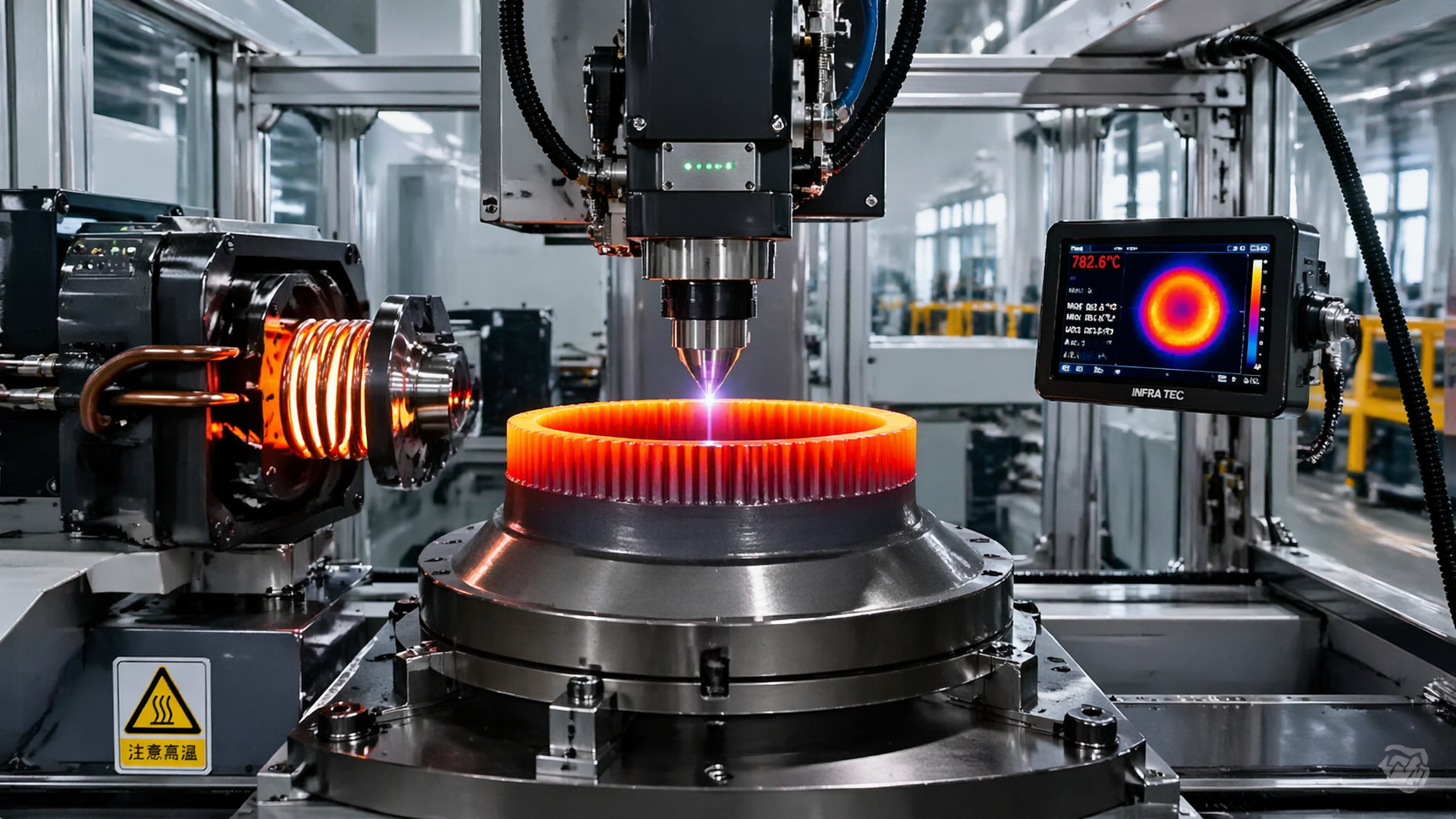
Thermal gradients are a hidden but decisive factor in part quality across Precision Manufacturing, from Laser Processing and Fiber Lasers to Induction Heating, Plasma Cleaning, Industrial Microwave, and Battery Manufacturing. Whether in Semiconductor Lithography or advanced Plasma Processing, uncontrolled heat distribution can drive distortion, residual stress, microstructural defects, and costly rework. This article explains how thermal gradients form, why they matter, and what engineers, buyers, and quality teams should evaluate to improve process stability and final part performance.
Why do thermal gradients matter so much in advanced manufacturing?
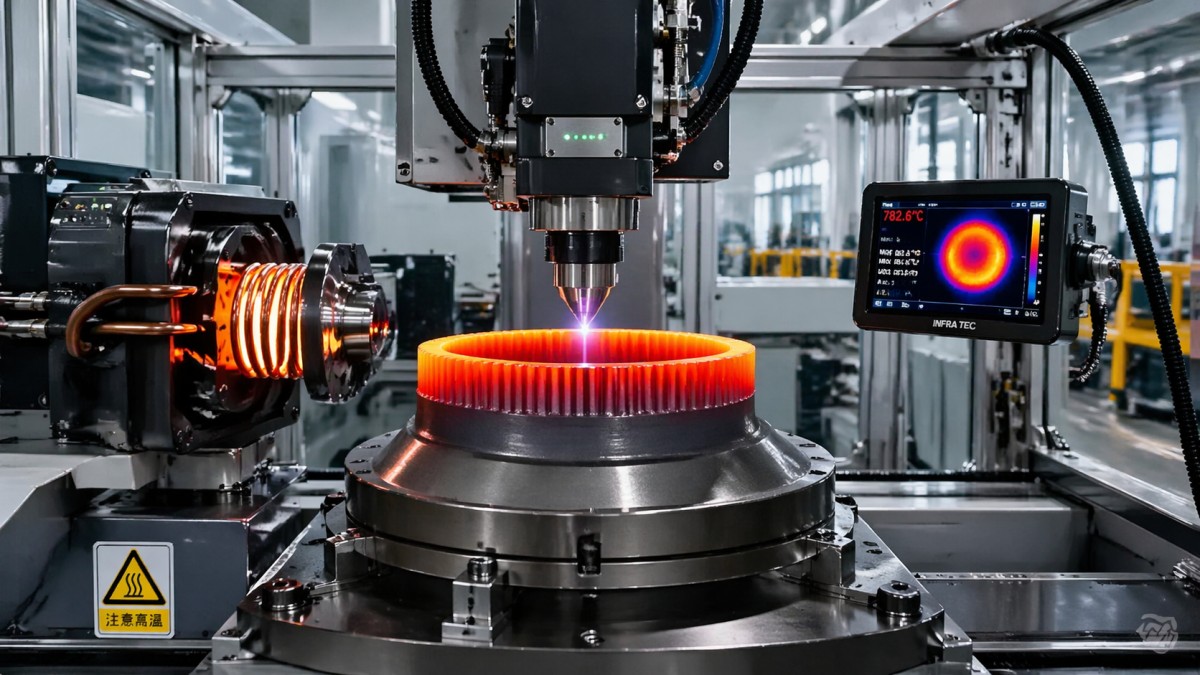
A thermal gradient is simply the temperature difference between one zone of a part and another over a given distance or time. In industrial practice, that difference may be small and controlled, or it may become severe during high-energy processing. In laser welding, electron beam melting, induction heating, vacuum heat treatment, and plasma-assisted steps, a rapid change from hot to cool zones can alter geometry, metallurgy, and dimensional repeatability within seconds.
For operators and quality teams, the practical issue is not the concept itself but the consequences. A gradient that rises too quickly can cause warpage, cracking, recast layers, porosity, hardness variation, or coating adhesion problems. In thin sections, even a local difference of tens of degrees across a short span may affect flatness. In thicker sections, the issue often appears as delayed distortion after cooling, machining, or assembly.
For procurement and project teams, thermal gradients should be treated as a process capability question, not only a machine power question. A 5 kW to 20 kW thermal system may look sufficient on paper, but if beam profile control, thermal sensing, shielding, fixture design, and ramp-rate management are weak, the delivered part quality may remain unstable. This is where benchmarking against ISO, AWS, and DIN-oriented process windows becomes commercially important.
G-EBT approaches this topic from the “Physics of Transformation” perspective. Instead of viewing equipment in isolation, it compares how energy input, heat flow, atmosphere control, and metallurgical response interact across five industrial pillars. That matters to R&D directors, chief engineers, and procurement officers who must compare more than one technology path within 2 to 4 weeks of evaluation time and under strict reliability, compliance, and throughput constraints.
What usually creates a harmful thermal gradient?
In real production, gradients rarely come from one cause alone. They usually result from a combination of concentrated energy density, poor heat dissipation, unstable motion, inconsistent part geometry, or unsuitable clamping. In semiconductor, battery, and aerospace applications, the tolerance window can be narrow enough that a small change in absorptivity, contact pressure, or surface condition shifts the thermal profile beyond the acceptable range.
- Excessive local energy concentration, such as a tightly focused laser spot or induction coil mismatch, which creates steep hot-to-cold transitions.
- Material-property variation, including thickness change, surface finish differences, alloy composition spread, or multilayer stack behavior.
- Insufficient thermal management, such as weak fixturing contact, poor cooling path design, or unstable chamber atmosphere during vacuum or plasma processing.
- Improper cycle design, including heating ramps that are too fast, soak times that are too short, or cooling rates that are inconsistent from batch to batch.
These drivers explain why two lines using similar nominal equipment can produce very different results. The issue is not only machine specification but the full process envelope: input energy, part geometry, thermal diffusion path, atmosphere, handling sequence, and post-process inspection.
How do thermal gradients affect part quality across different applications?
The impact of thermal gradients changes by process family. In laser processing, sharp gradients often generate heat-affected zone variability, edge taper, microcracking, or weld distortion. In electron or ion beam applications, the vacuum environment improves contamination control but does not remove the risk of local overheating. In induction heating, the challenge often lies in coil-to-part coupling and depth control. In microwave and plasma processes, nonuniform field distribution can create localized thermal excursions.
For battery manufacturing, the issue may appear during tab welding, cell component drying, thermal bonding, or coating treatment. A nonuniform temperature field can change bond quality, separator integrity, or surface chemistry. In semiconductor-related production, even small distortions can affect alignment-sensitive assemblies. In aerospace and metal joining, thermal gradient control is directly linked to fatigue resistance, residual stress, and dimensional stability over service life.
A useful way to evaluate risk is to link the process to the dominant quality failure mode. Some applications mainly suffer geometric distortion, while others mainly suffer metallurgical inconsistency or surface-function loss. This distinction helps buyers and engineers prioritize sensors, fixtures, cycle design, and inspection methods rather than overinvesting in the wrong control feature.
The table below summarizes how thermal gradients tend to influence different industrial scenarios and what the most relevant quality checks usually look like during production qualification or supplier comparison.
This comparison shows why part quality cannot be judged by a single temperature value alone. A process may reach the correct peak temperature and still fail because the gradient was too steep, the dwell too short, or the cooling path too uneven. That is why G-EBT benchmarking emphasizes both hardware capability and thermal-process discipline.
Which defects should quality and safety teams monitor first?
The first priority is usually dimensional stability, because distortion is easy to miss during the thermal cycle and expensive to correct later. The second is microstructural integrity, especially in welded, hardened, or additively processed parts. The third is surface-function reliability, which is critical for plasma-treated, coated, or bonded components. In many factories, 3 core checks are used during line approval: geometry, material response, and process repeatability over at least 3 consecutive runs.
For safety management, thermal-gradient instability can also indicate a broader process-control issue. If one batch requires frequent rework, the line may suffer from misaligned sensors, coil wear, beam drift, cooling imbalance, or fixture fatigue. These are not only quality problems; they can also become uptime, scrap, and audit issues.
What should engineers and buyers compare when selecting equipment or processes?
When thermal gradients affect part quality, the wrong buying decision usually comes from comparing only machine power, nominal throughput, or initial purchase price. A better approach is to evaluate process controllability. For most B2B buyers, 5 decision dimensions matter: energy delivery, temperature sensing, motion or field uniformity, fixture or chamber design, and validation support. These elements determine whether the system can hold stable quality over shifts, materials, and batch sizes.
This is especially relevant in mixed production environments where part thickness, alloy family, or takt time changes from project to project. A system optimized for one narrow application may not perform well when the thermal load changes by 20% to 30%. Procurement teams therefore need application-specific acceptance criteria and not just generic brochures.
G-EBT’s cross-industry benchmarking is valuable here because it frames selection around measurable process behavior. Instead of asking only “How powerful is the source?”, decision-makers can ask “How stable is the thermal field under real production variation?” That question is more useful for enterprise decision-makers and distributors who must compare suppliers across multiple industrial pillars.
The following table provides a practical procurement view of what should be examined before committing to a thermal-processing or energy-beam investment.
A strong supplier answer should connect equipment capability to your actual defect mode, material family, and throughput target. If the discussion stays only at rated power, beam type, or chamber size, the evaluation is incomplete. The more demanding the part quality requirement, the more important it is to review process windows, validation methods, and expected setup time over the first 7 to 15 production days.
A practical 4-step selection checklist
- Define the dominant failure mode first: distortion, cracking, hardness variation, surface damage, or bond inconsistency.
- Map the thermal load by material, thickness, cycle time, and batch size. Separate prototype, pilot, and volume conditions.
- Request application-specific validation evidence, not only generic machine data. Ask for inspection methods and allowable variation bands.
- Review long-term operating factors: sensor maintenance, fixture wear, operator skill requirements, and downtime impact over quarterly production.
This checklist helps project managers and commercial evaluators reduce the gap between technical promise and delivered production performance.
How can manufacturers reduce thermal-gradient risk during implementation?
Improving thermal-gradient control does not always require a new platform. In many cases, part quality improves through a better implementation sequence. The most effective programs usually combine 4 elements: process mapping, controlled trials, inline monitoring, and disciplined acceptance criteria. This applies whether the line uses fiber lasers, vacuum heat treatment, induction heating, plasma cleaning, or microwave processing.
A common mistake is to optimize only for cycle time. If ramp-up is shortened before thermal uniformity is verified, distortion and microstructural scatter may rise. It is often better to validate at 3 stages: laboratory or sample trial, pilot lot, and production confirmation. Each stage should review dimensional response, thermal consistency, and defect pattern before output is increased.
Another practical measure is to align fixturing and inspection with heat-flow reality. A part may need support at different points during heating than during cooling. Likewise, post-process inspection should not focus only on visible surface finish. Depending on the application, the acceptance plan may need hardness mapping, cross-sectional review, flatness check, bond resistance test, or surface-energy verification.
The implementation table below outlines a process-control framework that many industrial teams use when thermal gradients are creating unstable quality or elevated rework costs.
This staged approach helps teams avoid the costly pattern of passing a short trial but failing during volume production. It also creates a shared language among engineering, procurement, and quality personnel, which is critical when approval decisions must be made quickly or across multiple sites.
Common implementation mistakes
- Using nominal machine settings from a previous project without checking material thickness, coating state, or fixture contact condition.
- Approving a process based on a small sample size and skipping multi-lot verification over different shifts.
- Relying on peak temperature alone and ignoring gradient direction, cooling asymmetry, and residual-stress formation.
- Underestimating maintenance effects such as coil wear, optics contamination, chamber leakage, or sensor drift after continuous operation.
These mistakes are preventable when the project team treats thermal gradients as a system-level quality variable rather than a narrow process setting.
FAQ: what do decision-makers and operators usually ask?
How do I know whether thermal gradients are the real cause of poor part quality?
Look for recurring patterns tied to heating or cooling, not random defects alone. Typical signs include repeatable distortion in one direction, hardness spread between surface and core, cracks near transition zones, or quality shifts when cycle time changes. If defects increase after setup changes, maintenance delay, or material-thickness variation, thermal gradients are often a primary suspect. A useful first review covers 3 areas: temperature history, geometry response, and defect location.
Which processes are most sensitive?
Processes with concentrated energy input or sensitive layered materials are usually the most vulnerable. That includes laser welding, beam-based melting, selective surface hardening, plasma-assisted treatments, and battery-tab or micro-joining operations. The sensitivity increases further when wall thickness is low, tolerances are tight, or cooling conditions vary from part to part.
What should procurement teams request during supplier evaluation?
Request process-window evidence, monitoring architecture, and validation logic for your specific material and geometry. Ask how the supplier manages ramp rate, thermal uniformity, fixture design, and alarm thresholds. Also ask what acceptance checks are typical in the first 2 to 4 weeks after installation. This gives a clearer view of implementation risk than price and lead time alone.
Is a more powerful machine always better?
No. Higher power can reduce cycle time, but it can also steepen the thermal gradient if control is weak. In many applications, stable modulation, uniform field delivery, and better sensing are more valuable than simply increasing power. The right choice depends on material behavior, part geometry, and the acceptable quality window.
How often should quality and maintenance teams review gradient-related stability?
For critical lines, a layered routine works best: shift-level monitoring for alarms and rejects, weekly review of key drift indicators, and monthly or quarterly verification of calibration, fixtures, and inspection correlation. The exact schedule depends on duty cycle and process criticality, but thermal-gradient control should not be reviewed only after a major defect event.
Why work with G-EBT when thermal gradients are affecting quality, cost, or supplier decisions?
Thermal-gradient problems often sit at the intersection of equipment physics, material response, compliance expectations, and production economics. That is exactly where G-EBT is designed to operate. Its multidisciplinary structure across Laser Processing & Photonic Manufacturing, Electron & Ion Beam Equipment, Vacuum Heat Treatment & Induction Heating, Specialized Welding & Metal Joining, and Industrial Microwave & Plasma Processing enables a broader technical comparison than single-category sourcing alone.
For information researchers and business evaluators, this means faster access to technical benchmarking logic that supports internal discussion. For operators and project leaders, it means a clearer view of process risks, validation priorities, and implementation checkpoints. For procurement officers and distributors, it means a more structured way to compare capability, compliance fit, and lifecycle practicality before issuing RFQs or finalizing vendor shortlists.
If your team is reviewing part distortion, residual stress, uneven hardness, bond instability, or thermal-process consistency, G-EBT can support a more informed discussion around 6 practical topics: parameter confirmation, process selection, equipment comparison, delivery-cycle expectations, standards alignment, and sample or trial planning. This is particularly useful when decisions must balance quality, uptime, and commercial risk at the same time.
Contact us if you need structured guidance on thermal-gradient-sensitive applications, including process-window evaluation, product or technology selection, expected implementation stages, inspection focus, certification-related considerations, or quotation discussions tied to your manufacturing scenario. A clear technical brief at the start can reduce rework, shorten evaluation cycles, and improve confidence in both supplier choice and final part performance.
- Laser Processing
- Photonic Manufacturing
- Ion Beam Equipment
- Vacuum Heat Treatment
- Induction Heating
- Specialized Welding
- Metal Joining
- Plasma Processing
- Precision Manufacturing
- Semiconductor Lithography
- Battery Manufacturing
- Thermal Gradients
- Fiber Lasers
- Physics of Transformation
- Technical Benchmarking
- Industrial Microwave
- Plasma Cleaning
Technical Specifications
- Explosion-Proof Enclosure Prices: How Certification and Materials Affect Your QuoteAuthor :Dr. Aris Nano
- Selecting Heat Shrink Tubing for Wire Harnesses: Temperature, Ratio, and MaterialAuthor :Marcus Valve
- Selecting Servo Motors for CNC Machines: Torque, Speed, Inertia, and Duty CycleAuthor :Dr. Aris Nano
Expert Insights

Chief Security Architect
Dr. Thorne specializes in the intersection of structural engineering and digital resilience. He has advised three G7 governments on industrial infrastructure security.
Related Analysis
- Sep 13, 2026Explosion-Proof Enclosure Prices: How Certification and Materials Affect Your QuoteAuthor :Dr. Aris Nano
- Sep 12, 2026Selecting Heat Shrink Tubing for Wire Harnesses: Temperature, Ratio, and MaterialAuthor :Marcus Valve
- Sep 11, 2026Selecting Servo Motors for CNC Machines: Torque, Speed, Inertia, and Duty CycleAuthor :Dr. Aris Nano
Recommended News
- Explosion-Proof Enclosure Prices: How Certification and Materials Affect Your QuoteAuthor :Dr. Aris Nano

- Selecting Heat Shrink Tubing for Wire Harnesses: Temperature, Ratio, and MaterialAuthor :Marcus Valve

- Selecting Servo Motors for CNC Machines: Torque, Speed, Inertia, and Duty CycleAuthor :Dr. Aris Nano

- How to Evaluate a Brass Rod and Bar Manufacturer for Machining Quality and Supply ReliabilityAuthor :Dr. Aris Nano