Which Laser Processing Setup Fits Battery Manufacturing?
Author
Date Published
Reading Time
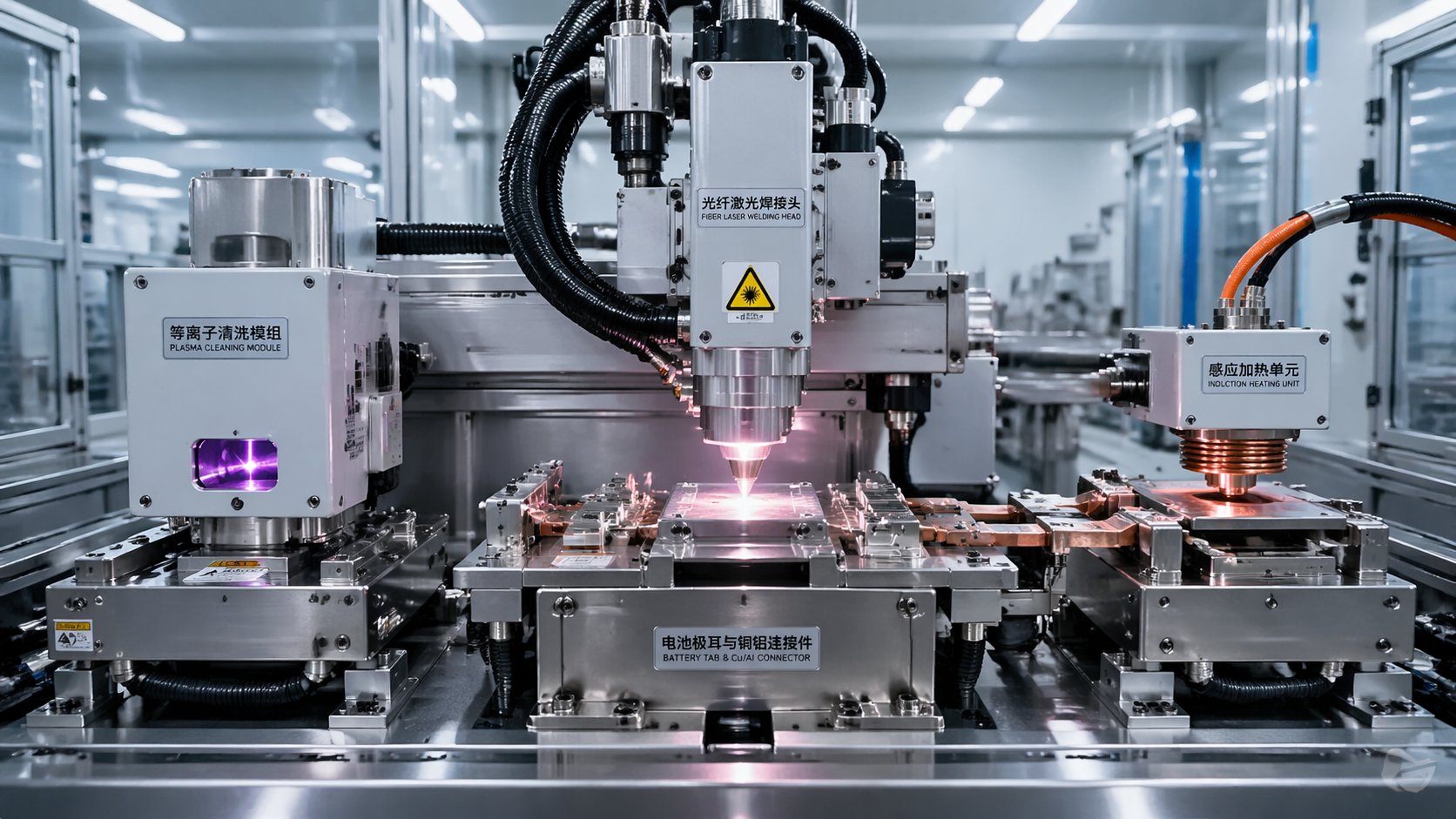
From Fiber Lasers to Plasma Cleaning and Induction Heating, selecting the right Laser Processing setup is becoming critical for Battery Manufacturing. As precision demands tighten across advanced production lines shaped by Thermal Gradients, Precision Manufacturing, and even cross-industry benchmarks from Semiconductor Lithography, buyers and engineers need clearer decision criteria. This guide explores how Industrial Microwave and Plasma Processing options compare in performance, control, and production value.
How should battery manufacturers define the right laser processing setup?
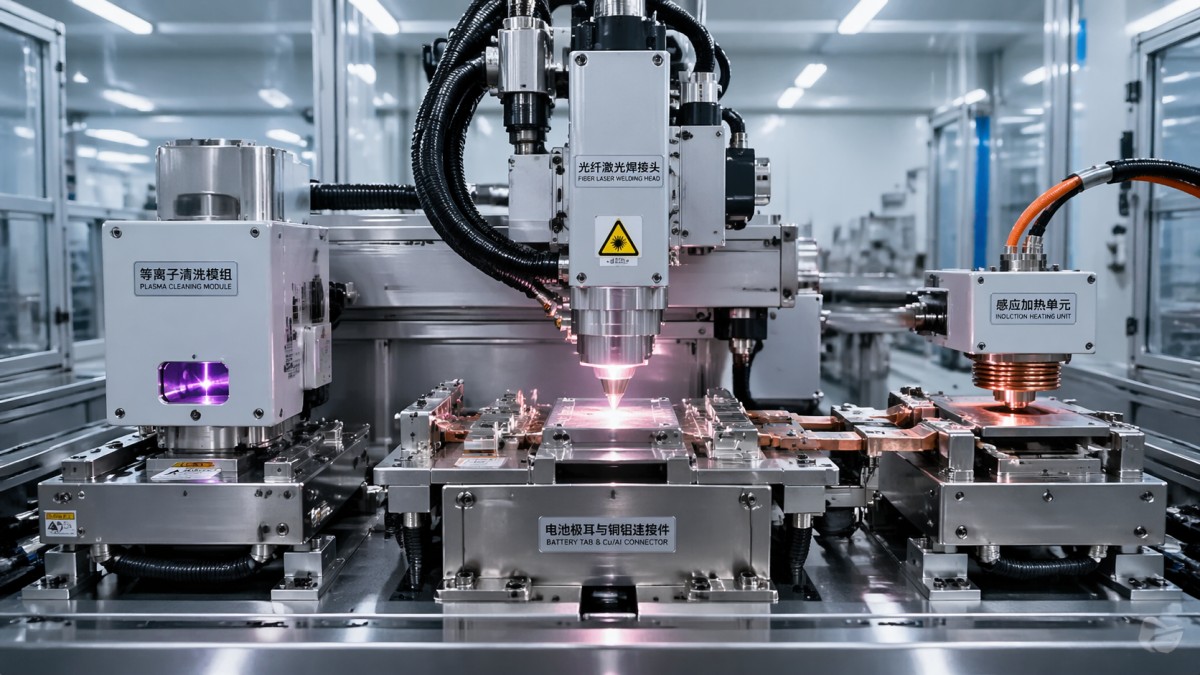
In battery manufacturing, a laser processing setup is rarely a single machine decision. It is a process chain that may include laser cutting, laser welding, surface preparation, plasma cleaning, thermal conditioning, fume extraction, inline inspection, and recipe control. The right configuration depends on whether the line handles electrode slitting support tasks, tab welding, busbar joining, pouch sealing support, or pre-bond surface activation.
For operators and project managers, the key issue is repeatability under continuous production. For procurement teams, the challenge is balancing capital cost with yield stability over 2-shift or 3-shift operation. For quality and safety teams, the focus is heat-affected zone control, spatter risk, traceability, and compatibility with internal validation protocols. These priorities do not always point to the same equipment class.
This is where G-EBT adds value. Because battery lines increasingly borrow precision expectations from aerospace, semiconductor, and advanced metallurgical environments, setup selection must be benchmarked beyond brochure-level power ratings. G-EBT evaluates energy-beam and thermal-processing systems against practical decision factors such as beam stability, thermal input window, process cleanliness, integration burden, and alignment with ISO, AWS, and DIN-oriented industrial controls.
In most projects, decision-makers should start with 3 questions: what material stack is being processed, what cycle time is required, and what defect mode is least acceptable. A line that tolerates cosmetic discoloration but not electrical resistance drift will need a different setup from a line that prioritizes thin-foil edge quality or low-porosity tab-to-terminal joints.
The 4-layer view of setup selection
- Process layer: cutting, welding, cleaning, heating, marking, or hybrid processing.
- Material layer: copper, aluminum, nickel-coated parts, foils, tabs, busbars, and coated surfaces.
- Production layer: prototype, pilot line, medium-volume output, or high-throughput automated cell assembly.
- Control layer: inline monitoring, recipe switching, MES connectivity, safety interlocks, and maintenance frequency.
When these 4 layers are aligned early, the selected laser processing setup is less likely to create downstream problems such as unstable weld nugget formation, excessive thermal distortion, or rework caused by poor surface energy before joining. In battery manufacturing, avoiding those hidden losses often matters more than chasing the highest nominal laser wattage.
Which technologies fit which battery manufacturing scenarios?
Different battery manufacturing steps benefit from different energy-beam and thermal-processing methods. Fiber lasers are commonly selected for fast, precise metal interaction. Plasma cleaning is frequently introduced when contamination or oxide layers reduce weld consistency. Induction heating can support controlled thermal input before forming or joining, especially where localized heating is preferred over bulk oven exposure. In some lines, these technologies are complementary rather than competitive.
A practical way to compare them is by matching process intent with material behavior. For example, highly reflective metals such as copper may demand tighter beam control and application-specific wavelength strategies, while aluminum assemblies may require close management of heat spread and surface condition. In pilot lines, engineering teams often test 2 to 3 process routes before freezing the final equipment list.
The table below helps information researchers, buyers, and technical users identify where each setup typically fits. It is not a substitute for sample testing, but it does narrow the field and shortens the early evaluation phase, which often takes 2–4 weeks in industrial procurement cycles.
For many battery plants, the strongest result comes from a hybrid setup: plasma cleaning to stabilize surface condition, laser processing to execute the weld or cut, and induction heating where thermal conditioning improves process margin. That combination can be especially useful when defect reduction is prioritized over single-station simplicity.
Scenario-based matching
When fiber laser processing is the better fit
Choose fiber laser processing when the production goal is high positional accuracy, narrow seam geometry, and short cycle time. In battery manufacturing, this often applies to tab welding, current collector joining, and coded traceability marking. Typical industrial setups may range from low-power precision systems for fine tasks to multi-kilowatt systems for thicker conductive assemblies, depending on joint geometry and throughput target.
When plasma cleaning should be added
Use plasma cleaning when weld inconsistency tracks back to oils, light residues, oxides, or low surface energy. It is often introduced after repeated scrap analysis shows the laser itself is not the root problem. In lines with high sensitivity to contact resistance or bond durability, a short pretreatment step of only a few seconds can improve process stability more effectively than increasing laser power alone.
When induction heating becomes strategic
Induction heating is valuable when local thermal management is difficult, especially in assemblies where preheating reduces thermal shock or improves forming consistency before a laser-based step. It can also help project teams avoid applying excess heat across the entire component, which matters in compact battery assemblies where adjacent materials react differently to temperature rise.
What technical parameters matter most before purchase approval?
Technical evaluation should move beyond headline power and focus on process window control. In battery manufacturing, buyers often compare 3 categories of metrics: energy delivery, motion and positioning, and quality assurance capability. A laser processing setup with high power but weak stability, limited monitoring, or poor fixture tolerance may underperform a lower-power system that offers tighter control and cleaner integration.
Procurement and engineering teams should also separate static specifications from usable production performance. For example, a quoted power range of 1 kW–6 kW says little about real weld quality unless paired with beam profile, focal stability, scan head performance, and the response of copper or aluminum under the selected process recipe. The same logic applies to plasma cleaning width or induction frequency range.
The next table is designed for cross-functional review. It helps operators, quality managers, and sourcing teams assess whether a proposed laser processing setup will hold up in daily production, not only during lab trials or demonstration runs.
A common purchasing mistake is to sign off based on a single successful sample. A stronger approach is to request a validation plan covering at least 3 conditions: nominal settings, upper tolerance materials, and lower tolerance materials. This gives a clearer view of process robustness before installation resources are committed.
Five technical checks that reduce risk
- Confirm whether the quoted throughput is measured on a full cycle, not only beam-on time.
- Check if recipe changeover supports multi-SKU production without long manual intervention.
- Review maintenance intervals for optics, nozzles, filters, coils, and extraction components.
- Ask how process drift is detected after 8–12 hours of continuous operation.
- Verify data export, audit trail, and integration readiness with MES or quality systems.
These checkpoints matter because battery manufacturing does not fail only at startup. It often fails during ramp-up, after changeovers, or when material lots vary. G-EBT’s benchmarking approach is useful here because it compares equipment behavior under industrial conditions, not just nominal lab specifications.
How do procurement, compliance, and implementation teams make a safer decision?
A strong procurement decision for a laser processing setup should combine technical fit, compliance readiness, and implementation realism. In battery manufacturing, the lowest upfront quote can become the highest total cost if the system requires long debugging, repeated fixture redesign, or unplanned safety modifications. Most enterprise buyers therefore evaluate both equipment performance and integration burden over a 12–24 month horizon.
Compliance teams should confirm whether the supplier can support documentation relevant to machine safety, process traceability, electrical standards, and welding or thermal-processing records where applicable. The exact framework varies by plant and region, but references to ISO, AWS, and DIN-aligned practices are often useful for cross-border industrial projects. This is especially relevant for global manufacturers managing multiple validation regimes.
Project managers should also map the implementation path in 4 stages: requirement definition, sample verification, installation and acceptance, then production ramp-up. Depending on customization depth, the equipment lead time may fall in a typical industrial range of 7–15 weeks, while process validation and line integration can add several more weeks. Early clarity on utilities, exhaust, floor layout, and operator training prevents avoidable delay.
A practical B2B decision checklist
- Define the target application precisely: material stack, thickness range, takt time, and defect threshold.
- Request process evidence, not only machine specification sheets or generic videos.
- Review whether plasma cleaning or induction heating should be added to improve yield margin.
- Check training scope for operators, maintenance staff, quality engineers, and EHS personnel.
- Clarify acceptance criteria, spare parts planning, and service response expectations before order placement.
Where many teams underestimate risk
One frequent misconception is that a laser processing setup can compensate for unstable upstream material quality. In reality, foil flatness variation, coating inconsistency, and poor fixturing can narrow the usable process window. Another mistake is assuming that plasma cleaning replaces all cleaning methods. It is highly effective for specific surface issues, but it is not designed for heavy particulate removal or gross contamination.
A third issue is underestimating service and spare planning. Components such as optics, extraction filters, nozzles, and wear parts need predictable replacement cycles. For lines expected to run every day, even a 24–48 hour service gap can be costly. Decision-makers should therefore include maintenance logistics in the initial vendor comparison, not after commissioning.
Frequently asked questions about laser processing setup for battery manufacturing
How do I choose between a standalone laser system and a hybrid setup?
If the process is stable, the material surface is consistent, and the task is narrow, a standalone laser system may be sufficient. If quality drift appears across shifts, material lots, or multiple SKUs, a hybrid setup with plasma cleaning, induction heating, or added monitoring usually provides a wider process window. In battery manufacturing, hybrid systems are often justified when scrap cost is high or rework is difficult.
What cycle time and throughput details should buyers verify?
Always ask whether the quoted number includes loading, alignment, treatment, inspection, and unloading. A quoted process time of a few seconds may exclude non-beam handling time. For realistic planning, request total cycle time by station and line balance assumptions. This matters most in medium-volume and high-volume battery manufacturing where one underestimated bottleneck can affect the full line.
What standards or compliance topics are commonly reviewed?
Although requirements vary, common review areas include machine safety, electrical conformity, process traceability, operator protection, fume extraction, and documented validation records. For welding or thermal-processing related operations, many industrial teams align internal review with broadly recognized frameworks such as ISO, AWS, or DIN-oriented documentation practices. The exact list should be confirmed during project scoping.
How long does evaluation and implementation usually take?
For many B2B projects, preliminary screening takes 1–2 weeks, sample validation may take 2–4 weeks, and custom equipment delivery often falls within 7–15 weeks depending on scope. Integration, training, and acceptance add further time. If multiple technologies such as laser processing, plasma cleaning, and induction heating are combined, planning should include extra time for control logic and fixture coordination.
Why consult G-EBT before finalizing a battery manufacturing setup?
Battery manufacturing sits at the intersection of precision joining, thermal control, material science, and industrial compliance. G-EBT is positioned for this environment because it does not view laser processing in isolation. It benchmarks systems across Laser Processing & Photonic Manufacturing, Industrial Microwave & Plasma Processing, Specialized Welding & Metal Joining, and Vacuum Heat Treatment & Induction Heating, allowing decision-makers to compare process routes with broader technical context.
For information researchers, G-EBT helps clarify which technologies deserve shortlisting. For operators and quality teams, it supports evaluation around process control, cleanliness, and repeatability. For procurement and executive decision-makers, it brings structure to parameter confirmation, supplier comparison, compliance review, and total implementation risk. That multidisciplinary view is increasingly important as battery plants scale from pilot validation to industrial output.
If you are comparing fiber laser processing, plasma cleaning, induction heating, or a combined production cell, contact G-EBT for application-focused guidance. You can discuss material stack assessment, process route comparison, configuration recommendations, expected delivery window, validation planning, standard-related documentation needs, sample support scope, and quotation alignment. This makes the conversation more useful from the first technical review to the final commercial decision.
The most effective next step is to prepare 5 items before consultation: target component drawings, material information, production volume level, quality criteria, and planned launch timeline. With those inputs, the discussion around the right laser processing setup becomes faster, more specific, and far easier to convert into a workable battery manufacturing plan.
Technical Specifications
- Explosion-Proof Enclosure Prices: How Certification and Materials Affect Your QuoteAuthor :Dr. Aris Nano
- Selecting Heat Shrink Tubing for Wire Harnesses: Temperature, Ratio, and MaterialAuthor :Marcus Valve
- Selecting Servo Motors for CNC Machines: Torque, Speed, Inertia, and Duty CycleAuthor :Dr. Aris Nano
Expert Insights

Chief Security Architect
Dr. Thorne specializes in the intersection of structural engineering and digital resilience. He has advised three G7 governments on industrial infrastructure security.
Related Analysis
- Sep 13, 2026Explosion-Proof Enclosure Prices: How Certification and Materials Affect Your QuoteAuthor :Dr. Aris Nano
- Sep 12, 2026Selecting Heat Shrink Tubing for Wire Harnesses: Temperature, Ratio, and MaterialAuthor :Marcus Valve
- Sep 11, 2026Selecting Servo Motors for CNC Machines: Torque, Speed, Inertia, and Duty CycleAuthor :Dr. Aris Nano
Recommended News
- Explosion-Proof Enclosure Prices: How Certification and Materials Affect Your QuoteAuthor :Dr. Aris Nano

- Selecting Heat Shrink Tubing for Wire Harnesses: Temperature, Ratio, and MaterialAuthor :Marcus Valve

- Selecting Servo Motors for CNC Machines: Torque, Speed, Inertia, and Duty CycleAuthor :Dr. Aris Nano

- How to Evaluate a Brass Rod and Bar Manufacturer for Machining Quality and Supply ReliabilityAuthor :Dr. Aris Nano